
February 6, 2018
The following is a press release from the Songwriters Hall of Fame:
Musical titans Bill Anderson, Robert “Kool” Bell, Ronald Bell, George Brown & James “JT” Taylor P/K/A “Kool & The Gang,” Steve Dorff, Jermaine Dupri, Alan Jackson, John Mellencamp and Allee Willis will become the latest inductees of the Songwriters Hall of Fame at the organization’s 49th Annual Induction and Awards Dinner. These legendary songwriters wrote mega-hits such as, “Mama Sang a Song,” “Celebration,” “Through The Years,” “Always Be My Baby,” “Chattahoochee,” “Jack And Diane,” and “I’ll Be There For You.” The star-studded induction event is slated for Thursday, June 14, 2018, at the Marriott Marquis Hotel in New York City. Additional special award honorees will be announced soon.
“The 2018 roster of Songwriters Hall of Fame inductees is a prodigious representation of creators of cross-genre hits, certain to resonate with everyone,” said SHOF co-chairs Kenneth Gamble & Leon Huff and president/CEO Linda Moran. “Each year, the slate of songwriters we induct is more diverse and illustrative of the history and contributions that we strive to acknowledge and honor. We could not be more excited to preside over this year’s event and to give these songwriters their due respect.”
Established in 1969, the Songwriters Hall of Fame (SHOF) serves as a vital bridge between music’s past and future. In the Hall, musical pioneers are enshrined and celebrated, while the organization’s outreach to the music community grooms the next generation of troubadours. To qualify for induction, a songwriter must be a published writer for a minimum of 20 years with a notable catalog of hit songs.
Bill Anderson

Bill Anderson is the rare songwriter whose first major label cut went to No. 1 on the charts, was named Song of The Year, and sparked a writing career that is currently in its seventh decade. The song, “City Lights,” was written when Anderson was a 19-year old Georgia disc jockey and became a career-defining hit for Ray Price in 1958. The song opened doors for him in Nashville, leading him to signing with BMI and Tree Publishing.
Anderson was far from a one-hit wonder. He followed “City Lights” with country standards like “Tips Of My Fingers,” the GRAMMY-nominated “Once A Day,” “Saginaw, Michigan,” “That’s What It’s Like To Be Lonesome,” “I Missed Me,” “Cold Hard Facts Of Life,” which earned him another GRAMMY nomination, “Mama Sang A Song,” the crossover smash, “Still,” and countless others. He was voted country Songwriter Of The Year six times during his first decade in Music City.
His success continued into the seventies with award-winning hits like “Slippin’ Away,” “The Lord Knows I’m Drinking,” “I May Never Get To Heaven,” and the disco-flavored, “I Can’t Wait Any Longer.” The eighties saw Anderson’s chart-topping career take a hiatus as he became a TV network game show host, spokesman for a national restaurant chain, and a nonstop touring Grand Ole Opry performer. In the nineties he came roaring back with a vengeance, however, as he seriously turned to co-writing for the first time.
Inducted into the Country Music Hall of Fame in 2001, his collaborations with the newer generation of Nashville tunesmiths resulted in hits like “Wish You Were Here,” the GRAMMY-nominated “Two Teardrops,” “A Lot Of Things Different,” for Kenny Chesney, “Which Bridge To Cross (Which Bridge To Burn),” for Vince Gill and two Song Of The Year awards for “Whiskey Lullaby,” with Brad Paisley and Alison Krauss and George Straight’s “Give It Away,” in 2005 and 2007 respectfully. He continues to write today with songs like Brad Paisley’s “Dying To See Her.”
Robert “Kool” Bell, Ronald Bell, George Brown & James “JT” Taylor P/K/A “Kool & The Gang”


In 1964, Robert “Kool” Bell and his brother, Ronald Bell joined George Brown and other Jersey City neighborhood friends to create a unique musical blend of jazz, soul and funk. After performing for five years under various monikers, Kool & The Gang officially launched in 1969 with the release of their self-titled debut album, which was an introduction to their signature sound.
The band’s stellar reputation grew with each album, but 1973’s gold disc “Wild & Peaceful” took Kool & The Gang to another level, spurred by the immortal party anthems “Funky Stuff,” “Hollywood Swinging” and the platinum smash “Jungle Boogie.” The 1970’s brought hits like “Higher Plane,” the classic “Summer Madness” (featured on the GRAMMY-winning movie soundtrack Rocky) and “Open Sesame,” which was featured on the top-selling movie soundtrack of all-time, Saturday Night Fever, earned the group a GRAMMY.
In 1978, James “JT” Taylor, joined Kool & The Gang. His distinctive voice was discovered at age seven, leading him to start a band and perform at the Apollo Theater by age thirteen. As a songwriter and lead vocalist, his appreciation for all music led him to numerous bands and, ultimately, the group as lead vocalist/songwriter. JT’s contributions made an instant impact. In 1979, the group unveiled a smooth new sound with Ladies Night, their first platinum album, produced by the legendary pop/jazz musician and mentor Eumir Deodato, which heralded an unprecedented decade of mainstream domination, creativity, and innovation.
In 1989, JT pursued a solo career. His first release, the Diane Warren-penned duet with Regina Belle, “All I Want Is Forever,” was featured in the film, Tap. JT’s uninhibited 1st album, Master of the Game, steered him towards industry giants like Teddy Riley, Jeff Lorber, Barry Eastman, Whitney Houston, and George Benson. His next endeavors included projects, such as “The Promised Land” for Ghostbusters II with Bobby Caldwell and Jeff Porcaro, the Simon Law-co-produced Feel the Need album featuring “Long Hot Summer Night,” as well as “Baby I’m Back,” and “A Brand New Me”. Today, JT continues to develop projects, always reaching for new horizons.
Kool & The Gangs iconic songs, including “Celebration,” which was inducted into the GRAMMY Hall of Fame and remains de rigueur at joyous occasions worldwide, have earned two GRAMMY Awards, 25 Top Ten R & B hits, nine Top Ten Pop hits, 31 gold and platinum awards, 5 American Music Awards, and numerous Grammy nominations. Marking their 50th anniversary this year, they were honored with a BET Soul Train Lifetime Achievement Award and a star on The Hollywood Walk of Fame and continue to tour the world.
Steve Dorff
Steve Dorff’s career as a songwriter spans five decades and includes more than forty BMI awards, twenty Top 10 hits, twelve No. 1 hits, and an American Music Award. The GRAMMY- and Emmy-nominated songwriter and composer has had songs recorded by more than four hundred artists from all genres of music, as well as twenty-eight movie scores and numerous theme songs and placements on TV series.
Dorff’s songs have been recorded by iconic artists such as Barbra Streisand, Celine Dion, Whitney Houston, Kenny Rogers, Anne Murray, George Strait, Garth Brooks, Dolly Parton, Willie Nelson, Dusty Springfield and countless others. A few chart hits include Rogers’ “Through the Years,” Murray’s “I Just Fall in Love Again,” Strait’s “I Cross My Heart,” and Eddie Rabbitt’s “Every Which Way But Loose”—the title track from Clint Eastwood’s 1978 film.
Dorff has composed TV music for shows such as Murphy Brown, Growing Pains, Murder She Wrote, Columbo, Reba, Spenser: For Hire, Just the Ten of Us, and The Singing Bee. His film contributions include songs and scores for Pure Country, Bronco Billy, Rocky IV, Tin Cup and Honky Tonk Man. Branching into stage productions, he wrote the music for the theatre production, Josephine. Dorff published the 2017 memoir, I Wrote That One Too…A Life in Songwriting from Willie to Whitney, and he enjoys performing his best-loved songs at venues across the country.
Jermaine Dupri

Jermaine Dupri wrote his first song “Single” at the young age of 15, then his first platinum selling single a mere four years later with the mega hit “Jump” (Kriss Kross) and he hasn’t stopped writing hits since.
Dupri’s songwriting accomplishments have continued for over two decades with over 30 number one hits including “My Boo” (Usher featuring Alicia Keyes) “Nice & Slow” (Usher), “Don’t Forget About Us” (Mariah Carey), “Grillz” ( Nelly featuring Paul Wall), “Confessions Part II” (Usher), “Burn” (Usher), “You Got It Bad” (Usher), “The First Night” (Monica), “Jump” (Kriss Kross) and “We Belong Together” (Mariah Carey). His songwriting transcends across all genres of music, with hits “Shake It Off” (Mariah Carey) and “Money Aint A Thang” (Jermaine Dupri feat Jay Z), “Give it 2 U” (Da Brat),“Just Kicking It” (Xscape) and “Where The Party At” (Jagged Edge).
The most iconic singers/rappers of the past quarter-century have recorded his songs: Usher, Aretha Franklin, The Notorious B.I.G., Ludacris, Bow Wow, Aaliyah, 3LW, Destiny’s Child, 112, Anthony Hamilton, Nelly, Fabulous, Lil John, Alicia Keyes, Master P, Da Brat, Jagged Edge, Xscape, Run DMC, Isley Brothers, Mase, TLC, New Edition, Tamia, Monica, Janet Jackson, and Mariah Carey amongst others.
Now in his third decade of writing and producing songs, GRAMMY award-winning Jermaine Dupri shows no signs of slowing down as he continue to pen his way to the top.
Alan Jackson
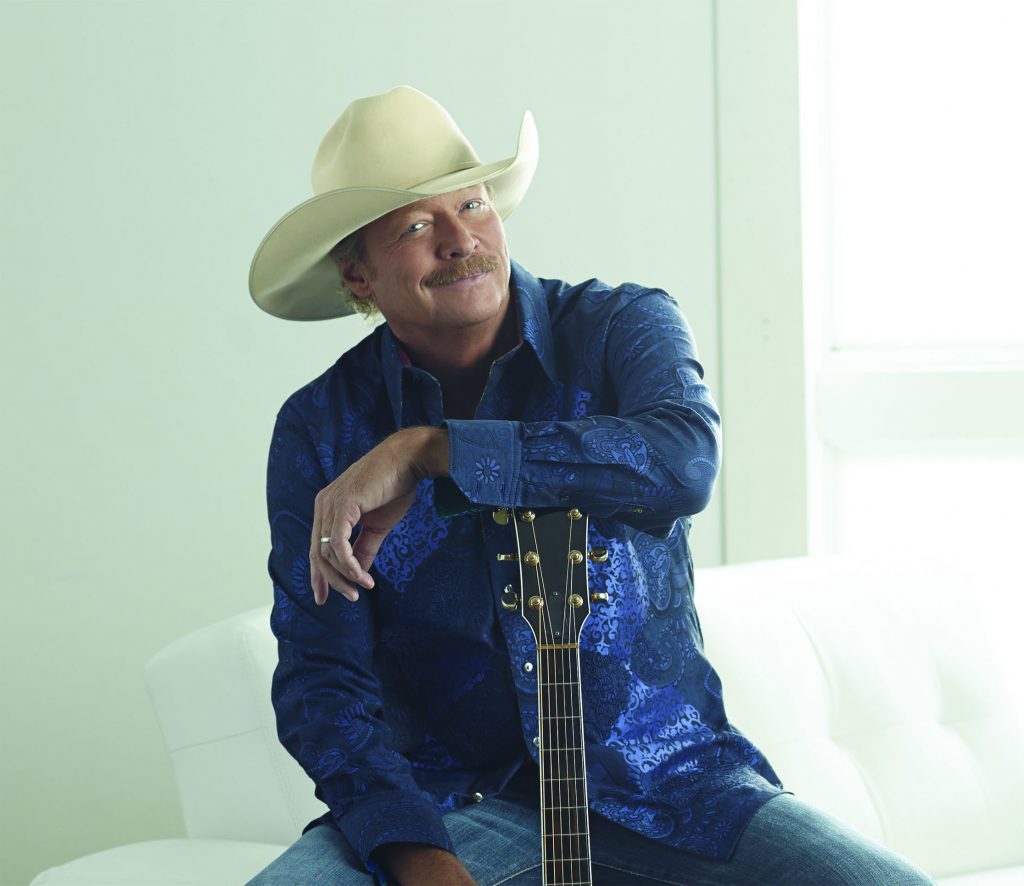
Recently inducted to the Country Music Hall of Fame, Alan Jackson’s membership among country music’s all-time greats is the latest in a long line of career-defining accolades that include three CMA Entertainer of the Year honors, more than 25 years of membership in the Grand Ole Opry, a 2016 Billboard ranking as one of the Top 10 Country Artists of All-Time, induction to the Nashville Songwriters Hall of Fame, and the Heritage Award as the most-performed country songwriter-artist of ASCAP’s first 100 years.
Jackson is one of the most successful and respected singer-songwriters in music. He is in the elite company of Paul McCartney and John Lennon among songwriters who’ve written more than 20 songs that they’ve recorded and taken to the top of the charts. Beginning with his first hit, “Here in the Real World,” Jackson’s pen has given us some of country music’s most-memorable songs of the past 30 years –the immediately-recognized “Chattahoochee,” the haunting “Midnight in Montgomery,” the touching “Remember When,” the autobiographical “Livin’ On Love,” “Drive,” and “Chasin’ That Neon Rainbow” and the inspired “Where Were You (When the World Stopped Turning).” Jackson is one of the best-selling artists since the inception of SoundScan, ranking alongside the likes of Eminem and Metallica. He’s also the man behind one of Nashville’s most-popular new tourist stops, AJ’s Good Time Bar, a four-story honky-tonk in the heart of downtown (along a stretch of Broadway known as the “Honky Tonk Highway”) featuring daily live music and a rooftop view of Music City.
The man from rural Newnan, GA has sold nearly 60-million albums worldwide and ranks as one of the 10 best-selling male vocalists of all-time in all genres. He has released more than 60 singles – registering 50 Top Ten hits and 35 #1s (including 26 Billboard chart-toppers). He has earned more than 150 music industry awards – including 18 Academy of Country Music Awards, 16 Country Music Association Awards, a pair of GRAMMY’s and ASCAP’s Founders and Golden Note Awards.
John Mellencamp
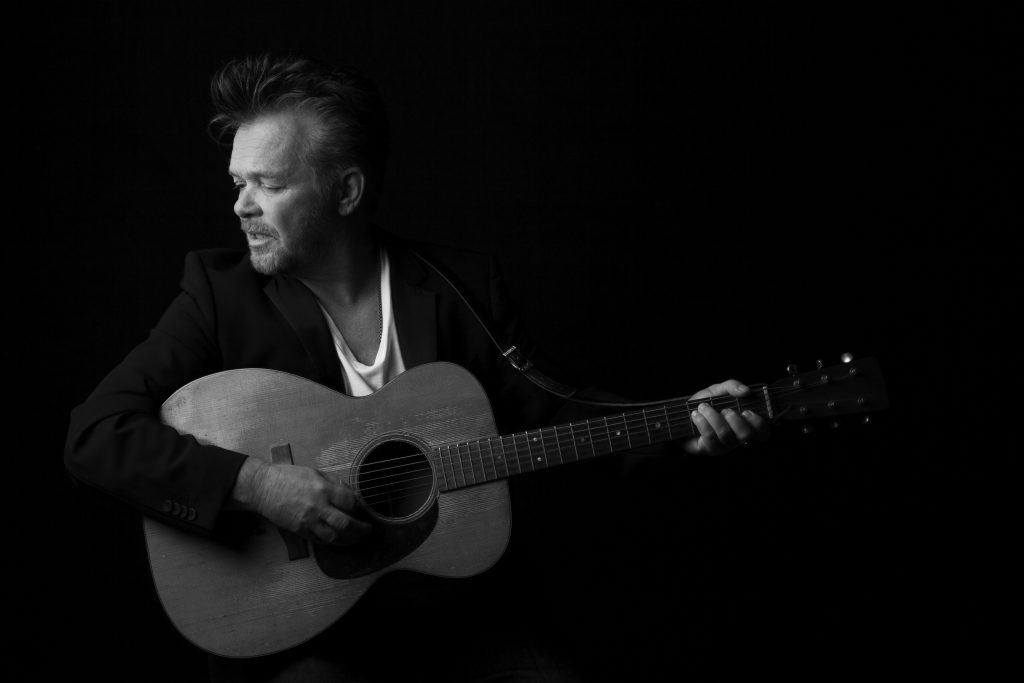
John Mellencamp’s career in music, spanning more than 35 years, has seen him transition from pop star to one of the most highly respected singer/songwriters of a generation. He is an authentic voice of American music and master storyteller with a commitment to creating traditional rock & roll, bittersweet songs of happiness and melancholia, inequality and fervent political dissent. With dozens of hits to his credit, the singer has taken on the plight of the family farmer, issues with authority figures and, of course, his own musings on relationships. Throughout his prolific career, John Mellencamp has written more than twenty Top 40 hits, Hits like “Jack and Diane,” “Small Town,” “Crumblin Down,” “The Authority Song,” “Rain On The Scarecrow,” “Lonely Ol Night,” “”R.O.C.K. In The U.S.A.,” “Paper In Fire,” “Check It Out,” “Pink Houses,” “Pop Singer,” and “Jackie Brown.” These iconic American songs have played an important role in defining Midwestern music and developing the rock genre.
Mellencamp is incredibly acclaimed; he is a member of the Rock and Roll Hall of Fame, a GRAMMY® winner, a recipient of the John Steinbeck Award, ASCAP Foundation’s Champion Award, The Woody Guthrie Award and Americana Music Association’s Lifetime Achievement Award and more recently, the Founders Award, the top honor assigned by the American Society of Composers, Authors and Publishers. He is also one of the most successful live concert performers in the world. The social activism reflected in his songs helped catalyze Farm Aid, the concert series and organization that has addressed the struggle of American family farmers for more than 25 years.
His latest song, “Easy Target” offers a raspy diagnosis of America’s current political ailments. John wrote the title song for the 2017 film, The Yellow Birds, an American war film directed by Alexandre Moors and based on the novel The Yellow Birds by Kevin Powers. The film debuted at Tribeca Film Festival and aired on the Nat Geo Channel.
John continues to focus on another facet of his artistic expression: painting. His style has progressed over the years as evidenced by several museum shows and published portfolios, and in recent years, he has increased his output by completing over 100 new works. He was also involved with an extraordinary collaboration for The Ghost Brothers of Darkland County, a musical with music and lyrics by John Mellencamp, a libretto by author Stephen King and production by T Bone Burnett.
Allee Willis
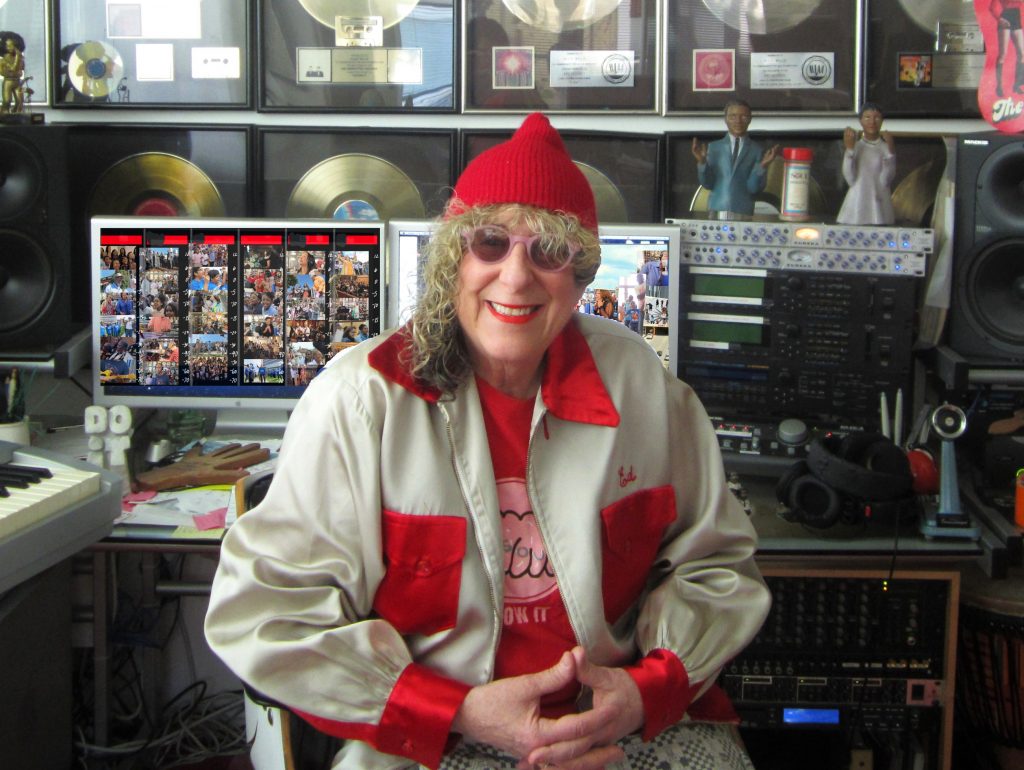
Allee Willis is a one-woman creative musical think-tank – a multi-disciplinary artist and visionary thinker whose range of imagination and productivity knows no bounds and whose songs integrate into all fields she works in. The GRAMMY ®, Emmy, and Tony award-winning and nominated songwriter’s hits include the seemingly ubiquitous “September,” “I’ll Be There For You (the Friends theme), “Boogie Wonderland,” “Neutron Dance,” “What Have I Done To Deserve This,” “Lead Me On,” “Stir It Up,“ “In The Stone,” and “You’re The Best”. Willis also co-authored the Oprah Winfrey-produced Tony and GRAMMY-winning musical The Color Purple.
Willis, who writes both music and lyrics, has written for artists across many genres, including Earth, Wind & Fire, The Pointer Sisters, Pet Shop Boys, Justin Timberlake, Patti LaBelle, Bonnie Raitt, Jimmy Cliff, Debbie Harry, DMC, Bette Midler, Aretha Franklin, Cyndi Lauper, Herbie Hancock, Toto, Bryan Adams, Diana Ross, Chaka Kahn, Jennifer Hudson, Ray Charles, Weather Report, Dusty Springfield, Fantasia, Kirk Franklin, Tina Turner, Taylor Dane, The Emotions, Boy George, Cher, Ashford & Simpson, Thomas Dolby, Dionne Warwick, Herb Alpert, Gladys Knight, and more.
Willis began writing songs in 1972 when she worked at Columbia/ Epic Records writing ads, radio commercials, and liner notes for the artists including, Laura Nyro, Barbra Streisand, Santana, Simon & Garfunkle, and Earth, Wind & Fire.
Willis’s first song was recorded in 1974 by Bonnie Raitt. But her big break came in 1978 when Patti LaBelle started regularly recording her songs. LaBelle placed Willis with Herbie Hancock, who she wrote three songs with. A few months later she began collaborating with Verdine White of Earth, Wind & Fire who introduced her to his brother Maurice, founder and lead singer of the band. Within five minutes of meeting they started writing “September”.
In 1997, representing 3 million BMI songwriters, Willis became the first pop artist to address Congress on artist rights in cyberspace. Throughout the 90’s she consulted with tech and media companies including Microsoft, Intel, AOL, Fox, Disney and Warner Bros. on their music and entertainment web strategies.
Willis most recently completed writing, recording producing, directing, and animating “The D,” a song for her hometown of Detroit. It features 5000 vocalists, more people in history than have ever been on a record before. Willis also started performing a series of sold-out one-woman shows, combining her songs with her comedy, art, videos and technology.
About The Songwriters Hall of Fame:
The Songwriters Hall of Fame celebrates songwriters, educates the public with regard to their achievements, and produces a spectrum of professional programs devoted to the development of new songwriting talent through workshops, showcases and scholarships. West Coast educational activities are held at The GRAMMY Museum, which hosts the permanent Songwriters Hall of Fame Gallery, and at the University of Southern California. Out of the tens of thousands of songwriters of our era, there are approximately 400 inductees who make up the impressive roster enshrined in the Hall of Fame. To qualify for induction, a songwriter must be a published writer for a minimum of 20 years with a notable catalog of hit songs. The list of inductees include Kenneth Gamble & Leon Huff, Barry Mann & Cynthia Weil, Jerry Leiber & Mike Stoller, Eddie Holland, Lamont Dozier & Brian Holland, Smokey Robinson, Paul Williams, Hal David & Burt Bacharach, Billy Steinberg & Tom Kelly, Bob Dylan, Isaac Hayes & David Porter, Carole King, Paul Simon, Billy Joel, Jon Bon Jovi & Richie Sambora, Elton John & Bernie Taupin, Brian Wilson, James Taylor, Don Schlitz, Bruce Springsteen, Phil Collins, Alan & Marilyn Bergman, Loretta Lynn, Jimmy Webb, Van Morrison, Kris Kristofferson, Dolly Parton, Garth Brooks, Diane Warren, Paul Anka, Stevie Wonder, Steven Tyler & Joe Perry, Mac Davis, Leonard Cohen, Ray Davies, Donovan, Cyndi Lauper, Desmond Child, Mick Jones & Lou Gramm, Chip Taylor, Elvis Costello, Marvin Gaye, Nile Rodgers & Bernard Edwards, Lionel Richie, Bill Withers, Neil Diamond, Jay Z, Tom Petty, Toby Keith, Max Martin, Jimmy Jam & Terry Lewis, Berry Gordy, Kenneth “Babyface” Edmonds and Robert Lamm & James Pankow among many others.
Full biographies and a complete list of inductees are available on the Songwriters Hall of Fame website at https://www.songhall.org. Joining online is quick and easy: https://www.songhall.org/join.
Ticket Information:
Tickets for the Songwriters Hall of Fame event begin at $1,500 each, and are available through Buckley Hall Events, 914-579-1000. Net proceeds from the event will go toward the Songwriters Hall of Fame programs. Songwriters Hall of Fame is a 501(c)3 organization. The non-deductible portion of each ticket is $170. Contributions, for which no goods or services are received in exchange, are fully tax-deductible as provided by law.