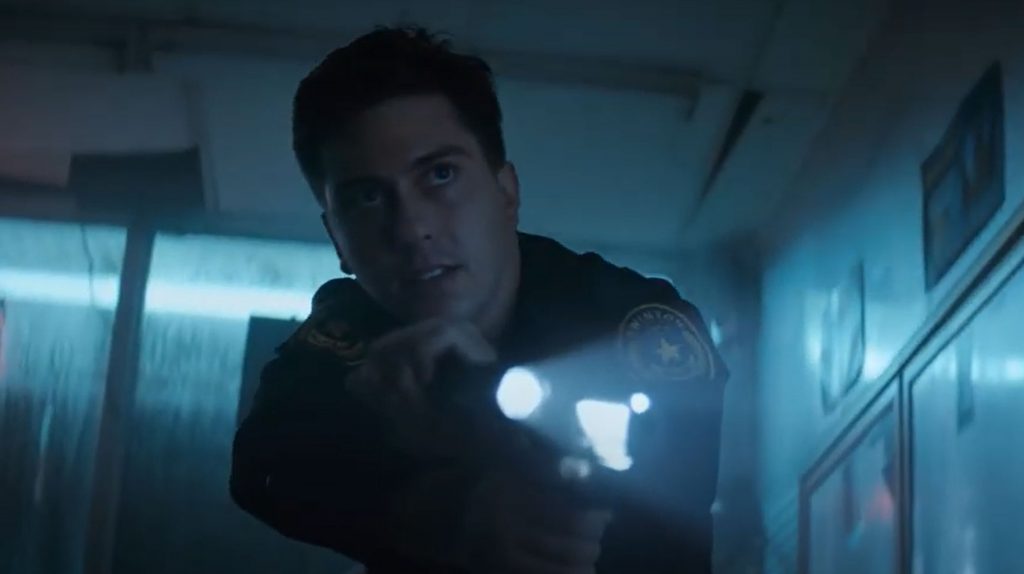
Review: ‘The Running Man’ (2025), starring Glen Powell, William H. Macy, Lee Pace, Emilia Jones, Michael Cera, Daniel Ezra, Jayme Lawson, Colman Domingo and Josh Brolin

November 11, 2025

by Carla Hay

Glen Powell (center) in “The Running Man” (Photo courtesy of Paramount Pictures)

“The Running Man” (2025)

Directed by Edgar Wright

Culture Representation: Taking place in a dystopian version of the United States, the sci-fi action film “The Running Man” (based on the Stephen King novel of the same name) features a predominantly white cast of characters (with some African Americans and Latin people) representing the working-class, middle-class and wealthy.

Culture Clash: An unemployed and financially struggling hothead, who is desperate to get medical treatment for his ailing daughter, enters a brutal reality TV show contest where the grand prize is $1 billion to the contestant who can survive for 30 consecutive days when people from all over the United States are given financial incentives to kill the show’s contestants.  

Culture Audience: “The Running Man” will appeal primarily to people who are fans of the movie’s headliners, the book on which the movie is based, the 1987 movie “The Running Man” and sci-fi action movies that are predictable and shallow.

Josh Brolin and Colman Domingo in “The Running Man” (Photo courtesy of Paramount Pictures)

“The Running Man” stumbles in the last 20 minutes by cramming in too many action clichés. The movie sacrifices development of supporting characters to showcase Glen Powell’s hollow lead character. Changes made to the original story aren’t very interesting.

Directed by Edgar Wright (who co-wrote “The Running Man” screenplay with Michael Bacall), “The Running Man” is adapted from Stephen King’s 1982 novel of the same name. “The Running Man” book was also made into a 1987 movie, starring Arnold Schwarzenegger and directed by Paul Michael Glaser, with an adapted screenplay by Steven E. de Souza. The stories in the book and the movies take place in a dystopian version of the United States. Both “Running Man” movies have very different endings from the book.

The 2025 version of “The Running Man” is closer to the book’s original story than the 1987 version of the movie. (The 2025 movie has a quick nod to Schwarzenegger by featuring his face on a $100 bill.) The story protagonist Ben Richards (played by Powell) is a civilian married father of an ailing daughter (just like in the book), instead of the 1987 movie version of Ben (played by Schwarzenegger), who was a military captain bachelor with no children. Ben and his family live in Co-Op City in the fictional U.S. state of Co-Op, somewhere on the East Coast. (“The Running Man” was actually filmed in the United Kingdom and in Bulgaria.)

The character of Ben in 2025’s “The Running Man” is an arrogant hothead whose only loyalties are to his family. Ben, who is 35 years old, has a history of not being able to keep jobs because he repeatedly gets fired for insubordination. His most recent job was being a vague low-level worker for a government company called Defense Net. That’s all you’ll really learn about Ben’s personal background throughout the entire movie.

Ben has been unemployed for an unspecified period of time. His wife Sheila (played by Jayme Lawson) works as a waitress in a nightclub bar called The Libertine and has to work extra shifts because she and Ben are financially struggling and need the money. It’s hinted in the movie that women who work at the Libertine engage in side hustling as sex workers who proposition Libertine customers.

In “The Running Man” book, Sheila has resorted to this sex work. But in this movie, it’s repeatedly mentioned that Sheila is not a sex worker. If anyone thinks that Sheila is a sex worker, Ben will be ready to fight that person. He loses his temper and instigates fights many times in the movie.

Ben and Sheila have a toddler daughter named Cathy (played by Alyssa Benn and Sienna Benn), who has a fever from a severe flu and needs medicine that the couple can’t afford. In the beginning of 2025’s “The Running Man,” Ben is seen going back to Defense Net to ask if he can be re-hired. He is coldly rejected by a gatekeeper named Richard Manuel (played by David Zayas), who makes a snarky remark about Ben bringing Cathy with him as a sympathy ploy.

Ben denies it (even though it’s true) and says, “I didn’t bring her here to guilt trip you.” Ben adds that he brought Cathy with him so he wouldn’t viciously assault Richard. This angry comment further alienates Richard. Ben, knowing he has reached a dead end in this discussion, leaves the building before he can be thrown out by security.

The United States in this story has several reality TV shows from the government-operated Games Network, where contestants can win prize money, but at great risk to their physical well-being. The contestants usually have to do dangerous stunts in order to get the money. The movie eventually reveals the obvious: The games are a way for the government to control and manipulate the financially desperate people who are the majority of the contestants.

The most dangerous and most lucrative of these game shows is “The Running Man,” which offers a grand prize of $1 billion to any contestant who can survive 30 consecutive days without being hunted down and murdered by Games Network assassins called Hunters. The Hunters use sphere-shaped drones called roving cams to assist in tracking down their targets. People in the general public get financial rewards if they give informant tips or can hunt down the contestants themselves. In the beginning of the movie, no one has ever won “The Running Man” game.

With no other job prospects, Ben tells Sheila that he’s going to apply for one of the contests that’s not “The Running Man.” Ben tells Sheila that he has no interest in being a “Running Man” contestant. Sheila adamantly doesn’t want Ben to apply for “The Running Man,” which is why it’s contradictory and strange when Sheila finds out that Ben is a contestant on “The Running Man,” she easily accepts this decision without getting upset, even though the chances are very high that Ben will be murdered.

Ben ends up as a contestant in “The Running Man” after he stands in line to apply for another contest, and he is seen getting into a physical fight with security officers who accost Ben for trying to help an elderly man who has vomited while waiting in line in front of Ben. “The Running Man” executive producer/showrunner Dan Killian (played by Josh Brolin) sees Ben on security camera footage and instantly decides that Ben’s rebellious nature and bad temper would be perfect for the show.

Ben takes the show’s required psychiatric evaluations, which reveal he’s the “angriest” contestant that “The Running Man” has ever had. Dan is thrilled. Dan convinces Ben to be on “The Running Man” by appealing to Ben’s ego. Dan tells Ben that he’s the first person who has a realistic chance of winning “The Running Man” because of Ben’s high level of anger. Dan tells Ben that Ben should use this anger as Ben’s “superpower.”

Dan is a stereotypical cold-blooded villain who doesn’t care how many people get murdered, as long as he can reap the benefits. In this case, Dan’s only goal is to make “The Running Man” the biggest TV show in U.S. history, no matter how many lives are lost. “The Running Man” is hosted by a flamboyant loudmouth named Bobby Thompson (played by Colman Domingo), whose only loyalties are to anyone who is most likely to make him rich and famous.

The rules of “The Running Man” are fairly straightforward: A contestant can go anywhere in the world and use disguises and fake names to hide the contestant’s true identity. Each contestant gets a 12-hour head start with $1,000, and can earn $100 per hour for staying alive and avoiding capture and an additional $100 for each law enforcement officer or Hunter who is killed by the contestant.

Each contestant is given a portable video device and is required to record a video message per day and mail the message back to Game Networks headquarters. Failure to send this video message means that the contestant will forfeit the grand prize and can still be murdered for profit and will be hunted for the rest of the contestant’s life. People in the general public can get money by giving informant tips (with proof) on where the contestant is, or can earn even more money by murdering the contestant before a Hunter can do it.

Ben finds out the hard way that the government tells lies about the contestants, in order to get the general public to hate the contestants. In Ben’s case, one of the first lies that is told about him is that he was fired from Defense Net for selling military defense secrets to America’s enemies. The government also uses deepfake artificial intelligence to manipulate and fabricate things on the video messages that the contestants send.

In 1987’s “The Running Man,” the beginning of the movie showed that Ben was sent to a prison camp for refusing to open fire on anti-government protestors. Eighteen months after his imprisonment, he escapes with fellow inmates Harold Weiss (played by Marvin J. McIntyre) and William Laughlin (played by Yaphet Kotto), who are both resistance fighters in the anti-government movement. Harold and William, who were not in “The Running Man” book, are Ben’s sidekicks when Harold and William are put in “The Running Man” contest at the same time.

In 2025’s “The Running Man,” these two supporting characters are put in “The Running Man” competition at the same time as Ben, but all three go their separate ways as soon as they start the contest. The other two “Running Man” contestants in the 2025 version of the movie are named Tim Jansky (played by Martin Herlihy) and Jenni Laughlin (played by Katy O’Brian), whose personal backgrounds are never mentioned in the movie. Tim is a socially awkward nerd, while Jenni is a hedonistic lesbian.

It’s later explained in the movie (just like it’s explained in the book) that these three contestants were chosen because they fit the ideal three personality types that Dan and other executives want for “The Running Man.” Tim is the Hopeless Dude type, who can’t help but make stupid mistakes because he craves attention. Jenni is the Negative Dude type, who hates the world and only cares about partying as much as possible. Ben is the Final Dude type, who is the most serious about winning the contestant and is expected to be the last contestant standing.

“The Running Man” doesn’t have a lack of adrenaline-pumping energy in its expected chase scenes, explosions, fist fights and gun violence. The problem is that it’s like watching a hyperactive and incoherent video game that ultimately wastes a lot of time with nonsense. Ben also gets too many lucky breaks to be believable. By the last third of the film, it’s just a pile-on of more shouting, running, and gun-toting—all of it extremely predictable and increasingly irritating because you start to care less and less about these characters.

Ben’s outlaw journey takes him to various cities (such as New York City, Boston, and Derry, Maine), as several people help him along the way. Molie Jernigan (played by William H. Macy) is a recluse who gives Ben disguises and fake identities. Bradley Throckmorton (played by Daniel Ezra) and his pre-teen brother Stacey (played by Angelo Gray) are resistance rebels, who help Ben with advice on escape routes and where to get weapons. Bradley and Stacey have a 5-year-old sister named Cassie, who has lung cancer because low-income communities, such as where the Throckmorton family lives, are being polluted with toxic chemicals from the government.

Bradley puts Ben in touch with Elton Parrakis (played by Michael Cera), a resistance rebel in Derry, who publishes an anarchist newsletter-zine and can supply Ben with more weapons. (Derry is a well-known city in the Stephen King universe, because it’s the location of King’s 1986 horror novel “It.”) Elton lives with his elderly mother Victoria Parrakis (played by Sandra Dickinson), a “Running Man” fanatic who will do whatever it takes to get some of the show’s prize money. A woman named Amelia Williams (played by Emilia Jones) is a civilian who has the same role as a hostage that she does in “The Running Man” book.

As for the movie’s Hunters, they are as generic as generic can be, with none having names except for their leader Evan McCone (played by Lee Pace), who wears a full face mask for most of his screen time, as if he thinks he’s a comic book supervillain. By the time Evan shows his face in the movie, it doesn’t help the story, because there’s nothing compelling about him or his personality, unless you consider the ability to sneer and snarl a personality trait. Karl Glusman plays a bleach-blonde Hunter who has such a blank personality, this character might as well be a robot.

“The Running Man” has some comedy that quickly grows redundant and ends up going nowhere. Throughout the movie, there are scenes of people watching a reality TV show called “The Americanos,” which is the movie’s obvious parody of “The Kardashians.” Debi Mazar has the role of Amoré Americano, the Kris Jenner-type matriarch character, who rules over her spoiled adult daughters. Although slightly amusing, “The Americanos” has no bearing on the movie’s plot.

Powell is in danger of being typecast in action movies as a leading character who thinks he can get by on cockiness and wisecracking quips. It’s not enough to carry an entire movie when the jokes strain to be funny and relevant and come across as reheated leftovers from the 1980s. “The Running Man” will satisfy anyone who just wants to see a lot of mindless action. But the movie is so busy rushing around, it doesn’t care enough to give the principal characters any fully developed personalities and instead just renders them as glorified video game characters. It’s hard to care about characters that you feel like you don’t really know by the end of the movie.

Paramount Pictures will release “The Running Man” in U.S. cinemas on November 14, 2025.

Review: ‘Force of Nature’ (2020), starring Emile Hirsch, Kate Bosworth, Mel Gibson, David Zayas and Stephanie Cayo

July 1, 2020

Mel Gibson, Emile Hirsch, Kate Bosworth and Stephanie Cayo in “Force of Nature” (Photo courtesy of Lionsgate)

“Force of Nature” (2020) 

Directed by Michael Polish

Culture Representation: Taking place in San Juan, Puerto Rico, the action flick “Force of Nature” has a racially diverse cast (white people, Latinos and one African American) portraying middle-class citizens and criminals.

Culture Clash: During a hurricane, two police officers and four other people in an apartment building try to fight off a gang of ruthless thieves who’ve invaded the mostly evacuated building to steal a safe full of valuables worth $55 million.

Culture Audience: “Force of Nature” will appeal primarily to people who like movies with a lot of gun violence but very little substance.

Emile Hirsch and William Catlett in “Force of Nature” (Photo courtesy of Lionsgate)

Let’s say you’re in a gang of thieves who want to pull off the perfect heist in a building when there won’t be hardly anyone in the building. When do you want to commit this crime? During a hurricane, of course. That’s the premise behind the laughably bad action movie “Force of Nature,” whose stupidity is as relentless as the fake torrential rain that’s supposed to pass for a Category 5 hurricane in this mess of a story.

Directed by Michael Polish and written by Cory Miller, “Force of Nature” can’t even get basic elements right when it comes to portraying a hurricane in the movie. In “Force of Nature,” the Category 5 hurricane just looks like a heavy rain storm on the Category 2 level, since the wind gusts in the outside fight scenes are very mild compared to what a real Category 5 hurricane looks like.

But people who make these kinds of mindless movies aren’t really too concerned about realism or having a believable story. Their main concern is to stage as much violence and stunt shots to fill up the story with as much action as possible and distract from the flimsy plot. However, even the action scenes in “Force of Nature” are unimaginative and very repetitive.

In “Force of Nature” (which takes place in San Juan, Puerto Rico), viewers are introduced to the main protagonist: A police officer whose last name is Cardillo (his first name is never mentioned; he’s portrayed by Emile Hirsh), who is shown in the beginning of the film by himself in a bathtub with a gun pointed in his mouth. Cardillo doesn’t go through with shooting himself, and when he gets dressed, viewers see that he’s a police officer. Why is he suicidal? It’s revealed later in the movie.

Now that we know that this cop is suicidal, you have to wonder if it’s deliberate or a coincidence that this “gun in mouth” scene is similar to the “gun in mouth” scene in 1987’s “Lethal Weapon,” which had Mel Gibson also portraying a suicidal cop. It’s worth mentioning this comparison, since Gibson plays an angry retired cop in “Force of Nature.” We’ll get to that in a moment.

When Cardillo goes to work, he’s less than thrilled to find out that he’s supposed to train a new partner that day: Jess Peña (played by Stephanie Cayo), who has a fairly upbeat personality, but is no pushover when a cranky Cardillo makes it obvious that he doesn’t want to work with her.

Puerto Rico is about to go on lockdown because of an impending Category 5 hurricane, so Jess has been assigned to work with Cardillo to train on how to evacuate residents. They’ve been called to assist in an apartment building where two of the residents stubbornly refuse to evacuate.

Meanwhile, a crime boss named John, nicknamed John the Baptist (played by David Zayas), and one of his henchmen have taken an elderly lady named Mrs. Gradisher (played by Leslee Emmett) to a bank, where they force her by gunpoint to open a safe-deposit box in a private room. There’s cash in the box (which the thugs take), but what they’re really more interested in is a painting in the box.

As they start to leave the bank, John coldly executes the lady in the head in the bank lobby. Several horrified people in the bank have witnessed the shooting. Therefore, not only are these criminals ruthless, they also don’t care about being seen committing murder without any disguises, in full view of witnesses and security cameras.

Meanwhile, at a grocery store, a man named Jason Griffin (played by William Catlett) has stocked up on a cartload of meat. He’s taken so much meat that there’s no more left for other customers. Griffin gets into a dispute with another man who asks Jason for one packet of meat, but Griffin refuses.

The angry customer than gets a store manager and falsely claims that Griffin stole a package of meat right out of the hands of the other customer’s son. Even though Griffin denies it, the manager sides with the other customer and asks Griffin to leave the store. (There are some racial undertones to this scene, since Griffin is African American and the other customer is not.)

Before he leaves, Griffin lunges at the other customer in anger. And the next thing you know, the police are called. Guess who are the cops who show up to respond to this incident? Cardillo and Jess, of course.

The customer who started the dispute declines to press charges on Griffin, who is released from police custody. When Cardillo asks Griffin why he was trying to buy all that meat, Griffin explains that he wanted to feed his cat Janet before the hurricane arrived.

And it just so happens that Griffin lives in the same apartment building where Cardillo and Jess were headed to assist in an evacuation. Cardillo and Jess agree to let Griffin back into this apartment to feed his cat, on the condition that Griffin immediately evacuate after the cat is fed.

It’s easy to figure out, based on the type of meat and the large quantities that Griffin was going to buy, that he does not have a regular domestic cat. But apparently, these two cops are too dumb to notice these clues, and they’re shocked when they find out what type of cat Griffin has. This animal is the reason for a subplot to the movie that won’t be revealed in this review.

Meanwhile, the two residents of the building who refuse to evacuate are retired cop Ray (played by Gibson) and another retirement-age man named Paul Bergkamp (played by Jorge Luis Ramos), who is originally from Germany. Bergkamp has no one else in his apartment, but Ray’s daughter Troy (played by Kate Bosworth, who’s married in real life to “Force of Nature” director Polish) is in the apartment with Ray, because she’s been unsuccessfully trying get him to evacuate.

Troy is a doctor (her medical skills come in handy later in the story), but she tells Jess, “He doesn’t exactly respond to female authority,” which is why Ray won’t listen to her. (We might never know if Gibson’s own reputation for making sexist comments had anything to do with why he got cast in this role.)

At any rate, Ray is an ill-tempered curmudgeon who immediately says when the cops arrive to evacuate him: “The current PD [police department] is full of pussies who care more about liberties and politics. I’m staying here.”

The only other known person at the apartment building is the superintendent, who is outside boarding up and securing windows. Not long after Cardillo and Jess have the displeasure of meeting Ray, Cardillo witnesses the superintendent getting gunned down by John and his small gang of thugs. Why are these criminals at this apartment? To get to a safe that has $55 million worth of valuables.

The rest of the movie’s action is a showdown between the bad guys and the people at the apartment. And just to make it harder for anyone to escape, the apartment elevator just happens to be not working. And did we mention that Ray has an arsenal of weapons at his disposal?

Gibson seems to be very self-aware of his controversial reputation, because he plays Ray to the hilt as an anti-hero, so there’s almost an element of camp to his acting. The rest of the cast members play it straight in this very formulaic, cheaply made action flick. The visual effects are tacky, and the director does a sloppy job with the action sequences, where it’s obvious to see who the stunt doubles are.

Much of the dialogue in “Force of Nature” is also very cringeworthy. At one point in the movie, Jess says, “Let’s go. Rock me like hurricane.” “Force of Nature” is supposed to take place during a hurricane, but the movie itself is another kind of disaster.

Lionsgate released “Force of Nature” on digital and VOD on June 30, 2020.
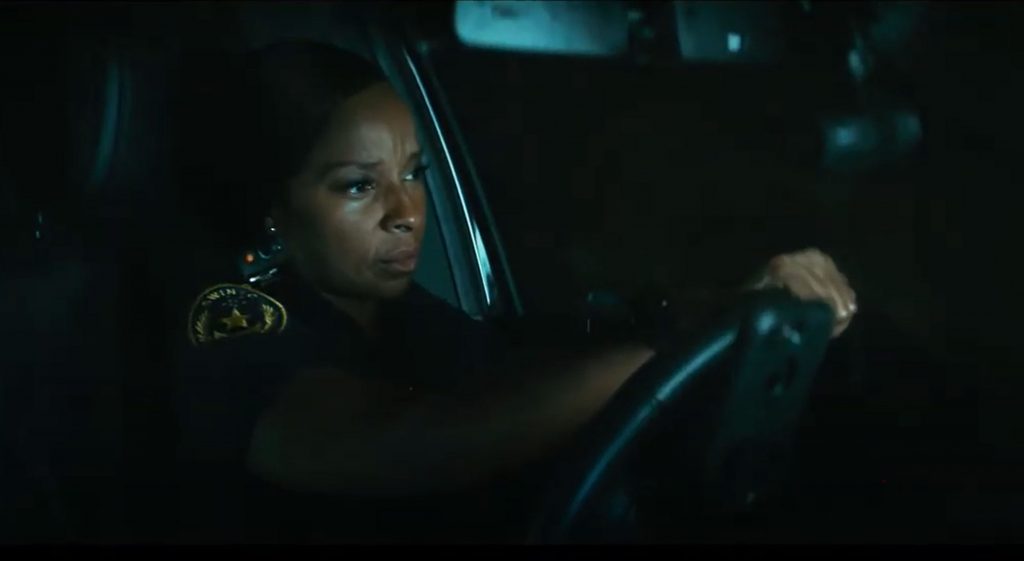
Review: ‘Body Cam,’ starring Mary J. Blige, Nat Wolff, David Zayas and Anika Noni Rose

May 20, 2020

by Carla Hay

Mary J. Blige in “Body Cam” (Photo courtesy of Paramount Pictures)

“Body Cam”

Directed by Malik Vitthal

Culture Representation: Taking place in the fictional city of Swinton, Louisiana, the horror film “Body Cam” has a racially diverse cast (African American, white, Latino and Asian) representing the middle-class.

Culture Clash: A veteran cop goes rogue in investigating a series of mysterious and bloody murders that have been recorded on surveillance videos.

Culture Audience: “Body Cam” will appeal primarily to Mary J. Blige fans and to people who like formulaic and predictable horror movies.

Nat Wolff in “Body Cam” (Photo courtesy of Paramount Pictures)

Grammy-winning singer Mary J. Blige was nominated for two Oscars for the 2017 Netflix drama “Mudbound” (Best Supporting Actress and Best Original Song), so it’s a shame that her next role in a live-action film turned out to be such an embarrassing dud.

After “Mudbound,” Blige had voice roles in the animated films “Sherlock Gnomes” (2018) and “Trolls World Tour” (2020), with both roles as supporting characters. In the live-action “Body Cam,” Blige is front and center as the main character— a troubled cop named Renée Lomito-Smith, who lives and works in the fictional city of Swinton, Louisiana. The movie is Blige’s first time getting top billing in a major motion picture—”Body Cam” is from the ViacomCBS-owned companies Paramount Pictures and BET Films—and it’s an unfortunate career misstep for her as an actress, due to her wooden acting in the film and the movie’s silly plot.

The only saving grace is that “Body Cam” has little chance of being seen by a large audience, so there probably won’t be permanent damage to Blige’s efforts to be taken seriously as an actress. Paramount Pictures apparently has so little faith in this movie that the studio didn’t even release a trailer for the film until the week before “Body Cam” was dumped as a direct-to-video release.

The beginning of “Body Cam” (which has almost every scene taking place at night) shows Swinton as a city in racial turmoil over police brutality. The opening scene takes place in a local diner, where a TV news report shows that a white cop from the Swinton Police Department has been acquitted in a fatal shooting of an unarmed black man. As the news report is shown on TV, a black cop named Kevin Ganning (played by Ian Casselberry) enters the diner, but he is told by the older black gentleman who serves him a cup of coffee that he’s not welcome in the diner.

After Kevin leaves the diner during this rainy night, he’s alone on patrol duty when he encounters a green Chevy van in a routine traffic stop. He looks inside the vehicle and sees something bloody in the back. He then orders the driver to step outside. A black woman in her 30s, wearing a hooded jacket, steps out with her arms raised. And then, a mysterious force swoops Kevin up in the air.

The movie’s story then shifts to 12 hours earlier, when Blige’s Renée character is seen in a meeting with an internal affairs psychiatrist named Dr. Lee (played by Han Soto), who interrogates her about her mental health, by asking if she has insomnia or troubling thoughts. “Have you moved on from your son’s death?” he asks.

As viewers learn, Renée has been grieving over the death of her pre-teen son Christopher (played by Jibrail Nantambu in flashback scenes), who passed away from an accidental drowning in a neighbor’s swimming pool. Although her husband Gary (played by Demetrius Grosse) is grieving too—Christopher was their only child—and Gary is very supportive of Renée, her emotional turmoil has apparently affected her job performance.

Renée is under investigation because she slapped a civilian during an argument with the civilian—an incident that was captured on her body cam, but not shown in the movie. The meeting is to determine if she will be suspended or be able to continue working in the department. Ultimately, Renée (who was on administrative leave during the investigation) gets to keep her job.

When she returns to the police department, Renée is put on the night shift and welcomed warmly by her colleagues. They include Sergeant Kesper (played by David Zayas) and patrol-duty fellow police officers Kevin Ganning, Darlo Penda (played by David Warshofsky), Gabe Roberts (played by Philip Fornah) and Mariah Birke (played by Naima Ramos-Chapman). Renée also finds out that she’s been paired with a rookie cop named Danny Holledge (played by Nat Wolff), who previously worked with Ganning.

The police staff meetings led by Sergeant Kesper show that there is a culture of strong solidarity that’s expected of the cops. Kesper expresses that the recent acquittal of their fellow cop colleague was the right decision. He also warns his subordinates that the controversial shootings have caused a lot of anger toward cops, so extra care must be taken in dealing with the public.

Meanwhile, Renée’s colleagues tease her about getting stuck with a rookie. She isn’t thrilled about having to train a newcomer, but she brushes off the good-natured ribbing and does her best to work with Danny, who is a “by the book” type of cop and eager to impress his more experienced co-workers.

It isn’t long for Renée and Danny to find out that they have very different styles of working. Renée is more of the “take charge” type, while Danny is more of a passive observer who follows the lead of someone who has authority over him. While out on patrol, they encounter a black boy who’s about 5 years old sitting alone in the middle of the street. As Renée approaches the boy with concern, his mother bursts out of a nearby house and shouts at Renée not to touch her son.

A small group of angry neighbors suddenly appear, and they’re hostile to Renée and Danny. Because they are cops, they’re clearly not wanted in the neighborhood. Renée quickly diffuses the situation by reassuring the crowd that she was only trying to help the boy because he wasn’t being supervised by an adult. As they leave the area, Danny tells Renée that he respects how she handled the incident.

Renée and Danny then arrive at an apparent crime scene: Officer Ganning’s squad car has been apparently abandoned, with the cop nowhere in sight. The green Chevy van shown earlier is near the squad car and also appears to be abandoned. The van has no license plates. And soon, Renée and Danny find a lot of blood near the car and bloody teeth on the hood of the car.

When Renée looks at the surveillance footage from the dashboard camera, and she sees how Officer Ganning encountered the mystery woman and then appeared to be abducted and lifted up in the sky by a mysterious and shadowy force. He was then brutally thrown on the ground. While the injured and bloodied cop is crawling on the ground, he is scooped up again and lets out a horrified scream.

While she’s still absorbing what she just saw, Renée tells the investigating cop Detective Susan Hayes (played by Laura Grice) that Office Ganning was probably murdered. But when Detective Hayes looks at the surveillance video, she tells Renée that the video was apparently erased because the footage doesn’t exist.

Upon further investigation, it’s confirmed that Office Ganning was murdered, when his mangled body is found impaled like a scarecrow on a steel link fence. In shock, Renée and Danny commiserate with each other at a local diner, where she opens up to him about the incident that put her on a leave of absence. She admits that she “lost it” with the civilian because he called her a “black bitch.”

She also tells Danny about her son Christopher and how he died. “I can’t let another person close to me die without doing something,” Renée tells Danny. And so, the rest of the movie is about Renée’s attempt to solve the mystery of her colleague’s murder and other similar murders that happen throughout the story.

Through surveillance footage, Renée was able to find out that the mystery woman in the van is a registered nurse named Taneesha Branz (played by Anika Noni Rose), who used to work at Winton Hospital but has mysteriously disappeared. And by doing an Internet search, Renée finds out that Taneesha had a 14-year-old son named DeMarco (played by Mason Mackie) who died of foul play, since he was found shot in an abandoned industrial area.

Unfortunately, this shoddily written screenplay from Nicholas McCarthy and Richmond Riedel has Renée breaking all kinds of laws to get to the bottom of the mystery herself. She steals evidence from crime scenes, and she breaks into Taneesha’s abandoned home multiple times. Danny uncomfortably witnesses some of these law violations (he’s with Renée the first time that she breaks into Taneesha’s empty house), and he voices his objections, but Renée essentially ignores him and does what she wants anyway as she tries to solve the case all on her own.

Part of her “going rogue” also includes a laughable scene where she convinces a morgue attendant to leave her alone in a roomful of bodies so that she can find the thumbprint that she needs to unlock a cell phone that she stole. This takes place after the “killer on the loose” strikes again by massacring several people in a rampage at a convenience store.

Danny and Renée—who are apparently the only cops in Swinton who get called to murder scenes in Swinton—are the first police officers to arrive after this mass murder spree. And, of course, Renée goes straight to the store’s security video to see what happened, since the ongoing theme in the movie is that Renée (and the viewers) are putting the pieces of the puzzle together through video surveillance footage.

The lackluster direction of Malik Vitthal and the moronic screenplay are mainly to blame for this dreary and unimaginative movie. The pacing in “Body Cam” is sometimes too slow for a story that’s supposed to be a suspenseful thriller/horror movie. The expected bloody gore (which isn’t very creative) takes place in numerous scenes, but the movie lacks character development in its paint-by-numbers storytelling that’s derivative of so many below-average movies in the horror genre.

And some viewers might be very annoyed that because almost everything in the movie happens at night, the entire color palette of the film is very dark and often very murky, even in the interior scenes. “Body Cam” cinematographer Pedro Luque lights a lot of scenes as if almost every location in Swinton is grimy and polluted. The movie was actually filmed in the vibrant city of New Orleans, but you wouldn’t know it from how the cinematography makes this movie’s city look like a depressing urban wasteland.

Blige often delivers her lines in a monotone voice and stiff demeanor that might be her attempt to portray Renée as someone who is numb with grief, but it comes across as simply dull and dreadful acting. The other actors in the film do an adequate job with their underwritten characters that have very forgettable dialogue. And in the case of Rose, who plays a mostly mute Taneesha, there’s hardly any dialogue to be said. Blige is the one who’s supposed to carry the film as the main character, and it appears that she’s not quite ready for this type of heavy lifting. Blige’s original song “Can’t Be Life” is tacked on to the film’s end credits, but even that tune is forgettable and certainly won’t be nominated for any awards.

The ending of “Body Cam” is very easy to predict, even down to the climactic scene that takes place in a dark and abandoned building where no self-respecting cop would go without backup. Unlike the surveillance video in the movie, “Body Cam” can’t be deleted or erased from Blige’s list of acting credits, but she probably wants to forget that she made this substandard film.

Paramount Pictures released “Body Cam” on digital on May 19, 2020. The movie’s VOD release date is June 2, 2020.

Copyright 2017-2026 Culture Mix
CULTURE MIX