
Review: ‘Bunny’ (2025), starring Mo Stark, Ben Jacobson, Liza Colby, Tony Drazan, Linda Rong Mei Chen, Eric Roth, Richard Price and Henry Czerny

November 23, 2025

by Carla Hay

Mo Stark in “Bunny” (Photo by Jackson Hunt/Vertical)

“Bunny” (2025)

Directed by Ben Jacobson

Culture Representation: Taking place in New York City, the comedy film “Bunny” features a predominantly white cast of characters (with a few African Americans, Latin people, and Asians) representing the working-class and middle-class.

Culture Clash: A hustler, his best friend, and other people who live in the same apartment building try to hide the body of a man the hustler accidentally killed.

Culture Audience: “Bunny” will appeal primarily to people who are fans of the low-budget independent films about.

Tony Drazan, Mo Stark, Ben Jacobson and Linda Rong Mei Chen in “Bunny” (Photo courtesy of Vertical)

“Bunny” is a shaggy but watchable 2020s movie that pays tribute to absurdist stoner comedies of the 1990s. The plot (about New York City apartment dwellers trying to hide a dead man’s body) drags and wears thin by the middle of the movie, but there are some genuinely funny moments. It’s probably why “Bunny” would’ve been better as a short film.

As it stands, “Bunny” (which clocks in at 87 minutes) doesn’t get too long-winded. It’s the type of movie best appreciated by people who like to see movies about misfits and weirdos getting into conflicts and trying to get out of one mishap after another. Much of the comedy in “Bunny” comes from the fact that many of the film’s main characters are too stoned to think clearly.

Directed by Ben Jacobson, “Bunny” had its world premiere at the 2025 SXSW Film and TV Festival. Jacobson, Mo Stark and Stefan Marolachakis co-wrote the “Bunny” screenplay. The movie takes place over a 24-hour period on a summer day in New York City’s East Village, where “Bunny” was filmed on location. Most of the movie’s scenes take place inside or nearby the apartment building, thereby keeping the plot fairly uncomplicated.

“Bunny” is named after the movie’s main protagonist, who does occasional voiceover narration, where he gives hindsight commentary. Bunny (played by Stark) is first seen handcuffed in the back of a police car. It happens to be Bunny’s birthday. He says in the voiceover, “Today, I fucked up. I upended the lives of people I love the most: my family.”

What exactly did Bunny do? He accidentally killed a man named Calvin, a stranger who attacked Bunny in a fight inside the apartment building. Most of the movie is about Bunny enlisting the help of friends and neighbors to hide the body.

Why doesn’t Bunny call the police and claim self-defense? Bunny doesn’t want to deal with law enforcement because he does illegal work as a gigolo servicing women and men. Bunny has assumed that the dead stranger who attacked Bunny was getting revenge for a recent sex worker job that went wrong when Bunny assaulted two male clients who got rough with Bunny during a sexual encounter.

This client attack incident is not shown in a flashback but is described by Bunny in a detailed confession to Bunny’s somewhat dimwitted best friend Dino (played by Jacobson), who lives on the same apartment floor as Bunny but in a different apartment unit. Bunny makes this confession in an apartment hallway and is overheard by an unnamed rabbi (played by Henry Czerny), who pops up later in the story.

The movie takes a little too long to get to the main conflict (what to do about the dead body), because this plot development doesn’t happen until almost halfway through the story. Before that, “Bunny” consists of a series of scenes showing the people in the apartment building who will get involved in this cover-up. It’s a motley crew that isn’t always beliveable, but there can be suspension of disbelief because “Bunny” is a comedy that doesn’t take itself too seriously.

There are many things in “Bunny” that are nods to the 1990s. Bunny looks like grunge rocker from the 1990s. Dino looks like bleach-blonde skateboarder from the 1990s. At one point in the movie, Bunny and Dino both wear jerseys sporting the name of the 1995 movie “The Basketball Diaries,” starring Leonardo DiCaprio as a New York City teenage basketball player who gets addicted to drugs. (“The Basketball Diaries” movie is based on Jim Carroll’s 1978 memoir of the same name.)

“Bunny” has a gritty visual aesthetic that is similar to independent drama films that were set in 1990s New York City, where the main characters (just like the main characters in “Bunny”) live in run-down apartment buildings that have unpleasant and unidentifiable smells. The main characters in these movies are often up to some type of illegal mischief. 1995’s “Kids” (directed by Larry Clark) and 1992’s “Bad Lieutenant” (directed by Abel Ferrara) come to mind.

In addition to Bunny and Dino, the conspirators to hide the body are:

  • Bobbie (played by Liza Colby), Bunny’s sexually fluid and fun-loving wife, who works as a production designer.
  • Linda (played by Linda Rong Mei Chen), the apartment building’s feisty manager/landlord.
  • Happy Chana (played by Genevieve Hudson-Price), an Orthodox Jewish divorcée who is renting a room from Bunny and Bobbie for a few days because she’s traveled from Tarzana, California, to meet an online boyfriend in person for the first time.
  • Loren (played by Tony Drazan, also known as Anthony Drazan), Bobbie’s estranged father who shows up unannounced after not seeing Bobbie for years.
  • Ciel (played by Kia Warren), a friend of Bunny’s and Bobbie’s, who spends most of her screen time getting high on cocaine and marijuana.

Complicating matters are two New York Police Department officers, who seem to have nothing better to do during their work time but loiter in outside of the apartment building and pester the building’s residents and people walking on the street about where to get certain types of fast food. The two cops are Officer Cellestino (played by Ajay Naidu) and Officer Nadov (played by Liz Caribel Sierra), who are quick to misuse their authority in ways that are meant to intimidate people over trivial matters. Officer Cellestino and Office Nadov frequently stop and question Bunny throughout the movie.

The beginning of the movie shows Bunny, who has noticeable fight wounds, as he frantically runs with a travel bag through the streets. He ducks into a park to change his clothes and then runs back to his apartment. It’s later revealed that he was running away from the incident where he assaulted two of his clients. Based on the way Bunny describes the assault, he was acting in self-defense.

Early in the movie’s voiceover narration, Bunny compares his gigolo work to being like Richard Gere in the 1980 movie “American Gigolo.” Bunny is kind of delusional, because he doesn’t do high-priced escort work, like Gere’s character in “American Gigolo.” Bunny says in the narration that the sex work that Bunny does is “a means to an end for a beautiful life.”

Not much else is revealed about Bunny except that he has a reputation in his apartment building for being friendly and helpful. For example, there are multiple scenes where Bunny assists a disabled neighbor named Ian (played by Richard Price) by carrying items (such as laundry) up and down the apartment stairs. (It’s a walk-up apartment building with no elevator.)

Before the dilemma over the dead body happens, Bobbie introduces Bunny to a woman named Daphne (played by Eleonore Hendricks), who has agreed to have a threesome with the couple to celebrate Bunny’s birthday. Bobbie also has some molly (ecstasy) and excitedly tells Bunny that a hotel room has been rented for this threesome. However, Bunny says he’s not interested because he doesn’t feel well.

Bobbie gets upset and storms off, bringing Daphne with her. (Bobbie and Daphne eventually come back to the apartment, where more hijinks ensue.) While Bobbie is temporarily away, her father Loren shows up because his current wife has broken up with him, and he needs a place to stay. Loren and Bobbie are estranged because Loren abandoned Bobbie and Bobbie’s mother (his ex-wife) when Bobbie was a child.

Meanwhile, Linda is angry because a young male tenant (played by Anthony Rodriguez) is long overdue on paying rent. The tenant isn’t returning her messages or answering when she knocks on his door, which seems to be barricaded. What happened to this tenant is eventually revealed in the movie.

There are also three “party girl” tenants who are friends with each other and are seen going in and out of the building: Betty (played by Noa Fisher), Elaine (played by Jaeden Gomez, also known as Jaeden Rae Gomez) and Yaz (played by Yaz Perea), who invite Bunny and his pals to a party in the midst of this chaos. These three characters aren’t really essential to the movie’s plot, but they add to the frenetic atmosphere.

“Bunny” has some cliché slapstick comedy and a few predictable scenarios. But some of the characters are written with specific quirks that make them unique enough for this movie. For example, Dino doesn’t have much common sense, but he’s a movie fanatic who can quote and namecheck trivia from his most-liked films. (He mentions 2006’s “The Departed” and 2007’s “There Will Be Blood.”)

There’s also a running joke about Happy Chana, who is very neurotic and particular about how people say her name. (Chana is pronounced Hanna.) She always introduces herself by saying that people can call her Happy Chana or Chana Eliza, but never just Chana. The joke is funny the first three times it’s in the movie, but it quickly gets old the more it’s repeated.

Happy Chana is also very religious and refuses to be in Bunny’s apartment unless Bobbie or two other women are there, because Orthodox Judaism teaches that a single woman cannot be in a space with a man unless the man’s wife or two other women are there. Bunny needs the money that Happy Chana is paying, so he has to accommodate her demands. While Bobbie is away, Linda and Ciel are the two women who can fulfill Happy Chana’s Orthodox Jewish protocol requirements.

Stark’s portrayal of Bunny has enough charisma to keep people watching when parts of the movie tend to be come tedious. Stark and Jacobson, who are friends in real life, have an easy chemistry together as Bunny and Dino. Colby does well in her role as outspoken Bobbie, while Hudson-Price is a scene-stealer as nervous Happy Chana.

The tone of “Bunny” is both freewheeling and tension-filled. Although some of the situations are definitely over-the-top, “Bunny” is an authentically New York City movie that skillfully captures a lot of the attitude and eccentricities that really are a part of New York City’s East Village culture. Despite many of the seedy and crude things that happen in the movie, “Bunny” leaves room for some sweet sentimentality about the power of community camaraderie.

Vertical released “Bunny” in select U.S. cinemas, on digital and VOD on November 17, 2025.

Review: ‘Mission: Impossible – The Final Reckoning,’ starring Tom Cruise

May 14, 2025

by Carla Hay

Pom Klementieff, Greg Tarzan Davis, Tom Cruise, Simon Pegg and Hayley Atwell in “Mission: Impossible – The Final Reckoning” (Photo courtesy of Paramount Pictures)

“Mission: Impossible – The Final Reckoning”

Directed by Christopher McQuarrie

Some language in French with subtitles

Culture Representation: Taking place in various parts of the world, the action film “Mission: Impossible – The Final Reckoning” (the eighth movie in the “Mission: Impossible” movie series) features a predominantly white cast of characters (with some black people, Asians, Latin people and Native Americans) representing the working-class, middle-class and wealthy.

Culture Clash: American rogue superspy Ethan Hunt and his international allies race against time to stop a massive artificial intelligence force called the Entity from destroying the world. 

Culture Audience: “Mission: Impossible – The Final Reckoning” will appeal primarily to people who are fans of the movie’s headliners, the “Mission: Impossible” franchise and action movies that are over-the-top spectacles.

Nick Offerman, Angela Bassett, Mark Gatiss and Janet McTeer in “Mission: Impossible – The Final Reckoning” (Photo courtesy of Paramount Pictures)

“Mission: Impossible – The Final Reckoning” is overstuffed, goes on for too long, and comes dangerously close to the ridiculousness of the “Fast & Furious” franchise. However, the engaging characters and superior stunts outweigh the movie’s flaws. It’s by no means the best “Mission: Impossible” movie in the series, but it’s certainly the one that expects viewers to think the hardest about a convoluted plot that doesn’t deserve overthinking.

Directed by Christopher McQuarrie, “Mission: Impossible – The Final Reckoning” (the eighth movie in the “Mission: Impossible” series was written by Erik Jendresen and McQuarrie. “Mission: Impossible – The Final Reckoning” had its world premiere in Tokyo and its European premiere at the 2025 Cannes Film Festival. McQuarrie also directed and co-wrote 2015’s “Mission: Impossible – Rogue Nation,” 2018’s “Mission: Impossible – Fallout” and 2023’s “Mission: Impossible – Dead Reckoning Part One,” whose title was later shortened to “Mission: Impossible – Dead Reckoning” after the movie underperformed at the box office. The “Mission: Impossible” movie series is inspired by the TV series “Mission: Impossible,” which was on the air from 1966 to 1973.

“Mission: Impossible – The Final Reckoning” is essentially “Mission: Impossible – Dead Reckoning Part Two,” but you don’t need to see “Mission: Impossible – Dead Reckoning Part One” to understand “Mission: Impossible – The Final Reckoning.” That’s because “Mission: Impossible – The Final Reckoning” is filled with exposition dumps of characters explaining what happened in previous “Mission: Impossible – Dead Reckoning Part One” and other previous “Mission: Impossible” movies, as well as over-explaining what they’re about to do in “Mission: Impossible – The Final Reckoning.”

One of the most unintentionally laughable things about “Mission: Impossible – The Final Reckoning” is how the characters take turns in their exposition-dump dialogues by each saying things with perfect timing, as if they know each other’s lines and never talk over each other or interrupt each other during these overly choreographed conversations. It never looks like real conversations, especially in the high-pressure situations that these characters experience. There are also several flashback montages for nostalgia’s sake and to inform viewers who might not have seen or who might have forgotten some key moments in previous “Mission: Impossible” movies.

At the end of “Mission: Impossible – Dead Reckoning Part One,” American rogue superspy Ethan Hunt (played by Tom Cruise)—an operative of the secret agency Impossible Missions Force (IMF)—escaped from with one of two keys that have the power to destroy a massive artificial intelligence villain called the Entity, which is intent on taking over the world. The Entity is not physically embodied in any one being because the Entity is a virtual enemy that can spread wherever and whenever it chooses. However, the biggest human enemy in the “Mission: Impossible – Dead Reckoning Part One” and “Mission: Impossible – The Final Reckoning” is Gabriel (played by Esai Morales), an assassin liaison for the Entity.

“Mission: Impossible – The Final Reckoning” begins with an outer-space galaxy image and a male voice intoning the “Mission: Impossible” movie motto that gets repeated multiple times throughout this film: “We live and die in the shadows of those we hold close and those we never meet.” The voice adds, “The world is changing. War is coming.”

The praise gets a little corny and starts to deify Ethan as a female voice thanks Ethan for hs service, as several scenes from previous “Mission: Impossible” movies are shown like a greatest-hits playlist. The voice adds: “Every personal sacrifice you made has brought us another sunrise,” she says. “And although you never followed orders, you never let us down.

It’s also explained in the beginning of the movie that every corner of cyberspace has been corrupted by the Entity, which has inspired a doomsday cult. These fanatics have infiltrated every level of law enforcement, government bureaucracy and the military. “Mission: Impossible – The Final Reckoning” doesn’t do a lot with this “worldwide cult” plot development, because most of the movie shows Ethan mostly hanging out or fighting against a small group of people, most of whom are familiar characters.

Ethan is under orders to surrender to the U.S. government and hand over the Entity key that Ethan has in his possession. Ethan as other plans. His first order of business in “Mission: Impossible – The Final Reckoning” is to a prison break of former Gabriel cohort Paris (played by Pom Klementieff), a French assassin who is currently in prison in Austria because of the events that happened in “Mission: Impossible – Dead Reckoning Part One.”

This review won’t go into too many more details about what happens, but it’s enough to say that “Mission: Impossible – The Final Reckoning” has a lot of dazzling action scenes but the story doesn’t do much that’s surprising. Ethan is joined by Ethan is joined by his two most loyal sidekicks: IMF computer technician Luther Stickell (played by Ving Rhames) and IMF technology field agent Benji (played by Simon Pegg), who have opposite personalities. Luther is laid-back and cool. Benji is high-strung and nervous.

Also along for the ride are Paris and two other of Ethan’s enemies-turned-allies who first appeared in “Mission: Impossible – Dead Reckoning Part One”: arms dealer Alanna Mitsopolis (played by Vanessa Kirby); former U.S. intelligence agent Degas (played by Greg Tarzan Davis); and masterful thief Grace (played by Hayley Atwell), who has a mutual growing attraction to Ethan. Alanna is the daughter of illegal arms dealer Max Mitsopolis (played by Vanessa Redgrave), who died in 1996’s “Mission: Impossible,” the first film in the “Mission: Impossible” movie series. “Mission: Impossible – The Final Reckoning” reveals that another character in the movie has a parent who died in the first “Mission: Impossible'” movie.

Erika Sloane (played by Angela Bassett), who was the director of the CIA in “Mission: Impossible – Fallout,” is now the president of the United States in “Mission: Impossible – The Final Reckoning.” Field agent Jasper Briggs (played by Shea Whigham) also returns and continues to hunt Ethan. He has a much smaller role than he did in “Mission: Impossible – Dead Reckoning Part One.”

Other government officials who are featured in the movie are U.S. Army General Sidney (played by Nick Offerman), who is chairman of the Joint Chiefs of Staff; U.S. Secretary of Defense Serling (played Holt McCallany); Walters (played by Janet McTeer); CIA director Eugene Kittridge (played by Henry Czerny); U.S. Navy Admiral Neely (played by Hannah Waddingham); U.S. Navy Captain Bledsoe (played by Tramell Tillman); and National Security Agency chief Angstrom (played by Mark Gatiss). They mostly just stand around and worry about decisions they have to make because of Ethan’s actions.

“Mission: Impossible – The Final Reckoning” has a lot of expected globetrotting, mostly in Europe, North America and Africa. (The movie was actually filmed in South Africa and England.) The trekking includes a stop in Alaska, where CIA analyst William Donloe (played by Rolf Saxon) and his wife Tapeesa (played by Lucy Tulugarjuk) play crucial roles in the story. William was previously seen in the first “Mission: Impossible” movie. It’s explained in Mission: Impossible – The Final Reckoning” what William been doing since then.

The expected fist fights, explosions and gun shootouts occur, but the two most impressive action sequences involve (1) a deep-sea dive to go inside a shipwrecked submarine and (2) a battle to reach Gabriel flying in a single-passenger plane. (These action sequences are glimpsed in the movie’s trailers.) The deep-sea sequence is marred only by unrealistic-looking actions where Ethan does certain things without an oxygen tank or pressure suit, which would definitely kill someone in real life in a deep-sea environment.

Cruise famously does many of his own stunts. But the visual effects in these fake-looking scenes don’t look convincing because they make Ethan look superhuman, which defeats the “Mission: Impossible” purpose of showing Ethan as a flawed human being. The filmmakers should’ve left it so Ethan could be a superhero without superpowers that go beyond human capacities.

And in case it wasn’t clear enough, even though it’s repeated enough times in the movie: It’s up to Ethan to save the world. And if he doesn’t save the world, as someone in the movie quips, it’s all Ethan’s fault. The elevating of Ethan to almost messianic levels becomes a running joke in the movie. The concept of Ethan being a superhero is obvious and doesn’t even need to be said out loud. However, it’s good to see that the movie is in on the joke and doesn’t take itself too seriously.

Cruise and the rest of the cast members are serviceable in their roles. But there’s sort of a cold disconnect in how most of the characters don’t mention the human stakes of saving their loved ones in this possible apocalypse. The only hints that any of these characters have lives outside of their work are brief glimpses of Erika showing affection and concern for her unnamed adult son (played by Kwabena Ansan), who’s in the U.S. military. William and Tapeesa are the only couple shown in the movie.

One of the drawbacks of making the chief villain an abstract virtual enigma instead of something tangible: It removes the possibility of having a villain with a unique personality. Human villain Gabriel is not in the movie for very long, considering the 169-minute runtime. Although there’s nothing wrong with Morales’ performance, Gabriel is an underdeveloped character and comes across as an inferior imitation of a villain in a James Bond movie.

Does anyone with knowledge of the movie business really believe that “Mission: Impossible – The Final Reckoning” is the last “Mission: Impossible” movie? No. “Mission: Impossible – The Final Reckoning” is not a great movie, but it’s good enough in delivering what fans expect. And what people can expect is for this franchise to continue in one way or another.

Paramount Pictures will release “Mission: Impossible – The Final Reckoning” in U.S. cinemas on May 23, 2025.

Review: ‘Mission: Impossible – Dead Reckoning Part One,’ starring Tom Cruise, Hayley Atwell, Ving Rhames, Simon Pegg, Rebecca Ferguson, Vanessa Kirby and Henry Czerny

July 5, 2023

by Carla Hay
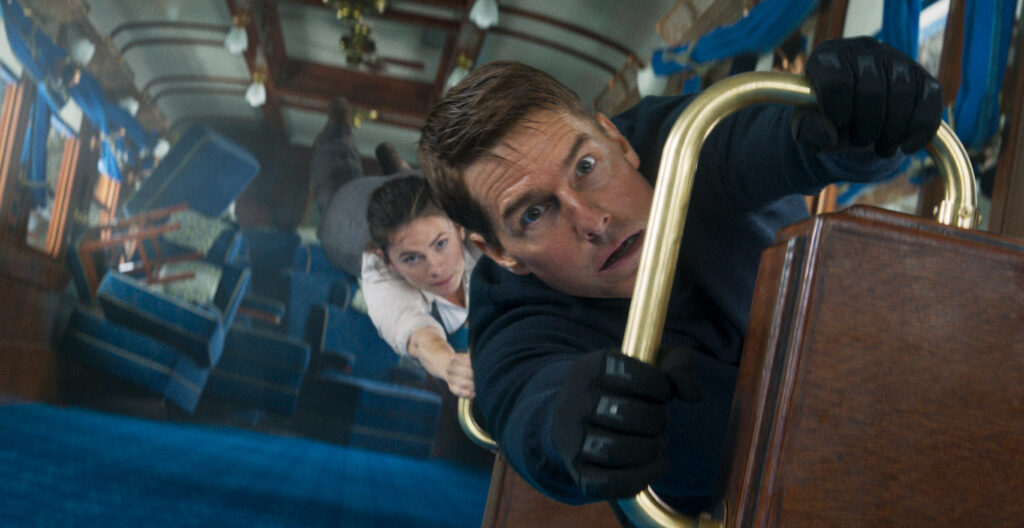
Hayley Atwell and Tom Cruise in “Mission: Impossible – Dead Reckoning Part One” (Photo courtesy of Paramount Pictures)

“Mission: Impossible – Dead Reckoning Part One”

Directed by Christopher McQuarrie

Some language in Italian and French with subtitles

Culture Representation: Taking place from various parts of the world, the action film “Mission: Impossible – Dead Reckoning Part One” features a predominantly white cast of characters (with some African Americans, Latinos and Asians) who are connected in some way with government operations or criminal activities.

Culture Clash: IMF (International Mission Force) rogue agent Ethan Hunt is once again on a mission to save the world from deadly villains. 

Culture Audience: Besides appealing the obvious target audience of “Mission: Impossible” fans, “Mission: Impossible – Dead Reckoning Part One” will appeal primarily to people who are fans of Tom Cruise and spy thrillers with death-defying action stunts.

Pom Klementieff in “Mission: Impossible – Dead Reckoning Part One” (Photo courtesy of Paramount Pictures)

By now, most movie fans know that the “Mission: Impossible” movie series, starring Tom Cruise as IMF rogue agent Ethan Hunt, will have a lot of amazing stunts and action sequences. Cruise famously does his own principal stunts for these films. The “Mission: Impossible” movie series (based on the TV series of the same name) began in 1996. Instead of slowing down with these movies, Cruise seems determined to do even more outrageous stunts. In “Mission: Impossible – Dead Reckoning Part One,” the stakes get even higher when Ethan and all the main characters face the challenge of an entity that can create false images and alter people’s perceptions of reality.

As already shown in the movie’s trailer, Cruise’s biggest stunt in the film is driving custom-made Honda CRF 250 off of Norway’s Helsetkopen mountain, where he fell 4,000 feet into a ravine before opening his parachute about 500 feet from the ground. There are more stunts (some using obvious visual effects) involving planes, trains and automobiles. The movie also introduces a few intriguing new characters who will be appearing in more than one “Mission: Impossible” movie.

Directed by Chistopher McQuarrie, “Mission: Impossible – Dead Reckoning Part One” is the seventh film in the “Mission: Impossible” movie series and the third consecutive “Mission: Impossible” film that McQuarrie has directed, following 2015’s “Mission: Impossible – Rogue Nation” and 2018’s “Mission: Impossible – Fallout.” Cruise and McQuarrie are the producers of “Mission: Impossible – Dead Reckoning Part One,” which was written by McQuarrie and Erik Jendresen. It’s the same writing, directing and producing team behind “Mission: Impossible – Dead Reckoning Part Two,” which is set for release in 2024.

“Mission: Impossible – Dead Reckoning Part One” is the most ambitious of the “Mission: Impossible” movie series so far but in some ways is also the most ridiculous. In trying so hard to outdo its predecessors, the movie gets into cartoonish territory when characters don’t get any injuries in crashes and explosions that would kill or maim most people in real life. Some of the plot also gets too convoluted. Despite these flaws, what a thrill ride it is. This action-packed and suspenseful film mostly earns its total running time of 156 minutes, even though “Mission: Impossible – Dead Reckoning Part One” still could’ve benefited from tighter film editing. (For example, the movie’s opening credits don’t happen until 28 minutes into the film.)

“Mission: Impossible – Dead Reckoning Part One” opens with a Russian submarine getting blown up after getting hit with a torpedo. The submarine’s video monitors and other computer systems were hacked by a mysterious entity that can create illusions to confuse the submarine’s occupants. These illusions caught the occupants off guard, which led to the torpedo destroying the submarine and everyone inside.

This all-powerful hacking tool is essentially on a computer flash drive, which is called a key. It should come as no surprise that every major terrorist group and every major governmental superpower is looking for this key, which is being sold to the highest bidder. Ethan works for a secretive government operation called International Mission Force (IMF), which gives him a new task in each “Mission: Impossible” movie. In “Mission: Impossible – Dead Reckoning Part One” Ethan and his team have been tasked with finding the key before it gets into the wrong hands.

Ethan agrees to accept this mission, but he disagrees with the U.S. Director of National Intelligence, whose last name is Denlinger (played by Cary Elwes), who is also the head of a mysterious spy group called The Community. Denlinger (who is based in Washington, D.C.) thinks the U.S. government should be able to control this entity. Ethan thinks that the entity should be destroyed. Denlinger doesn’t know that IMF exists until he meets Ethan.

For this mission, Ethan is once again joined by his two trusty sidekicks who are computer technology experts and hackers: Luther Stickell (played by Ving Rhames), who is calm and logical, is Ethan’s oldest friend. Luther’s nicknames are Phinneas Freak and The Net Ranger. Benji Dunn (played by Simon Pegg), who is jumpy and neurotic, often follows orders from Luther.

Returning to the “Mission: Impossible” franchise are mercenary Ilsa Faust (played by Rebecca Ferguson), who has complicated relationship with Ethan; Eugene Kittridge (played by Henry Czerny), who was in 1996’s “Mission: Impossible” movie and who is now the director of the CIA; and the morally ambiguous Alanna Mitsopolis (played by Vanessa Kirby), also known as The White Widow. There’s a very memorable sequence on a train that involves Alanna/The White Widow.

During this globetrotting hunt, Ethan and his team go to various places, including the Arabian Desert, Abu Dhabi, Amsterdam, Rome and the Austrian Alps. They are being hunted by operatives from the U.S. government agency Clandestine Services. A Clandestine Services operative named Briggs (played by Shea Whigham) is leading this hunt. Briggs is a gruff taskmaster who likes to bend the rules, while his relatively new subordinate Degas (played by Greg Tarzan Davis) is very by-the-book and wants to follow the established protocol.

The movie’s chief villain is a mysterious agitator named Gabriel (played by Esai Morales), who has his ruthless sidekick Paris (played by Pom Klementieff) do a lot of his dirty work. Ethan and Gabriel share a past that has to do with a woman named Marie (played by Mariela Garriga), with this shared past explaining some of Gabriel’s motivations. Paris is the one who is most often seen trying to kill Ethan and a cunning thief named Grace (played by Hayley Atwell), who becomes Ethan’s reluctant and often untrustworthy accomplice in this race to get possession of the key.

One of the ways that “Mission: Impossible – Dead Reckoning Part One” stands apart from so many other action films is that it doesn’t play into tired stereotypes of having a principal cast of people who mostly under the age of 40. Likewise, “Mission: Impossible – Dead Reckoning Part One” also defies that action movie stereotype of having just one leading actress (usually someone’s love interest in the movie) among a slew of male leading actors. In “Mission: Impossible – Dead Reckoning Part One,” there are four strong women who have prominent roles in the movie.

Klementieff is a standout among “Mission: Impossible” villains. Her menacing Paris character is in stark contrast to the sweet-natured outer-space alien Mantis that Klementieff played in Marvel Studios’ superhero “Guardians of the Galaxy” blockbusters. In many ways, Paris outshines Gabriel, since Gabriel is more of a psychological villain than someone who can barrel through streets in a high-speed car chases or cause mayhem with an arsenal of weapons.

Atwell also holds her own in the action scenes, although some viewers might find Grace’s intentionally duplicitous personality a little annoying. Rhames and Pegg continue their sometimes-amusing rapport as Luther and Benji. Cruise does some of his best stunt work ever in the movie. If stunt work had a category at the Academy Awards, then Cruise would be a certain nominee if not winner for “Mission: Impossible – Dead Reckoning Part One.” It’s a breathtaking thriller that delivers beyond expectations for action scenes and spy intrigue. However, the “Mission: Impossible” filmmakers need to remember to have some of these action scenes more grounded in the reality of human frailties and the realistic consequences of being in these death-defying situations.

Paramount Pictures will release “Mission: Impossible – Dead Reckoning Part One” in U.S. cinemas on July 12, 2023, with sneak previews on July 10, 2023.
Review: ‘Scream VI,’ starring Melissa Barrera, Jenna Ortega, Mason Gooding, Jasmin Savoy Brown, Courteney Cox, Hayden Panettiere and Dermot Mulroney

March 8, 2023

by Carla Hay

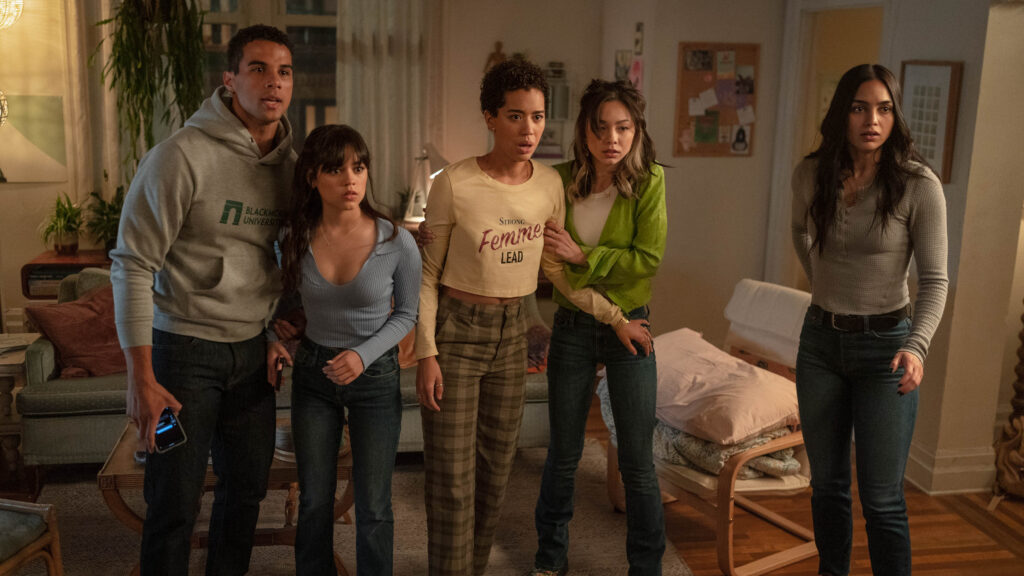
Mason Gooding, Jenna Ortega, Jasmin Savoy Brown, Devyn Nekoda and Melissa Barrera in “Scream VI” (Photo courtesy of Paramount Pictures)

“Scream VI”

Directed by Matt Bettinelli-Olpin and Tyler Gillett

Culture Representation: Taking place in New York City, the horror film “Scream VI” features a racially diverse cast of characters (Latin, white African-American) representing the working-class and middle-class.

Culture Clash: The four main survivors of the serial killings in the 2022 movie “Scream” have relocated from the fictional Woodsboro, California, to New York City, where they are plagued by a new set of Ghostface Killer murders. 

Culture Audience: “Scream VI” will appeal primarily to people who are fans of the “Scream” franchise and horror movie sequels that make several references to its preceding movies.

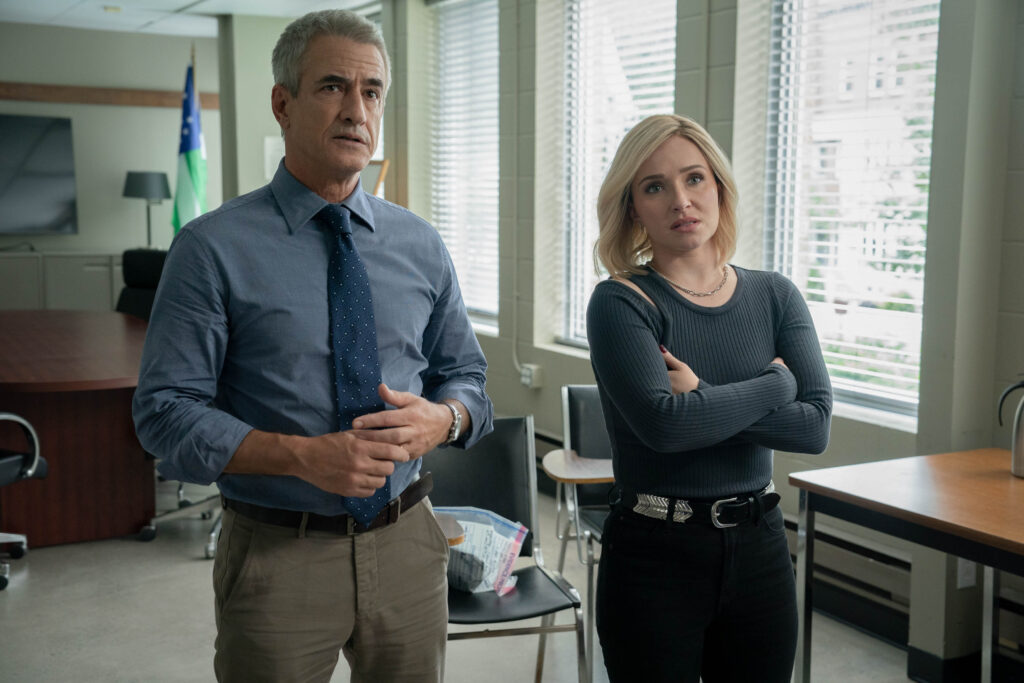
Dermot Mulroney and Hayden Panettiere in “Scream VI” (Photo courtesy of Paramount Pictures)

“Scream VI” has further cemented the “Scream” franchise as an intentionally comedic self-parody, but this entertaining movie doesn’t skimp on the horror thrills. The movie’s best scenes make up for the far-fetched revelations in the last 15 minutes. As the sixth movie in the “Scream” series, “Scream VI” is best appreciated by people who’ve seen all the previous “Scream ” movies, because there are many jokes and references to these predecessor films. However, if it’s not possible for someone to see all the previous “Scream” movies, then the 1996 “Scream” film (the one that started the series) and the 2022 “Scream” film are the two most essential moves to watch before seeing “Scream VI.”

The 2000 movie “Scream 3” added a movie-within-a-movie storyline, by creating a fictional horror movie series called “Stab,” which was inspired by what happened in the first “Scream” movie. It’s helpful, but not essential, to watch “Scream 3” before seeing “Scream VI.” What’s most important for viewers of “Scream VI” to know is that “Scream VI” gives a summary of all the revealed identities of the Ghostface Killer (who wears a creepy ghostface mask and a black hooded robe), who is a different person or people in each “Scream” movie. If you didn’t know their identities before seeing “Scream VI,” then the movie spoils all that information.

“Scream VI” reunites directors Matt Bettinelli-Olpin and Tyler Gillett with screenwriters James Vanderbilt and Guy Busick, who had the same roles for the 2022 “Scream” movie. Most of the same producers from 2022’s “Scream” are also part of the “Scream VI” team. “Scream VI” picks up one year after the events of the 2022 “Scream” movie, which took place mainly in the fictional Woodsboro, California. Four of the survivors of the Ghostface Killer murders and mayhem that happened in 2022’s “Scream” are trying to put this trauma behind them, and have relocated to New York City. (“Scream VI” was actually filmed in Montreal.)

Samantha “Sam” Carpenter (played by Melissa Barrera), who is 25 or 26, is in therapy but finds it difficult to open up to her therapist Dr. Christopher Stone (played by Henry Czerny) until a pivotal scene that’s a helpful summary for anyone who didn’t see 2022’s “Scream.” When Sam isn’t busy with her two jobs, she’s being overprotective of her younger half-sister Tara Carpenter (played by Jenna Ortega), who 18 years old and a first-year student at the fictional Blackmore University. Tara and Sam live in the same apartment building.

The other two people in this tight-knit foursome are twins Mindy Meeks-Martin (played by Jasmin Savoy Brown) and Chad Meeks-Martin (played by Mason Gooding), who are also first-year students at Blackmore University. The uncle of Mindy and Chad was Randy Meeks (played by Jamie Kennedy), whose fate is shown in 1997’s “Scream 2.” Mindy is a “Stab” trivia fanatic, while Chad (who was a popular athlete in high school) has a not-so-secret crush on Tara. Chad has come up with a nickname for this quartet of survivors: The Core Four. It’s a name that the other three think is corny, and the movie shows whether or not they go along with Chad’s enthusiasm to give themselves this nickname.

Three of the new characters that are introduced in “Scream VI” have gotten close to the Core Four. Tara’s free-spirited roommate Quinn Bailey (played by Liana Liberato) is having fun dating various men, but her sex life sometimes gets in the way of Tara wanting some peace and quiet. Chad’s roommate is Ethan Landry (played by Jack Champion), a socially awkward misfit who wants to be accepted by Chad and his friends. Anika Kayoko (played by Devyn Nekoda) is dating openly queer Mindy, in a fairly new romance.

As several scenes in the movie show, Tara is resentful of Sam’s hovering presence, because Tara wants to be treated like an independent adult, not a helpless child. Tara and Sam also disagree about how to cope with what happened to them in Woodsboro. Tara refuses to go to therapy, she doesn’t like to talk about what happened in Woodsboro, and she thinks Sam is living too much in the past. Sam thinks it’s detrimental for Tara to avoid getting therapy. Meanwhile, Sam becomes the subject of untrue gossip spread on the Internet that she was really the Ghostface Killer in Woodsboro.

To its credit, “Scream VI” is less cluttered with characters than 2022’s “Scream.” The movie’s opening scene continues the “Scream” tradition of someone being murdered by the Ghostface Killer, who has called that victim on the phone. The person who gets slaughtered in the opening scene is Laura Crane (played by Samara Weaving), an associate professor of film studies at Blackmore University. She teaches horror movies as part of her curriculum.

On the night that Laura is murdered, it’s close to Halloween, and many people are dressed up in Halloween costumes for parties and other Halloween festivities. Laura is not in a Halloween costume when she is seen at a bar, talking on the phone with what she thinks is her blind date for the night. The date is really a Ghostface Killer.

The “date” pretends to be lost and asks Laura to step outside the bar into an alley where he says he is. While she’s on the phone, the caller’s tone turns menacing as he snarls, “You teach a class about slashers, and you still walk into a dark alley alone.” Needless to say, Laura doesn’t last long in this movie.

Without giving away too much information, it’s enough to say that it’s revealed early on in the movie that Sam and Tara are the main targets for the Ghostface Killers. It’s also revealed that whoever is behind the murders that happen also wants to finish the “Stab” tribute movie that was started by Richie Kirsch (played by Jack Quaid), who was Sam’s boyfriend in 2022’s “Scream,” but (spoiler alert for people who haven’t seen 2022’s “Scream”), Richie turned out to be the Ghostface Killer, and Sam killed him in self-defense.

Some other characters who are part of the “Scream VI” are Blackmore University student Jason Carvey (played by Tony Revolori); Quinn’s father Detective Bailey (played by Dermot Mulroney), who is a police officer who investigates homicides; and David Brackett (played by Josh Segarra), an attractive neighbor who lives in the apartment building directly across from the apartment building where Sam, Tara and Quinn live. Sam and Tara (who has given David the nickname Hot Boy) can see directly into David’s apartment and vice versa.

“Scream VI” also has the return of ambitious and arrogant TV news journalist Gale Weathers (played by Courteney Cox), who has written a book about the events that happened in 2022’s “Scream.” Tara and Sam are furious about this book not only because Gale had broken her promise not to write a book about what happened but also because the book has unflattering descriptions of Tara and Sam.

Also making her return to “Scream VI” is Kirby Reed (played by Hayden Panettiere), who was the “final girl” in 2011’s “Scream 4.” Kirby, who is now 30 years old and an agent for the FBI, arrives in New York City to investigate this new set of Ghostface Killer murders. Kirby was a senior at Woodsboro High School when Sam was a freshman at the school. As for other familiar characters from the “Scream” franchise, Sidney Prescott (played by Neve Campbell), the original target of the Ghostface Killer, is not in “Scream VI” but is briefly mentioned as being in hiding in a safe place. Campbell went public about declining an offer to be in “Scream VI” because she felt that the offered salary was too low for her.

“Scream VI” delves more than 2022’s “Scream” did into the psychological fallout of all of these killings. “Scream VI” does a fairly good job at contrasting the ways that Sam and Tara feel about therapy, without passing judgment on either character. As already revealed in 2022’s “Scream,” Sam and Tara are the children of the late Billy Loomis (played by Skeet Ulrich), who was one of killers in the first “Scream” movie. As shown in 2022’s “Scream” and “Scream VI,” there are big indications that Sam is worried that she could have inherited a desire to become a murderer. “Scream VI” has more exploration of how Sam’s suspected “dark side” is affecting her.

The movie’s scenes with Ghostface Killer on a rampage are among the best of the “Scream” franchise. A standout scene is one that involves a ladder between buildings. Another scene that’s suspenseful is when Ghostface Killer goes after Tara and Sam in a convenience store. Meanwhile, there is plenty of sarcastic wisecracking (especially from Libby) about horror movie clichés, who the likely suspects are, and who’s most likely to be killed next. All of these self-referential jokes in “Scream VI” are sometimes to the detriment of the story. The movie doesn’t take itself too seriously, but it expects viewers to know a lot about the “Scream” movies, in order to get most of the jokes.

Barrera and Ortega, who are very believable as sisters with a love/hate relationship, are excellent additions to the “Scream” franchise. Mulroney really hams it up and delivers some of his lines in ways that are pure camp. Panettiere also gives a good performance as “all grown up now” Kirby. Cox doesn’t really do anything new with the Gale character, but she performs well in her action scenes. Savoy Brown is a sassy scene stealer with the Libby character, who has much better character development and funnier lines of dialogue than in 2022’s “Scream.”

There’s no doubt that “Scream VI” is an unapolgetic “fan service” movie that isn’t particularly accommodating to newcomers to the “Scream” movie franchise. And there isn’t anything innovative about the plot reveals, which might remind “Scream” fans of a certain previous “Scream” movie. “Scream VI” is not the best movie in the “Scream” franchise, but “Scream VI” delivers exactly what it intends: horror entertainment that serves up plenty of gore with self-deprecating laughs.

Paramount Pictures will release “Scream VI” in U.S. cinemas on March 10, 2023.

Copyright 2017-2025 Culture Mix
CULTURE MIX