
Review: ‘Father Mother Sister Brother,’ starring Tom Waits, Adam Driver, Mayim Bialik, Charlotte Rampling, Cate Blanchett, Vicky Krieps, Sarah Greene Indya Moore and Luka Sabbat

October 8, 2025

by Carla Hay

Vicky Krieps, Cate Blanchett and Charlotte Rampling in “Father Mother Sister Brother” (Photo courtesy of MUBI)

“Father Mother Sister Brother”

Directed by Jim Jarmusch

Culture Representation: Taking place in the United States, Ireland, and France, the dramatic film “Father Mother Sister Brother” features a predominantly white cast of characters (with two African Americans) representing the working-class and middle-class.

Culture Clash: In this anthology film with three separate stories, various family members visit each other in reunions that have certain levels of tension.

Culture Audience: “Father Mother Sister Brother” will appeal mainly to people who are fans of the movie’s headliners, filmmaker Jim Jarmusch, and low-key independent films about families.

Luka Sabbat and Inya Moore in “Father Mother Sister Brother” (Photo courtesy of MUBI)

Viewers who know in advance that “Father Mother Sister Brother” is more of a character study than a plot-driven film will be more likely to appreciate this talkative and quirky drama. The movie has emotionally authentic depictions of family relationships. The storytelling is an uneven hodgepodge, but the talented cast’s performances are worth watching.

Written and directed by Jim Jarmusch, “Father Mother Sister Brother” had its world premiere at the 2025 Venice International Film Festival, where it won the Golden Lion, the festival’s top prize. “Father Mother Sister Brother” had its North American premiere at the 2025 New York Film Festival. The movie was filmed on location in three separate countries for each story: the United States, Ireland, and France.

“Father”

The first story, titled “Father,” features two siblings named Jeff (played by Adam Driver) and Emily (played by Mayim Bialik) sharing a car ride on the way to visit their unnamed widowed father (played by Tom Waits) on a winter’s day somewhere in New Jersey. The siblings’ widowed father lives in isolation in a small, remote house near a lake. Jeff (whose occupation is not stated in the movie) and Emily (who works in academia) don’t see their eccentric father very often.

Jeff and Emily don’t see each other on a regular basis either, but they keep in touch by phone or email. Therefore, these family members’ conversations with each other are often awkward—a mixture of polite small talk and judgmental remarks. The death of the siblings’ mother (when this death happened s never stated in the movie) seems to have made the siblings and their father more distant from each other.

Emily has a noticeably smug attitude with Jeff because she seems to think her life is “perfect” (married with kids, good job, comfortable lifestyle), compared to the life Jeff, who divorced, has no children, and is still emotionally struggling after his divorce. In the car ride on the way to their father’s house (Jeff is driving), Emily asks Jeff where their retired father gets money because she’s not sure if he’s eligible for Social Security benefits due to his long history of “not having a real job.”

Jeff replies, “I’m not completely sure. He always seems to have projects.” It leads to Emily asking Jeff if he’s sent money to their father recently. Jeff admits that he occasionally sends money to their father byut only because their father said he needed money for emergency repairs, such a fixing the house’s well, a septic disaster, and a caved-in wall. Jeff also says that their father told Jeff that the father can barely pay his for electricity and phone bills.

Emily comments that her husband Harold doesn’t like that Jeff sends money to the siblings’ father. Jeff admits that his ex-wife Cheryl didn’t like it either. Emily remarks, “That’s probably why she divorced you.” Emily seems to immediately regret saying this hurtful comment and tells Jeff that she’s sorry.

Before the siblings arrive, their father is seen quickly trying to tdy up his cluttered house as much as he can. He gives the impression that he like to hold on to a lot of old possessions.: His furnishings are outdated, and he prefers use a beat-up looking landline phone instead of a cell phone. When the siblings are at the house, the siblings and father greet each other warmly, but the conversation is strained.

The father’s mental health is alluded to when Jeff asks if the father if he’s had any recent “episodes” like the “episode” that the father had at the funeral of the siblings’ mother. The father says no. Jeff replies, “You handled it admirably.” The father mentions that he’s not taking any medication, but he adds, “I take a drink now and then.”

Emily notices that the father is wearing a Rolex watch, but he insists that it’s a fake Rolex. The father is fixated on serving water to drink for the three of them. When the father wants to make a celebratory toast with the glasses of water, Jeff asks if water can really be used to give a toast.

“Father” is the most comedic of the three stories, mainly because of Waits’ performance, where he plays his gravelly-voiced, disheveled persona to the hilt. “Father” is also the most intriguing of the three stories because of what happens in the last five minutes. It’s enough to say that all is not what it seems with one of these family members.

“Mother”

“Mother,” the second story, takes place in the Irish capital of Dublin. It’s another scenario where two siblings meet up with an elderly parent in the parent’s home. In this situation, the three family members are an unnamed single mother (played by Charlotte Rampling), her prim daughter Timothea (played by Cate Blanchett), and Timothea’s free-spirited younger sister Lilith (played by Vicky Krieps). All three women have gathered for their annual tradition of having tea with this dignifed and formal mother in her stately, well-kept home.

It’s mentioned that the mother talks on the phone with Timothea and Lilith about once every few weeks. Timothea calls more often than Lilith. Timothea was recently appointed to a lofty position at a historical society. It’s not stated what Lilith does for a living.

Timothea and Lilith drove in separate cars to their mother’s home. Timothea was driving her car but had some car trouble and called to tell her mother why Timothea was running late. Lilith got a car ride from a woman named Jeanette (played by Sarah Greene), who is Lilith’s lover, but Lilith doesn’t want Lilith’s mother to know. Lilith asks Jeanette to pretend that Jeanette is Lilith’s Uber driver.

Jeanette seems slightly amused and not offended, which is an indication that she and Lilith haven’t been dating each other for very long or have the type of casual relationship that Jeanette doesn’t care if Lilith’s mother is deceived about the true nature of the relationship. Later, Lilith tells her mother that she’s been dating a man named Richard but doesn’t want to marry him. “I’m not sure I want to be tied to a man,” says Lillith.

Unfortunately, “Mother” is the weakest of the three stories because it mostly shows a dull conversation between the mother, Lilith and Timothea. This is a family who also doesn’t talk about whatever issues they have—at least not in this visit. And so, viewers can only speculate why Lilith is lying about Jeanette to Lilith’s mother. The “Mother” story is the least interesting of the three because it reveals very little about the characters by the time this story ends.

“Sister Brother”

“Sister Brother,” the third story in the movie, is the most sentimental and sweet-natured. It takes place in the French capital of Paris and shows twins Billy (played by Luka Sabbat) and Skye (played by Indya Moore) going to the apartment where their recently deceased mother used to live and sorting through her possessions. The conversations between Billy and Skye also start off with polite small talk, but their discussions end up going emotionally deeper than the conversations in “Father” and “Mother.”

Based on these conversations, the siblings grew up in a non-traditional family who allowed Billy and Skye to express themselves freely. The twins agree that they’re glad they didn’t grow up in a conventional household. It’s a “slice of life” story where not much happens except the siblings reminiscing about their past and talking about their current lives.

The favorite song of the twins’ mother was Classics IV’s 1967 hit “Spooky.” Annika Henderson’s cover version of “Spooky” is played in the beginning and end of “Father Mother Sister Brother,” like lovely book ends. The movie also has a throughline of scenes that feature skateboarders rushing past the main characters in each story.

The film’s cinematography by Frederick Elmes and Yorick Le Saux often features several overhead shots to draw attention to attractive locations or props. For example, in the “Mother” story, there are multiple “bird’s eye view” shots of the tea and pastries that are laid out on the table for the family gathering. The musical score by Jarmusch and Henderson is both whimsical and dreamy.

“Father Mother Sister Brother” is not the type of movie that is meant to overwhelm or dazzle viewers. The performances are good, but not outstanding. It’s an artsy “hangout” film where viewers get a brief glimpse into the lives of some unique characters and some of their family dynamics. “Father Mother Sister Brother” invites viewers to think about not just what’s said but what’s left unsaid, which is a lot more like real life than a movie that shows and tells viewers exactly what viewers should think.

MUBI will release “Father Mother Sister Brother” in select U.S. cinemas on December 24, 2025.

Review: ‘Aquaman and the Lost Kingdom,’ starring Jason Momoa, Patrick Wilson, Yahya Abdul-Mateen II, Amber Heard, Nicole Kidman, Dolph Lundgren and Randall Park

December 22, 2023

by Carla Hay
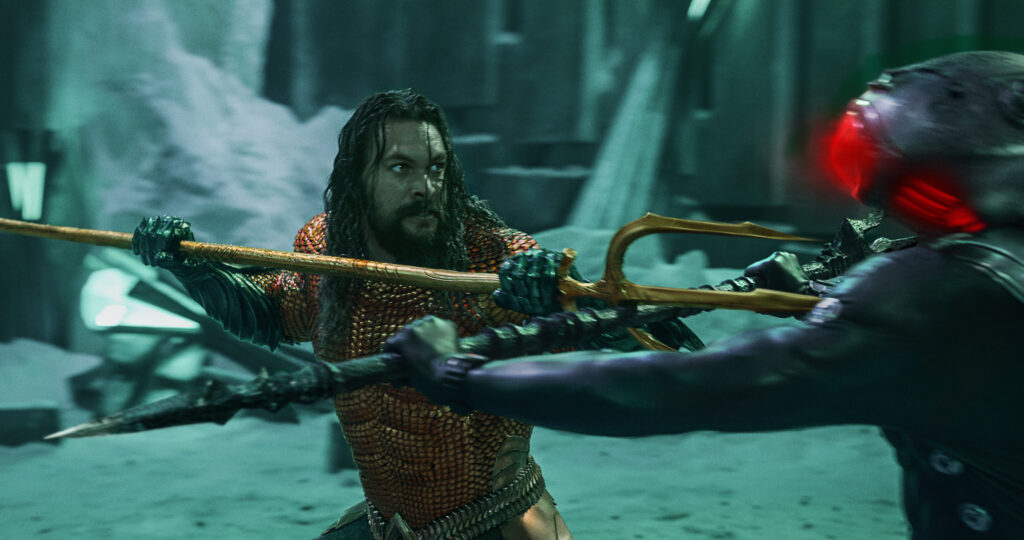
Jason Momoa and Yahya Abdul-Mateen II in “Aquaman and the Lost Kingdom” (Photo courtesy of Warner Bros. Pictures)

“Aquaman and the Lost Kingdom”

Directed by James Wan

Culture Representation: Taking place above and below the oceans of Earth, the superhero action film “Aquaman and the Lost Kingdom” (based on DC Comics characters) features a racially diverse cast of characters (Asian, white and African American) portraying superheroes and regular human beings.

Culture Clash: Ocean-dwelling superhero Aquaman, also known as Arthur Curry, battles Black Manta, a villain who wants to control the world through environmental terrorism. 

Culture Audience: “Aquaman and the Lost Kingdom” will appeal primarily to people who are fans of star Jason Momoa and movies based on DC Comics, but the movie is inferior in every way to its 2018 predecessor, “Aquaman.”
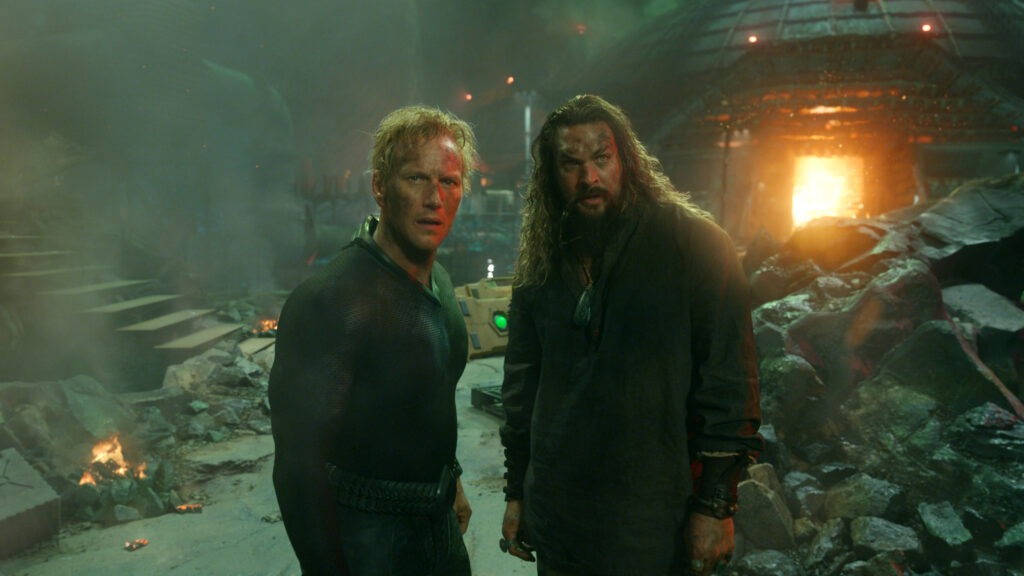
Patrick Wilson and Jason Momoa in “Aquaman and the Lost Kingdom” (Photo courtesy of Warner Bros. Pictures)

Just like toxic seaweed, “Aquaman and the Lost Kingdom” is a tangled and rotten mess of a superhero film with uneven visual effects, cringeworthy dialogue and a sloppy plot. The filmmakers mistakenly think that Aquaman’s charisma is defined by “surf dude” whooping and hollering. It all becomes very predictable and tiresome, especially when the story is so weak and becomes unnecessarily convoluted in order to stretch the movie’s screen time.

Directed by James Wan and written by David Leslie Johnson-McGoldrick, “Aquaman and the Lost Kingdom” (whose release was delayed multiple times) is supposed to be the last movie in the DC Extended Universe (DCEU), which began with 2013’s “Man of Steel,” a Superman origin story. Movies and TV shows based on DC Comics are going through a major overhaul under the leadership of DC Studios co-chairs/co-CEOs James Gunn and Peter Safran, who were appointed to these positions in 2022. The first “Aquaman” movie, released in 2018, is the highest-grossing DC Comics-based movie of all time, with worldwide ticket sales of about $1.15 billion.

Many of the filmmakers behind “Aquaman” are also behind “Aquaman and the Lost Kingdom,” including director Wan, screenwriter Johnson-McGoldrick, producer Rob Cowan, cinematographer Don Burgess, production designer Bill Brzeski, film editor Kirk Morri, music composer Rupert Gregson-Williams and music supervisor Michelle Silverman. Most of the headlining cast members from “Aquaman” are also in “Aquaman and the Lost Kingdom.” What went wrong?

“Aquaman and the Lost Kingdom” stumbles from the beginning with a corny montage sequence of Arthur Curry/Aquaman (played by Jason Momoa) rescuing a ship that’s being invaded by pirates, and then explaining that he’s now a husband and father who’s the king of the secret underwater kingdom of Atlantis. “That’s right,” Arthur says proudly. “I’m the king of frickin’ Atlantis.”

Arthur likes having this royal title, but he says he hates doing government work that comes with the job, such as attending council meetings, because he doesn’t think it’s any fun. The montage includes Arthur/Aquaman looking like he’s about to fall asleep from boredom at one of these meetings. Aquaman is supposed to be an adult (who looks like a middle-aged human), but he often talks like he’s a teenager who’s become a legal adult and is resentful about having certain adult responsibilities.

Arthur’s wife Mera (played by Amber Heard) gets very choppy film editing in the movie. She’s almost non-existent in the early scenes showing Arthur taking care of baby son Arthur Jr., while Arthur’s supportive father Tom Curry (played by Temuera Morrison) lives in the same household. Adding to the movie’s unimaginative and juvenile comedy, the baby urinates in Arthur’s face more than once in diaper-changing scenes.

At several points in the movie, Arthur looks like he’s a single father, even though he speaks lovingly of his wife, who is nowhere to be seen without explanation when Arthur is spending time with his family. The off-screen controversy over Heard and ex-husband Johnny Depp might or might not have played a role in how Heard is edited in the movie. Many of Depp’s fans petitioned Warner Bros. Pictures to cut her out of the movie because of issues related to the ex-couple’s legal disputes.

Meanwhile, villain David Kane (played Yahya Abdul-Mateen II), who has the alter ego Black Manta, is hell-bent on getting revenge on Aquaman, who was responsible for the death of David’s father in the first “Aquaman” movie. In “Aquaman and the Lost Kingdom,” David is seen scowling while his Black Manta suit is propped nearby. He fumes, “Every day I don’t fix my power suit is another day that Aquaman gets to live.”

David has continued in his father’s profession of being a deep-sea diver who hunts for treasure. He ends up rescuing Dr. Stephen Shin (played by Randall Park), a marine biologist who has survived a deadly attack from a mysterious giant creature with tentacles during an underwater exploration near Antarctica. (“Aquaman and the Lost Kingdom” was actually filmed in Hawaii.) This creature has killed some of the people in Stephen’s team.

Stephen (who is stereotypical science geek character) is grateful to David for saving his life, but it turns out that David is forcing Stephen and the rest of the marine biologist team to work with David. Unbenkownst to Stephen, David has found a magical Black Trident that has allowed David to communicate with this demonic-like creature. The creature has told David: “Free me from my prison, and I will grant you the strength to kill the man who murdered your father.”

This creature is Kordax (played by Pilou Asbæk), the leader of Necrus, which is also called the Lost Kingdom of Atlantis. There are seven kingdoms of Atlantis: Necrus, Atlantis, Xebel, Kingdom of the Fishermen, Kingdom of the Trench, Kingdom of the Brine and Kingdom of the Deserters. David finds out that the Black Trident needs a certain fuel to reach its full power.

Five months later, Arthur/Aquaman appears before the Council of Atlantis, whose leader Karshon (played by Indya Moore) advises him that the people in the surface world have been poisoning the atmosphere of Atlantis through irresponsible environmental pollution. (It has something do with David stealing a stash of orichalcum, a dangerous metal that was locked up in Atlantis.) Arthur thinks it’s time for Atlantis to reveal itself to the people above the water. However, he gets resistance from council members who think that Atlantis should remain a secret from humans.

The rest of “Aquaman” becomes a mishmash of very fake-looking chase/fight scenes, climate change messaging, and a family reunion with a lot of awkward banter. And there’s some nonsense about Curry family blood that gets thrown into the story in a desperate attempt to make the plot look more interesting. For the movie’s action scenes, “loud” and “cluttered” don’t add up to being “exciting” or “interesting.”

The family reunion part of the story involves Arthur’s estranged younger half-brother Orm (played by Patrick Wilson), the former king of Atlantis who was Arthur’s enemy in “Aquaman.” Orm (who also goes by the name Ocean Master) is a dirty, disheveled and emaciated prisoner when Arthur breaks him out of prison to help in the fight against Black Manta and Kordax. But in one of the movie’s phoniest-looking scenes, Orm magically “cleans up” and transforms into a chiseled hunk as soon as he submerges himself in some water on a beach.

Also joining the fray in this family reunion are Atlanna (played by Nicole Kidman), the mother of Arthur and Orm. Atlanna’s regal personality from the first “Aquaman” movie seems to be washed away in “Aquaman and the Lost Kingdom,” which makes her as bland and bland can be. The same can be said for Mera, whose fiery personality has been replaced with being a generic sidekick who helps out in the fight scenes. Mera’s stern father, King Nereus (played by Dolph Lundgren), is also part of Aquaman’s fight team. The main purpose of King Nereus in the movie is to be the person on the team who is most suspicious that Orm will be helpful.

All of these characters would be enough for a superhero movie. But “Aquaman and the Lost Kingdom” doesn’t trust that would be enough to entertain audiences. And so, there are myriads of creatures that populate the movie as distractions that don’t do much to further the plot. Topo, the drum-playing octopus, makes a return to help Aquaman, who doesn’t really want this pet tagging along, but his mother Atlanna insists that Topo accompany Arthur. Arthur/Aquaman acts like a teenager who doesn’t want to babysit the family dog. Kingfish (voiced by Martin Short) is a mutant sea creature who is the sarcastic leader of underwater pirates that have conflicts with residents of Atlantis.

“Aquaman and the Lost Kingdom” has some striking visuals in the Octobots: vehicles with octopus-like metal arms that are used by Black Manta and his goons. However, even with these inventions and villainous armies doing battle against the heroes, none of it looks truly terrifying during these fight scenes. It all looks very busy, as if the filmmakers thought that throwing up a lot of computer-generated imagery (CGI) on screen is enough to create suspense.

The acting performances in “Aquaman and the Lost Kingdom” go through the motions and aren’t anything special. Momoa looks like he’s trying inject some playful energy into “Aquaman and the Lost Kingdom,” but it just dilutes the action scenes to make Aquaman into a goofball with muscles. It’s similar to how filmmaker Taika Waititi’s version of “god of thunder” Thor in Marvel movies loses the royal aura that the character had in the comic books to become a walking comedy machine that tells jokes that aren’t always funny.

Don’t expect there to be any good mid-credits or post-credits scenes in “Aquaman and the Lost Kingdom.” The mid-credits scene is meant to be amusing, but it will likely nauseate some viewers because it depicts someone eating a cockroach. There is no end-credits scene, which wouldn’t really help anyway, because this movie doesn’t have any story ideas that are fresh or surprising. “Aquaman and the Lost Kingdom” isn’t the worst superhero movie based on DC Comics, but compared to the first “Aquaman” movie, it’s like a crowd-pleasing cruise that has become a shipwreck.

Warner Bros. Pictures released “Aquaman and the Lost Kingdom” in U.S. cinemas on December 22, 2023.


Review: ‘Escape Room: Tournament of Champions,’ starring Taylor Russell, Logan Miller, Indya Moore, Holland Roden, Thomas Cocuerel and Carlito Olivero

July 14, 2021

by Carla Hay

Taylor Russell, Logan Miller, Holland Roden, Indya Moore and Thomas Cocquerel in “Escape Room: Tournament of Champions” (Photo courtesy of Sony Pictures)

“Escape Room: Tournament of Champions”

Directed by Adam Robitel

Culture Representation: Taking place in New York City, the horror film “Escape Room: Tournament of Champions” features a mostly white cast of characters (with some African Americans and Latinos) representing the middle-class.

Culture Clash: Six people are trapped by diabololical forces in an elaborate escape room, where they are forced to solve different puzzles in a limited time, or else they might die.

Culture Audience: “Escape Room: Tournament of Champions” will appeal primarily to people who saw 2019’s “Escape Room” and to people who don’t mind watching silly horror movies that have nonsensical plots.

Holland Roden, Carlito Olivero, Thomas Cocquerel, Indya Moore, Taylor Russell and Logan Miller in “Escape Room: Tournament of Champions” (Photo courtesy of Sony Pictures)

What’s really escaped from “Escape Room: Tournament of Champions” is good filmmaking. Viewers will feel trapped in this badly made horror sequel, which consists mostly of idiotic scenes of people yelling at each other while they unrealistically solve convoluted puzzles in a very short period of time or else they could die. In real life, people who are panicking this much wouldn’t be able to have the near-psychic powers that these trapped characters seem to have when they quickly make over-the-top, elaborate deductions. The so-called “problem solving” in the movie doesn’t feel earned, because it looks exactly like what it is: overly staged nonsense from a poorly written screenplay.

“Escape Room: Tournament of Champions” is the sequel to 2019’s “Escape Room,” both directed by Adam Robitel. “Escape Room” had two screenwriters (Bragi Schut and Maria Melnik), while “Escape Room: Tournament of Champions” has four: Melnik, Will Honley, Daniel Tuch and Oren Uziel. It could be a case of “too many cooks in the kitchen.” Just like most movie sequels, “Escape Room: Tournament of Champions” is inferior to the original.

In “Escape Room,” six strangers were unwittingly chosen by a mysterious and sinister group called Minos to be in a life-or-death escape room. If you don’t know what happened at the end of “Escape Room,” you’ll be forced to know this spoiler information when watching “Escape Room: Tournament of Champions.” Two people who survived at the end of “Escape Room” are physics student Zoey Davis (played by Taylor Russell) and grocery store stocker Ben Miller (played by Logan Miller), who became friends after their traumatic ordeal.

“Escape Room: Tournament of Champions” begins with Zoey and Ben, who have traveled by plane to New York City, trying to find the unlisted building in Manhattan that Zoey thinks could be the headquarters of Minos. It’s a clue that she found at the very end of “Escape Room.” “Escape Room: Tournament of Champions” wastes time in the beginning with a terror scene of Ben being trapped somewhere, but it turns out to be a nightmare. This “it was only a nightmare” trick is used in a lot of horror movies as a way to fill up the time when the writers can’t think of anything else to further the plot.

It isn’t long before Zoey and Ben arrrive at the abandoned building that they’re sure can give them answers to who’s behind the escape room that they endured. Inside the building is a scruffy-looking guy (played by Matt Esof), who appears to be a homeless junkie. He claims to know nothing about the escape room. But he’s observant enough to see the pocket watch that Zoey has, so he lightly cuts her with a knife and steals the watch.

Zoey and Ben chase after this thief, but he’s able to escape. Out of breath and feeling defeated, Zoey and Ben go on a subway train to figure out what to do next. And this is the part of the movie where you know the “escape room” antics will start and that the other people in the same subway car will be trapped in the game too.

Sure enough, the subway car starts rocking like it’s been hit by an earthquake. There’s no train conductor in sight. And in a dumb movie like this one, the subway conveniently doesn’t have emergency brakes or a way to call for emergency services. The subway car detaches from the rest of the train, as it hurtles off the train tracks.

The six people trapped in this subway car are:

  • Zoey, the smartest one in the group who’s the most likely to figure out solutions to the puzzles.
  • Ben, a somewhat passive follower who keeps reminding everyone that Zoey saved his life.
  • Theo (played by Carlito Olivero), the loudest and most panic-stricken person in the group.
  • Rachel Ellis (played by Holland Roden), who’s very sarcastic and the one most likely to tell the terrible jokes that fall flat in the movie.
  • Brianna Collier (played by Indya Moore), the one most likely to run into a booby trap so that she can predictably scream and wail.
  • Nathan (played by Thomas Cocquerel), an alcoholic who seems to have given up on life until he has to fight for his life in this new escape room scenario.

Theo is an athletic-looking guy who tries to pound and kick his way out of the subway car, to no avail. He’s upset because he tells everyone that today is his wife’s birthday, and there’s no way he’s going to miss celebrating her birthday with her. It doesn’t take long for these six people trapped in the subway car to figure out that they were brought together for a reason: They all survived previous escape rooms that were masterminded by Minos. And if the reason for this gathering of survivors isn’t clear enough to viewers (because the filmmakers must think everyone watching is as dumb as this movie), Rachel announces that this must be the “tournament of champions.”

Suddenly, it looks like an electrical storm has appeared in the subway car. It’s a race against time to figure out the puzzle or else they’ll die. Underneath a seat, a purse is found with a pedal that the trapped people use for purposes that won’t be revealed in this review. The subway car’s overhead electronic announcement sign gives ominous messages with clues on how to solve the life-or-death puzzle in a very limited of time.

These clues are extremely and unnecessarily complicated to stretch out each scene into a tangled web of people shouting out theories that they think will solve the puzzle. They see an announcement that says “Beware of False Advertising.” Zoey immediately figures out that means they should look for misspelling on the ads in the subway car. Somehow, these missing letters are linked to obsolete subway tokens that mysteriously show up and have to correspond with the number of passenger handles located on the upper rails in the subway car.

Zoey has quickly figured out that there are 26 of these passenger handles in the subway car, so of course they correspond with the 26 letters of the English alphabet. One of the passenger handles has a green stripe and another handle at the opposite end of the car has a red stripe. In lightning-quick speed, Zoey deduces that the green-striped handle stands for the letter “a,” and the red-striped handle stands for the letter “z.”

And so, when certain misspelled or missing letters are found on the subway ads, there’s a mad dash to find the passenger handles that correspond with that letter of the alphabet. When these handles are pulled, they reveal tokens that have to be put in a token slot box before time runs out. They’re supposed to do all of this in about 10 minutes, which is a ridiculously short amount of time for even the most logical, genius-level person to figure out while tapped in a subway car filled with electrical lightning that could kill anyone at any moment.

Conveniently, the subway car has a trap door that opens if they figure out the puzzle in time. And you know that this puzzle will be solved, because if it wasn’t solved, “Escape Room: Tournament of Champions” would be a very short movie. Other puzzle scenarios in “Escape Room: Tournament of Champions” include figuring out elaborate codes in a deserted bank with deadly security lasers; trying not to get trapped in quicksand on an idyllic-looking beach; and figuring out how to get protection when stuck out on a street where it’s literally pouring acidic rain.

“Escape Room: Tournament of Champions” has a semi-obsession with burning or electrocuting the people who are trapped in this moronic game. And the movie has moments that are unintentionally funny because they’re so badly written. None of the acting in this movie is outstanding. It’s all very formulaic.

And forget about getting to know the characters in the movie, because they’re as hollow as hollow can be. Except for Zoey and Ben, none of the characters has a significant backstory. People who saw the first “Escape Room” movie will learn nothing new about Zoey and Ben in this sequel.

It’s mentioned that Brianna is a travel vlogger, but she’s such a stereotypical screaming ninny in a horror movie that she couldn’t find her way out of a paper bag. Theo is a lunkhead who foolishly thinks he can strong-arm his way out of the escape room. Nathan has a vaguely mentioned troubled past that he’d like to forget, while Rachel is just forgettable.

Instead of having actual personalities, the characters in “Escape Room” are just lines of horribly written dialogue and just spend a lot of time shouting at each other about what they think they should do next. Because they don’t always agree, the bickering wastes even more time. And there’s always one second left in the countdown when anyone survives in time to go on to the next puzzle. It all becomes so tedious and predictable after a while.

Perhaps the most awful part of “Escape Room: Tournament of Champions” is that it tells viewers that any death that happens in this movie series might not be a real death. One of the people who “died” in the first “Escape Room” movie suddenly shows up to help in “Escape Room: Tournament of Champions.” Because this is such a terrible movie, there’s no logical reason given for why or how this person survived, even though the death was clearly shown in the first “Escape Room” movie.

Zoey and Ben are shocked to see this person, who has this vapid explanation when Zoey and Ben ask why this person isn’t dead: “If you didn’t see it, it didn’t happen.” In other words, more mindless excuses to have plot holes. And that means more ridiculousness if the “Escape Room” movie series continues. The dimwitted end of “Escape Room: Tournament of Champions” makes it clear that the filmmakers want to dump more “Escape Room” movies into the world. That’s a trap that fans of good horror movies can avoid.

Columbia Pictures will release “Escape Room: Tournament of Champions” in U.S. cinemas on July 16, 2021.

Copyright 2017-2025 Culture Mix
CULTURE MIX