Review: ‘Murder in Glitterball City,’ starring David Dominé, Ryane Conroy, Donny Burbrink, Erika Hart, Kevin Asher, Darren Wolff and Steve Romines

February 22, 2026

by Carla Hay

A December 2009 photo of Jeffrey Mundt and Joey Banis in “Murder in Glitterball City” (Photo courtesy of World of Wonder Productions/HBO)

“Murder in Glitterball City”

Directed by Fenton Bailey and Randy Barbato

Culture Representation: The two-episode documentary series “Murder in Glitterball City” (based on the true crime book “A Dark Room in Glitter Ball City: Murder Secrets and Scandal in Old Louisville”) features a predominantly white group of people (with a few African Americans) who talk about the Kentucky city of Louisville and the case of gay lovers/Louisville residents Joseph “Joey” Banis and Jeffrey “Jase” Mundt, who separately went on trial for the 2009 murder of 37-year-old James “Jamie” Carroll, who was the couple’s drug dealer and sex partner in a three-way sexual relationship.

Culture Clash: Banis (a repeat convicted felon) and Mundt (a technology consultant who had no prior criminal convictions) blamed each other for the murder, which happened in the couple’s house, and they both admitted the murder happened when they were in the midst of a methamphetamine binge.

Culture Audience: “Murder in Glitterball City” will appeal primarily to people who are interested in true crime documentaries that are about sex, drugs, murder and gay culture.

David Dominé in “Murder in Glitterball City” (Photo courtesy of World of Wonder Productions/HBO)

“Murder in Glitterball City” is a mixed-bag true crime documentary whose eagerness to have a variety of people interviewed results in some irrelevant interviews, for the sake of showing quirky personalities. The 2009 murder of Jamie Carroll almost gets overshadowed by Louisville lore. Despite the flaws in this two-part docuseries, “Murder in Glitterball City” tells a riveting story and a cautionary tale about a notorious murder case where many people believe justice was not fully served.

Directed by Fenton Bailey and Randy Barbato, “Murder in Glitterball City” is based on David Dominé’s 2021 true crime book “A Dark Room in Glitter Ball City: Murder, Secrets, and Scandal in Old Louisville.” Dominé, who also works as a Louisville tour guide, is one of the people interviewed in the documentary. According to Dominé, Glitter Ball City is a little-known nickname for Louisville, which was known for being one of the top cities to make glitter balls.

It seems like Bailey and Barbato’s intent is for “Murder in Glitterball City” to be like a documentary version of Dominé’s book about this murder case. However, some elements that might work just fine in a book format don’t work as well in this documentary, such as dramatic descriptions of local members of the community who weren’t involved in the story’s central crime case, a history of the city’s real-estate developments, and tales of paranormal sightings by the local residents. It’s fine for a documentary to give some context and information about the city or community where a crime takes place, but “Murder in Glitterball City” goes overboard with this concept in several parts of the documentary.

“A Dark Room in Glitter Ball City: Murder, Secrets, and Scandal in Old Louisville” has been described as trying to imitate the style of John Berendt’s 1994 book “Midnight in the Garden of Good and Evil,” which mixes true crime and fictional embellishments about the case of Savannah, Georgia-based antiques dealer Jim Williams and his multiple trials for the murder of male prostitute Danny Hansford. “Midnight in the Garden of Good and Evil” has so many fictional additions to the story, the book is often listed as a novel. One of the characteristics of both books is how the authors tried to make the cities in which the crimes took place to be almost like another story character, with each city filled with eccentric personalities.

“Murder in Glitterball City” is so intent on emulating the storytelling style of “A Dark Room in Glitter Ball City: Murder, Secrets, and Scandal in Old Louisville,” several of the documentary’s interviewees read aloud excerpts from the book, especially if they’re reading a passage from the book that describes themselves. In addition, “Murder in Glitterball City” has a narrator (actor Mick Wingert) reading excerpts in off-camera voiceover narration.

Barbato and Bailey are not new to documentary filmmaking. Among the numerous previous documentaries that they co-directed include 2000’s “The Eyes of Tammy Faye” (about Tammy Faye Bakker), 2016’s “Mapplethorpe: Look at the Pictures” (about artist/photographer Robert Mapplethorpe) and 2021’s “Catch and Kill: The Podcast Tapes” (about Ronan Farrow’s investigation of disgraced entertainment mogul Harvey Weinstein). However, Barbato and Baily (who are co-founders of the production company World of Wonder) are best known for their work in reality TV, with the Emmy-winning franchise of “RuPaul’s Drag Race” as their biggest success. At times, “Murder in Glitterball City” is filmed and edited like a reality show.

Part 1 of “Murder in Glitterball City” gives background information about the case against repeat convicted felon Joseph “Joey” Banis and technology consultant Jeffrey “Jase” Mundt, who separately went on trial for the December 2009 murder of 37-year-old James “Jamie” Carroll, who was stabbed and shot to death in the 8,000-square-foot Louisville house of gay couple Banis and Mundt. Banis and Mundt were 38 at the time of the murder. Part 2 of “Murder in Glitterball City” chronicles the high-profile 2013 trials of Banis and Mundt and each trial’s outcome. Part 2 also includes some previously unreleased recordings that Banis and Mundt did in the weeks before they were arrested.

Because this murder case received an enormous amount of media coverage, it’s already a well-known fact that Banis was found guilty of the murder of Carroll and was sentenced to life in prison, with the possibility of parole. Mundt was found not guilty of murder, but he was found guilty of evidence tampering and theft. Mundt received an eight-year prison sentence, he was released after serving four years of that sentence, and he has dropped off the public radar.

The documentary includes audio clips of phone interviews that Banis did from prison with the “Murder in Glitterball City” documentarians in 2022 and 2024. Banis still maintains that he was a bystander who watched Mundt murder Carroll. In the 2024 interview, Banis adds another detail that was not brought up in either trial. Banis now says he was tied up like a captive while Mundt murdered Carroll. Because Banis can’t prove it, it’s highly unlikely this statement will help Banis get a new trial. All of Banis’ appeals for a new trial have been denied so far.

The end of the documentary says that Mundt could not be reached for comment. Mundt’s current whereabouts have been publicly unknown for years, although Ted Shouse, one of his former attorneys who’s interviewed in the documentary, seems to know where Mundt is but won’t say what he knows about Mundt’s whereabouts. The documentary includes a short archival audio interview with Mundt, although the documentary does not mention the year that this interview took place.

No one from the families of Carroll, Mundt and Banis are interviewed in the documentary. However, some of the friends and former work associates of Carroll, Mundt and Banis are interviewed. In addition, the documentary has interviews with several people who were involved in the investigation and the trials, such as Louisville police officials, the prosecutors and defense attorneys.

“Murder in Glitterball City” lays out the basic facts of the case in a roundabout way. Viewers will have to wade through a lot of extraneous stories from Louisville locals who aren’t directly related to this murder case. After a while, these stories become a little irritating and distracting, but not so distracting for “Murder in Glitterball City” to go completely off the rails.

Mundt, a Louisville native, lived for a number of years in Chicago as an adult. In 2009, after a breakup with a boyfriend who is not named in this documentary, Mundt relocated from Chicago and moved back to Louisville. He worked as a technology consultant for the University of Louisville. Mundt bought a fixer-upper 8,000-square-foot Victorian house in Louisville’s historical St. James-Belgravia District (specifcally in the Belgravia Court area), with plans to turn the house into a bed-and-breakfast inn.

And so, the documentary has lengthy descriptions of the history of Belgravia Court and how it became an attractive residential location for gay men who renovated many of the old houses there. Interviewees giving this type of commentary include residential real estate agent Deborah Stewart, architectural historian Debra Richards Harlan, Louisville tour guide Angelique X Stacy, singer Maria Eckerle, preservation architect Kurtis Hord, and openly gay Louisville residents Bill Gilbert and Dale Strange.

Carroll was openly gay and had a drag queen alter ego named Ronica Reed. And so, there are long segments about the drag queen/gay nightclub scene in Louisville. Interviewees include drag queens Mykul Valentine and Hurricane Summers; Casey Leek, a former manager of gay nightclub Starbase Q; Banis’ ex-boyfriend Kevin Asher; and Banis’ friend Daniel Cissel, who says he had a fling with Mundt.

Cissel says he always felt uneasy about Mundt and decided to no longer be his sex partner. Cissel also mentions that before Cissell knew that Carroll had been murdered, Mundt tried to give some of Carroll’s clothes to Cissell, but Cissell declined the offer because the clothes were too big for Cissell. In the documentary, Cissell says it still upsets him to think about how cold-blooded Mundt must have been to want to give Cissell the clothes of a man whom Mundt knew was murdered and buried in the basement of Mundt’s house.

Cissel and other people in the documentary describe Banis (who often wore his hair styled in a Mohawk) as heavily addicted to meth and having a “bad boy” persona. Banis had mood swings where he would be quiet and introverted, but he would become an aggressive loudmouth when under the influence of meth. He also had a charismatic side that persuaded people to enable him.

Banis was a Starbase Q bartender sometime between 2004 to 2006. Leek describes Banis as having a dual personality and being a “compulsive cleaner,” which Leek says was probably due to Banis’ meth addiction. Leek says Banis was probably the thief who “cleaned out” the club, by stealing liquor, stereo speakers, cash from the club’s ATM, valuables from a safe and other items from Starbase Q around the same time that Banis quit the job. In the documentary, Summers confirms seeing Banis stealing liquor from the club, and Banis admitted to Summers that he was stealing the liquor to use it for another club.

After quitting Starbase Q, Banis had a short-lived gay/lesbian nightclub called Glow, which opened in December 2006. Leek comments that he saw Starbase Q’s stolen speakers at Glow. Leek says his Starbase Q boss reported the theft to police, who said that police were investigating but waiting to catch Banis on drug-related crimes and other thefts. Cissel says he worked for a time at Glow and remembers Banis as a “nice boss” who was very generous with sharing drugs but wasn’t great about paying employees on time.

In the documentary, Leek wonders how Banis was able to get a liquor license for Glow when convicted felons aren’t allowed liquor licenses in Kentucky. The documentary doesn’t answer that question. However, it’s mentioned in the documentary that Banis’ father is a prominent surgeon, and Banis grew up in a fairly affluent family in Louisville.

Banis’ ex-boyfriend Asher says that he and Banis dated each other for a number of years, beginning in their teens, when they both still lived with their respective parents. Asher and Banis eventually moved in together. Asher mentions that Banis told him about having a criminal record, but Asher was willing to look past it because he thought Banis was willing to stay out of trouble.

Asher said he broke up with Banis after a violent incident when they took LSD together. Banis got into an argument with Asher, slashed Asher’s arm with cut glass, and said, “See what you made me do.” Banis was arrested for this assault, but the documentary doesn’t mention what the legal outcome of the arrest was. Asher gets visibly upset and emotional when he makes this comment about Banis and the aftermath of the arrest: “I get him kicked out [of their shared home], and that fucker moved in next door. It was scary.”

In October 2009, Banis met Mundt on the gay dating website Adam4Adam and moved in with Mundt within a few weeks after they met. Banis says he was surprised that Mundt wanted to get involved with Banis, who was up front in telling Mundt about Banis being HIV+ and a convicted felon. By the time this toxic couple met, Banis had several felony convictions for drug possession, theft and other crimes. By contrast, Mundt did not have a criminal record and was known to have a “preppy” clean-cut image. Mundt says in the documentary’s archival interview that he was attracted to Banis because Banis was the opposite of him.

However, Mundt wasn’t as “clean-cut” as he appeared to be. Two of his former friends whom he knew in Chicago—Linda Krauth and Megan Albritton—talk about noticing him being erratic and often sniffling, which are two telltale signs that someone might have a drug problem. Krauth and Albritton say that Mundt cut off contact with them not long after he got out of prison, and they have no idea where he is.

Becky Shaw—who worked with Mundt when he was her supervisor as a Northwestern University project director—also saw a suspicious side to Mundt. Shaw says that Mundt spoke with a fake British accent because he told her that sounding British would get him more respect. Shaw describes him as very nitpicky and someone who always thought he was the smartest person in the room.

Shaw also remembers an incident when she accidentally locked her laptop in a desk, and Mundt told her he knew how to fix the problem. He took her to a store that sold bolt cutters and told her he had experience using bolt cutters because he used to steal bicycles when he was a student at Northwestern. Later, Mundt suggested but didn’t tell Shaw directly that she should get work reimbursement for the bolt cutters by pretending it was something else on her expense report.

Mundt’s habit of dishonesty also seemed to extend to what he told Banis, who says that Mundt repeatedly told stories about being formerly employed by the National Security Agency and still having connections to U.S. intelligence services. In one of Mundt’s meth-fueled ramblings that’s heard as an audio recording in the documentary, he mentions having an injury from his government security work in Bratislava, Slovakia. There has never been any proof that Mundt used to do this type of work.

Whatever Mundt’s drug habits were before he met Banis, there’s no doubt that they were both addicted to meth when they were a couple. They also obsessively documented their relationship through video and audio recordings. One of these videos became key evidence in the murder case. According to the documentary, there are hundreds of thousands of digital files of these recordings that were not processed by the Louisville Metropolitan Police Department because, at the time, the police department only had Windows PC computers, and the files were only compatible on Mac computers.

Carroll was also addicted to meth and had an addiction to crack cocaine, according to Carroll’s friends Erika Hart, Mick Bryant and Bryant’s mother Michelle Schiffer, who are all interviewed in the documentary and say that they were Carroll’s drug buddies. Bryant is the only one of these three who says in the documentary that he’s now clean and sober. They all describe Carroll as being very open and proud about being gay and a drag queen.

Hart says of Carroll: “Jamie did whatever the hell suited him. He would wear high heels to the grocery store in Pineville [a small city in Kentucky]. You just don’t do that. It’s country [rural and conservative]. Have you been? Don’t go when the banjos get louder.”

Carroll was also a drug dealer and sex partner for Mundt and Banis, who were heavily into BDSM, an acronym for bondage, discipline, sadism and masochism. The “d” in BDSM can also mean dominance, and the “s” can also mean submission. Carroll met Banis through an online website for gay male hookups and started a casual sex relationship with him. After Banis and Mundt became a couple, Carroll was invited to have three-way sex with Banis and Mundt.

The documentary includes details of Mundt placing BDSM ads for sex partners in threesomes or other group sex scenarios. In these ads, Mundt described himself as obsessed with rubber clothes and role-playing violent scenarios (including asphyxiation) as a dominant. By all accounts, the three-way sexual relationship between Banis, Mundt and Carroll was consensual.

Carroll also had a history of several arrests (mostly for drug-related crimes), but the documentary doesn’t discuss those crimes at length, perhaps because the documentarians did not want to make it look like they are shaming the victim. Instead, the documentary has a brief flash of Carroll’s arrest rap sheet. Carroll’s friends and acquaintances describe him as a bubbly and friendly person whose life went downhill when he became addicted to drugs.

Jodi Ritchie was Carroll’s childhood friend in their hometown of Martin, Kentucky, an economically depressed small town. She says she had an adolescent crush on Caroll, and she remembers that Carroll taught her how to French kiss, even though she found out later that he was openly gay. Ritchie says that for a while, teenage Carroll lived at their high school because he was kicked out of his home for being gay. She also describes hearing about teenage Carroll being in a hospital because Carroll’s father had almost beaten him to death.

Diana Owens Shaggs was Carroll’s instructor at the Carl Perkins Beauty School in Paintsville, Kentucky, in 1995. Owens Shaggs remembers Carroll as having a passion for hairstyling and being enthusiastic about opening his own beauty salon. Carroll fulfilled that ambition and owned a beauty salon called Illusions. But by the time Carroll got involved Mundt and Banis, Carroll had already lost his business and his home because of Carroll’s drug addiction.

The story of why Mundt and Banis got arrested for Carroll’s murder is bizarre and one of the reasons why this murder case got a lot of publicity. In the early-morning hours of June 17, 2010, Mundt frantically called 911 to report that Banis (whom he described as his “ex-boyfriend”) was breaking into the house and was intent on attacking Mundt. Police quickly arrived and arrested Banis.

Banis and Mundt were taken to the Louisville Metro Police Department for questioning. Banis denied the break-in and claimed he was being set up by Mundt because Mundt wanted Banis out of the house. By sheer coincidence, this interrogation was being filmed for the reality/documentary TV series “The First 48,” a true crime show that films police investigators at work. Mundt offered to take a polygraph test, while Banis refused.

Banis then dropped a bombshell when he made this confession during the police interrogation: According to Banis, Mundt murdered Carroll in December 2009, and Carroll’s body was buried in the basement of the house. Police obtained a search warrant to dig in the basement. Later that day, police found the body of Carroll in a plastic storage bin that was buried about five feet below the basement floor. Banis and Mundt were arrested and charged with first-degree murder, theft and tampering with evidence.

From the start, Banis and Mundt blamed each other for being the “real murderer,” but both admitted to participating in covering up the crime, under threat of being killed by the “real murderer.” Banis and Mundt accused each other of being the mastermind/controller in the relationship. Banis and Mundt both claimed in their statements to law enforcement that the murder of Carroll was not pre-meditated.

When they went on trial, Banis and Mundt testified against each other. Banis (whose trial took place before Mundt’s trial) did not testify in his own defense. The documentary includes courtroom footage from the trials and does a good job of showing through split screens how this former couple’s testimony against each other is eerily similar.

However, the documentary points out one big discrepancy in the courtroom testimony: Mundt said that Banis slashed Carroll’s throat, but the medical examiner’s report showed that Carroll was actually stabbed in the neck several times, which matches Banis’ description of Mundt murdering Carroll. Even if Banis is telling the truth about the fatal neck wounds on Carroll, it still doesn’t exclude Banis from being a participant in the stabbing and/or shooting of Carroll.

The most controversial evidence in the case is a “confession” video where Banis claimed to be suicidal, Banis said he “killed someone,” and he was holding Mundt hostage. Banis turned the camera to show a seemingly unconscious Mundt on a bed behind Banis. However, a few minutes before this “confession,” Mundt is shown writing the “confession” script on a laptop and coaching Banis on what to say.

To show further proof that Mundt was the mastermind/controlling person in the relationship, the prosecution submitted a BDSM sex video as evidence during Mundt’s trial. In the self-made video (which Mundt and Banis recorded after the murder), Mundt and Banis are having sex, with Mundt being the dominant partner giving the orders. The video was considered the tawdriest part of the trial.

Prosecutors say that Banis and Mundt both participated in Carroll’s murder, and the motive for the murder was Banis and Mundt wanted to get a thrill from killing a human being. However, the jury in Mundt’s trial disagreed and found him not guilty of murder. Several people in the documentary say they believe that Mundt got away with murder.

The editing for “Murder in Glitterball City” jumps around a lot in the story’s timeline. It isn’t until toward the end of the Part 2 episode, after the trial outcomes are discussed, that the documentary mentions that two months before Banis and Mundt were arrested for murder in Louisville, they had been arrested in Chicago for other crimes. Mundt had lost his job, and the couple had been counterfeiting money and were arrested for it. This information should’ve been mentioned earlier in the documentary.

This Chicago arrest occurred in April 2010, when Mundt and Banis were caught leaving a counterfeit $100 bill as a tip for a hotel employee. Chicago police soon found Mundt and Banis in possession of $50,000 in counterfeit American cash, as well as weapons and fake IDs. In a prison interview, Banis says that he and Mundt were desperate for money and had planned to use the counterfeit cash to “get real money.” They chose Chicago for this scam because of Mundt’s familiarity with the city.

In one of his interviews from prison, Banis says that he and Mundt decided that Banis would take the blame for all these arrest charges in Chicago, because Mundt would be the more likely person to get the $20,000 that was needed to bail Banis out of jail. The plan worked, because the charges were dropped against Mundt, who got the bail money for Banis. Banis was out on bail for these Chicago arrest charges when he and Mundt were arrested in Louisville for Carroll’s murder.

The most time-wasting parts of the documentary are when certain Louisville residents are shown doing shameless self-promotion that has nothing to do with this murder case. A flamboyant married couple named John Tan and Missy Tan, who own a Louisville jewelry store called Little John’s Derby Jewelry (or Little John’s for short), are featured for too much screen time in this documentary, as they talk about their jewelry business, show the guns they keep in the shop, and brag about how popular their TV ads are. The spouses are also shown filming one of these commercials, with Missy as the director. Even the security guard for Little John’s (an off-duty police officer named Greg Terry) is interviewed in the documentary.

Why are the Tans and their jewelry store business in so much of this documentary? Because “A Dark Room in Glitter Ball City” author Dominé says that he was watching a Little John’s ad on TV when he saw the breaking news about Banis and Mundt being arrested. Dominé also claims that he had a brief non-verbal encounter with Mundt about 18 months before the arrest, when Mundt abruptly brushed past him during a realtor tour of the house that Mundt ended up buying. Dominé says he remembers that Mundt didn’t say, “Excuse me,” after making this unwanted body contact. It’s certainly debatable if those stories are true.

“Murder in Glitterball City” also goes on a tacky tangent when the documentary shows people babbling on about what they believe are haunted houses in Louisville, including the house where Carroll was murdered. Louisville paranormal tour guide Stacy is shown doing one of her tours with customers. It leads to another segment showing Stacy, who lives across the street from this house, talking about being certain that she’s seen the ghost of Carroll walking in the house several times from her bathroom window. Another segment in “Murder in Glitterball City” shows Dominé participating in his annual Victorian Ghost Walk event in Louisville. “Murder in Glitterball City” viewers might be wondering at this point: “Is this a true crime documentary or a paranormal reality show?”

Fortunately, “Murder in Glitterball City” comes back to the facts of this case in the documentary’s interviews with the law enforcement officials who were involved in this case. These interviewees include Louisville Metro Police Department head of homicide Donny Burbrink, Louisville Metro Police Department detective Collin King and Jefferson County sheriff deputy Michael Brown. Louisville Metro Police Department detective Jon Lesher, who died in 2018, can be heard in an archival audio interview.

Also interviewed are prosecutors Ryane Conroy and Josh Schneider; Banis’ defense attorneys Justin Brown and Darren Wolff; and Mundt’s defense attorneys Steve Romines and Shouse. In the documentary, Wolff does a lot more talking than Brown, while Romines is more talkative than Shouse. Other people interviewed in the documentary are Staci Huber, who was a juror in Banis’ murder trial; WLKY-TV reporter Marissa Alter; Courier Journal reporter Jason Riley; writer Kim Crum; mitigation specialist LeTonia Jones, who testified for the defense in Mundt’s trial; and contractor Kenny Robertson.

Robertson says Banis that contacted him sometime before June 2010 to get an estimate on what it would cost to cover the house’s first floor with concrete. Robertson he got a weird feeling about this consultation because the basement smelled horrible, and Banis refused to go in the room. Ultimately, Robertson decided not to do the job. Banis and Mundt were arrested not long after this consultation.

“Murder in Glitterball City” has some unanswered questions about Mundt and why he was acquitted of murder. But without insights from any jurors from that trial, the documentary does not answer those questions. Banis’ murder trial juror Huber describes herself as a “true crime junkie” who followed this case closely, and she says she’s still shocked and outraged that Mundt was acquitted of murder. If another documentary is made about this case, maybe it will focus more on getting answers to unanswered questions about the case instead of cluttering up the documentary with off-topic commentary from people who weren’t involved in the case.

HBO premiered “Murder in Glitterball City” on February 19, 2026.

Review: ‘Ordinary Angels’ (2024), starring Hilary Swank, Alan Ritchson, Nancy Travis and Tamala Jones

February 20, 2024

by Carla Hay
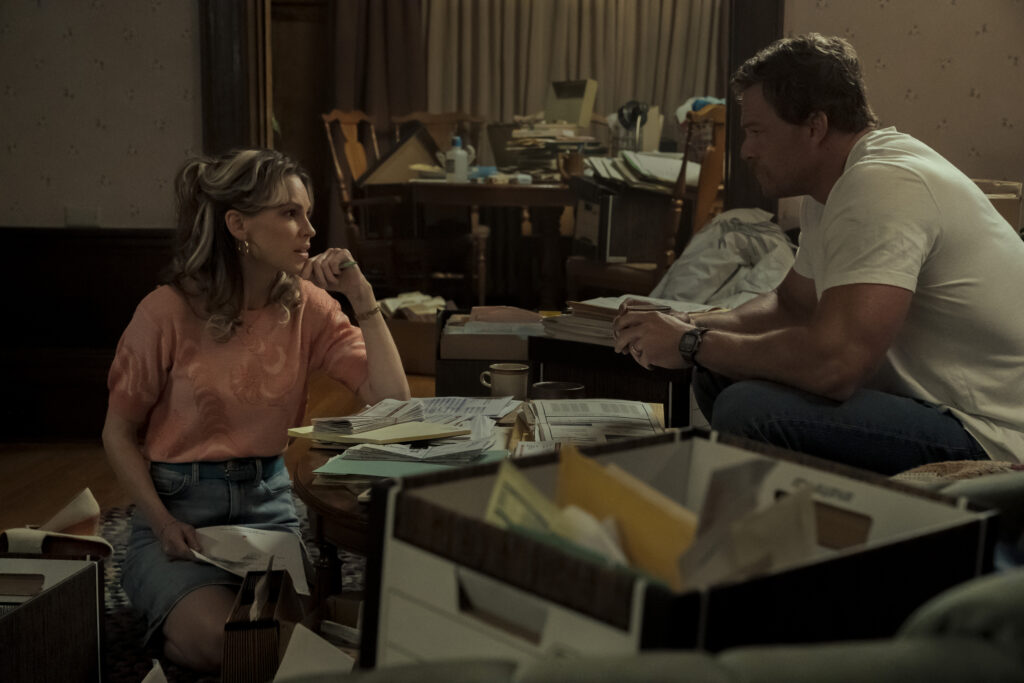
Hilary Swank and Alan Ritchson in “Ordinary Angels” (Photo by Allen Fraser/Lionsgate)

“Ordinary Angels” (2024)

Directed by Jon Gunn

Culture Representation: Taking place in Louisville, Kentucky, in 1993 and 1994, the dramatic film “Ordinary Angels (inspired by real events) features a predominantly white cast of characters (with some African Americans and one Asian) representing the working-class, middle-class and wealthy.

Culture Clash: An alcoholic hair stylist feels compelled to help a 5-year-old girl, who is dying from a liver disease and whose family can’t afford her medical expenses, which include a liver transplant that’s needed to save her life.

Culture Audience: “Ordinary Angels” will appeal primarily to fans of star Hilary Swank and faith-based movies that over-exaggerate true stories.

Alan Ritchson and Emily Mitchell in “Ordinary Angels” (Photo by Allen Fraser/Lionsgate)

“Ordinary Angels” is supposed to be based on a true story, but it has plot holes and a fluffy fantasy that all you need to erase medical expenses is a woman who can make $435,000 in hospital bills disappear with sweet talking and blueberry muffins as gifts. There is literally a scene where the protagonist convinces a hospital to cancel this debt by asking a hospital administrator in a meeting how it would feel if the administrator had a sick daughter and couldn’t pay her medical bills. That’s just one of many eye-rolling “only in a movie” scenarios that “Ordinary Angels” tries to shove down viewers’ throats and expect people to swallow as the whole truth.

It’s condescending and gross pandering that will only work with people who want to ignore or forget that medical care in places without universal health insurance has disturbing inequalities for people who aren’t in certain demographics. The end of the movie also has a hokey “race against time” during a blizzard that looks like a real event was very exaggerated in the movie for dramatic purposes. And in other parts of the movie, the truth and reality are over-simplified in order to manipulate certain emotions out of viewers.

Directed by Jon Gunn, “Ordinary Angels” was written by Kelly Fremon Craig and Meg Tilly. The movie takes place in Lexington, Kentucky, in 1993 and 1994. (“Ordinary Angels” was actually filmed in Manitoba, Canada.) In other words, this story took place before the existence of the Internet and social media, which are now common ways for people to raise funds for medical expenses. And the story also takes place before the Affordable Care Act existed in the United States, because the family experiencing the child medical crisis in this story did not have health insurance at the time.

The protagonist of “Ordinary Angels” has the disease of alcoholism and is estranged from her young adult son (her only child) because of her alcoholism. However, she is presented in this unrealistic-looking movie as someone who is a crusading angel in all other aspects of her life, where everything conveniently falls into place because she’s able to talk her way into getting what she wants. On her road to redemption, she has chosen a dying girl to be her obsessive “pet project.”

“Ordinary Angels” begins in 1993, by showing a talkative divorcée named Sharon Stevens (played by Hilary Swank) at a bar, doing something that she’s done many times in her life: Get drunk and call attention to herself with her drunken antics. She wakes up with a hangover and finds out that her boss/close friend Rose (played by Tamala Jones) brought her home from the bar the night before, because Sharon was too drunk to get home on her own. Rose owns the hair salon Shear Elegance, where Sharon works as a hair stylist.

Rose sternly lectures Sharon about this drunken blackout that Sharon has had: “This can’t happen again. I’m officially worried.” Shortly after this incident, Rose persuades Sharon to go to an Alcoholics Anonymous meeting, where Sharon defiantly declares to everyone: “I’m not an alcoholic. I’m just a pissed-off hairdresser with a splitting headache and an annoying friend.”

Swank has done this type of “sassy with grit” character many times before (see most of the movies where she’s had a starring role), so there’s nothing new or surprising about her performance. Just like the other performances in “Ordinary Angels,” it’s serviceable and predictable. “Ordinary Angels” is a faith-based movie, so expect to see a lot of references to God and praying. That’s not what’s offensive about this movie. What’s offensive is how it relentlessly insults viewers’ intelligence about how medical crises can be solved in the real world.

After leaving the Alcoholics Anonymous meeting, Sharon sees a front-page newspaper story about a 35-year-old mother named Theresa Schmitt (played by Amy Acker, shown in flashbacks), who has died of Wegener’s disease and has a daughter who needs a liver transplant. (The real Theresa Schmitt actually died of Wegener’s disease in 1992, at the age of 29.) Theresa’s surviving family members include her husband Ed Schmitt (played by Alan Ritchson) and their two daughters: 5-year-old Michelle Schmitt (played by Emily Mitchell) and Ashley Schmitt (played by Skywalker Hughes), who’s about 7 or 8 years old.

Both children are cute and adorable, but the movie unrealistically shows them as having no personality flaws. These two siblings also don’t get into any arguments and don’t show any rivalry with each other, which is another example of how phony this movie looks. “Ordinary Angels” completely ignores what can happen when a sick child in the family gets almost all the attention and any other children in the family might feel neglected or resentful. In real life, Michelle was 3 years old when she needed a transplant, but the movie made her 5 years old, because a 5-year-old is more capable than a 3-year-old of saying precocious lines of “cute kid” dialogue, as Michelle does in this movie.

Michelle has a rare liver disease called biliary atresia. Ed, who works as an independent-contractor roofer, is overwhelmed with debts of more than $435,000 in medical bills for Michelle and his late wife Theresa. He has these medical bills because he does not have health insurance for himself or his family. Ed also has the burden of other expenses for himself and his family. After the death of Theresa, Ed’s retired mother Barbara Schmitt (played by Nancy Travis) has moved into the home to help Ed with Michelle and Ashley.

Sharon sees the news story about ailing Michelle and immediately feels like she wants to do something to help the Schmitt family. Sharon starts by going to Theresa’s funeral. And when Ed asks her who she is, Sharon awkwardly explains that she’s a stranger who wants to give her condolences. Ed uncomfortably thanks her and thinks that will be the last he’ll see of Sharon. But there would be no “Ordinary Angels” movie if that was the last time Ed saw Sharon.

After the funeral, Sharon throws herself full-force into raising money for the Schmitt family. She has a fundraising event at the hair salon. She hands out flyers. She tells everyone she knows about the fundraiser. The fundraiser gets more than $3,250. She then goes over to the Schmitt home to deliver the money, which Ed reluctantly takes, because (as the movie repeats often, to irritating levels) Ed doesn’t feel right about taking charity from this lady whom he thinks is kind of a mess.

Barbara is more open to accepting this help. She’s the one who persuades Ed to invite Sharon into the house for dinner when Sharon delivers the fundraising money as a surprise. “Ordinary Angels” makes it clear that Sharon does not have the ulterior motive of trying to have a romantic relationship with physically attractive Ed, who is still deep in grief over the loss of Theresa. However, Sharon inserts herself into the Schmitt family’s life like a volunteer nanny/business manager/life coach, including helping take care of Michelle and Ashley; sorting out Ed’s bills and explaining his finances to him; and giving career tips and pep talks to Ed when he comes up with an idea of how he can make more money as a roofer.

Sharon even accompanies Ed to a sales pitch meeting with a potential employer, and she speaks for Ed like she’s a publicist. At one point in the story, Ed privately comes right out and tells overzealous Sharon that he resents all the help she’s giving because he thinks he should be the one to give the most help to his family. Sharon just smiles and says that Ed can just keep on resenting while she keeps on helping. It’s a very glib answer that glosses over the way that Sharon has fixated so fast on this family.

Yes, Sharon is a do-gooder, but the way she goes about it is kind of stalker-ish. There’s a scene where she calls the hospital where Ed owes money and pretends to be his accountant sister (who doesn’t really exist), just so she can find out how much money Ed owes for his medical bills. (It’s how she finds out he owes $435,000.) It’s a huge invasion of privacy on Sharon’s part, not to mention a HIPAA violation for the hospital to give out this information, but the person on the other line tells Sharon this information, because the movie wants people to believe that “ordinary angel” Sharon is who she is and can be dishonest and violate people’s privacy in order to get what she wants.

Sharon’s overly perky and ultra-helpful persona is a mask for some deep-seated issues in her own personal life. A scene in the movie shows Sharon going to a bar where her musician son Derek (played by Dempsey Bryk) is setting up some musical equipment before his band’s performance. Sharon seems to want to make amends for whatever she did to hurt him, but Derek’s hostile reaction makes it obvious he’s not interested in a reconciliation at that moment. It’s mentioned later in the movie that Sharon’s ex-husband (who is also a musician and not seen in the movie) abandoned Sharon and Derek when Derek was a child.

It’s unclear when Sharon became an alcoholic, but this alcoholism caused her to be a parent who did a lot of emotional damage to Derek. The movie hints at but never goes into details about this abuse, because those details would ruin the movie’s narrative that Sharon is an “ordinary angel” who wants to redeem herself. You don’t have to be a psychiatrist to know that one of the main reasons why Sharon is doing this charity work is out of guilt for her own failures as a parent.

One of the other reasons why Derek is estranged from Sharon is because she won’t admit that she’s an alcoholic and won’t get help for this disease. Derek knows that Sharon has been spending a lot of time helping the Schmitt family. He makes a cutting remark, which is one of the best lines in an otherwise corny movie. Derek says to Sharon about Sharon’s obsession with helping Michelle: “That girl, I feel sorry for her, not because she’s sick but because she’s counting on you for help.”

Sharon is able to overcome big obstacles with some very trite montages of her calling up people or by going to people’s offices, usually with blueberry muffins as gifts. At one point in the movie, viewers might ask themselves, “Does Sharon even work at her salon job anymore?” That question is answered in another part of the movie, when Rose gets upset with Sharon for not showing up to work for weeks, because Sharon wants to spend her time helping the Schmitts. Most people in the real world would get fired over this chronic absenteeism, but “ordinary angel” Sharon guilt-trips Rose into not firing her, because she lectures Rose by saying Rose should be more understanding of Sharon’s charity crusade.

Perhaps one of the worst things about “Ordinary Angels” is how it portrays Ed as a gruff and reluctantly grateful parent who bizarrely refuses to accept any more donations at a time when Michelle needed the money the most for a liver transplant. At this point in the movie, he comes across as a selfish parent who has put his own personal pride over his child’s health. It’s completely heinous, but the movie excuses Ed’s parental attitude problem. It just becomes another plot device for “ordinary angel” Sharon to show Ed that she’s more generous and more capable of solving his family’s problems than he is.

There’s also an unspoken narrative in the movie that the “Ordinary Angels” filmmakers don’t want you to think about: Cute kids with deadly diseases are more likely to get help and donations from strangers, compared to other people with deadly diseases who aren’t cute kids. Does that make the lives of those “other people” less of a priority for people like Sharon Stevens? According to the way Sharon acts in this movie, the answer is “yes.” The harsh reality is that this “ordinary angel” was very selective in whom she wanted to give all of this help to that went above and beyond what most people in her situation would do.

It’s obvious that the filmmakers and stars of the movie made “Ordinary Angels” as an inspirational film with the intention to win awards. (There’s nothing Oscar-worthy about this movie though.) “Ordinary Angels” does a disservice to people who are going through real-life medical crises by warping the truth and exaggerating real circumstances to make this story look like a fairy tale. The only award that “Ordinary Angels” deserves is Most Likely to Give False Hope.

Lionsgate will release “Ordinary Angels” in U.S. cinemas on February 23, 2024.

Homewood Suites by Hilton Louisville Downtown opens

April 12, 2018

Homewood Suites by Hilton Louisville Downtown
Homewood Suites by Hilton Louisville Downtown (Photo courtesy of Hilton)

The following is a press release from White Lodging:

Homewood Suites by Hilton, part of Hilton’s All Suites portfolio, announced today its newest property, Homewood Suites by Hilton Louisville Downtown. Developed and owned by Poe Companies, REI Real Estate Services and White Lodging and managed by White Lodging, the Homewood Suites by Hilton Louisville Downtown offers guests all the comforts of home, whether they are traveling for work or enjoying a well-earned getaway. With 133 new suites, the hotel complements Louisville’s growing tourism industry with increased lodging options, adding to the more than 2,000 hotel rooms that were opened in 2017 alone*.

 “Nestled in the heart of the ‘Derby City’, Homewood Suites by Hilton Louisville Downtown’s central location, spacious suites and convenient amenities offer the value-added experience that both business and leisure guests seek when visiting this robust city,” said Adrian Kurre, global head of Homewood Suites by Hilton. “Tourism is Kentucky’s third-largest industry**, and adding an extended-stay option for travelers in such a key area can further strengthen the state’s economy.”
Designed for guests who want to travel on their own terms, Homewood Suites by Hilton Louisville Downtown offers a combination of studio and one-bedroom accommodations, featuring fully equipped kitchens and separate living and sleeping areas. Guests are also provided all the essentials needed for a smart, reliable and convenient stay including complimentary daily full-hot breakfast, evening social Monday-Thursday, Wi-Fi and a grocery shopping service***. Homewood Suites by Hilton Louisville Downtown also makes it easy for travelers to unwind with an indoor pool, fitness center and outdoor patio. The property also offers over 1,000 square feet of flexible space that is ideal for meetings and social events.
Located at 635 West Market St., Homewood Suites by Hilton Louisville Downtown offers guests convenient access to major businesses, like Humana and UPS, as well as entertainment and dining district, such as the Louisville Riverwalk. The Kentucky Science Center, Louisville Slugger Museum & Bat Factory, KFC Yum! Center, Fourth Street Live!, and the Kentucky Center for the Performing Arts are also just a short walk from the hotel.
Homewood Suites by Hilton Louisville Downtown participates in Hilton’s award-winning customer loyalty program, Hilton Honors. Hilton Honors members who book directly through preferred Hilton channels have access to instant benefits, including a flexible payment slider that allows members to choose nearly any combination of Points and money to book a stay, an exclusive member discount, free standard Wi-Fi, as well as digital amenities that are available exclusively through the industry-leading Hilton Honors app, where Honors members can check-in, choose their room, and access their room using a Digital Key. For more information or to make a reservation, visit Homewood Suites by Hilton Louisville Downtown or call +1 502 589 2000.
Read more about Homewood Suites by Hilton at www.homewoodsuites.com and www.news.homewoodsuites.com.

*SOURCE: Louisville CVB
**SOURCE: Louisville CVB
***Guest pays for groceries. Other restrictions apply.

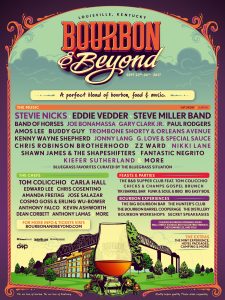
2017 Bourbon & Beyond Festival: lineup of performers, chefs and bourbon experiences announced

April 17, 2017

2017 Bourbon & Beyond Festival

The inaugural Bourbon & Beyond Festival has announced its lineup of performers, chefs and bourbon experiences. The event will take place September 23 and September 25 at Champions Park in Louisville, Kentucky.

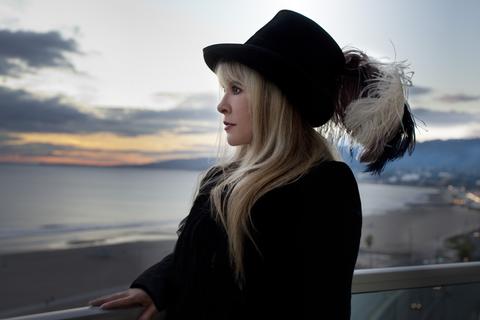
Stevie Nicks

Musical performers will include Stevie Nicks, Eddie Vedder, Steve Miller Band, Band of Horses, Joe Bonamassa, Gary Clark Jr., Paul Rodgers, Amos Lee, Buddy Guy, Trombone Shorty & Orleans Avenue, Kenny Wayne Shepherd, Jonny Lang, G. Love & Special Sauce, Chris Robinson Brotherhood, ZZ Ward, Nikki Lane, Shawn James & The Shapeshifters, Fantastic Negrito, Kiefer Sutherland, Dave Cavalier, The Bluegrass Situation.

Chefs appearing throughout the weekend include Tom Colicchio (from “Top Chef”), Carla Hall (from “The Chew”), Edward Lee, Chris Cosentino, Amanda Freitag, Jose Salazar, Cosmo Goss & Erling Wu-Bower, Kevin Ashworth, Anthony Lamas and Anthony Falco.

According to a press release, the festival will showcase more than 50 of the best Kentucky bourbons curated by Fred Minnick, Edward Lee and Chris Cosentino. Festivalgoers will get the chance to dive deep into the Kentucky bourbon experience through these attractions:

  • The Big Bourbon Bar: A 20,000-square-foot bar featuring delicious bourbon cocktails presented by the Louisville Courier-Journal.
  • The Hunter’s Club: A bourbon hound’s dream come true with experimental, rare, and hard-to-find bourbons.
  • The Bourbon Barrel Cooperage: A behind-the-scenes look at how coopers craft the oak barrels used to age bourbon.
  • The Distillery: An interactive experience to discover the life of a master blender, taster, and distiller.     Bourbon Workshops: Access to bourbon’s best and brightest in a series of free and intimate distilling, bartending, pairing, and cooking workshops.
  • Incredible Feasts, one-of-a-kind communal dining experiences including The Chicks & Champs Gospel Brunch and the exclusive B&B Supper Club featuring Colicchio.

Bourbon & Beyond will partner with renowned local chefs and over 20 beloved Louisville restaurants to deliver one-of-a-kind delectable creations. The first round of participating restaurants include: Baxter’s 942 Bar & Grill, Boss Hog’s BBQ, Doc Crow’s, Gospel Bird, Seviche, The Manhattan Exchange, Whiskey Dry and many more to be announced in the coming months.  Guests will be able to eat, drink, and party at The Big Easy Boil presented by Southern Comfort, Tiki Barrel Bar, Funk & Soul & BBQ.

Aloft Hotels opens second locations in Austin and Louisville

January 11, 2017
Aloft Hotels

Aloft Hotels has opened new locations in Austin  and Louisville.

Aloft Austin Northwest at 14020 US Highway 183 is the second Aloft in Austin, Texas. Owned by Pure Lodging Hospitality and managed by Lodgic Hospitality, Aloft Austin Northwest has 130 loft-style rooms, 1,000 square feet of meeting space, and live music at W XYZ Bar. The hotel is less than a mile from Lakeline Mall and 25 miles from Austin-Bergstrom International Airport.

Aloft Louisville East at 10700 Westport Road is the second Aloft in Louisville, Kentucky. Owned by M&T and developed by CRM Companies/PWM Real Estate Holdings, Aloft Louisville East has 126 loft-style rooms, more than 3,500 square feet of flexible meeting space and live music performances at the hotel’s W XYZ Bar and the outdoor Carloftis Courtyard.

Aloft Louisville East is less than a mile from EP “Tom” Sawyer State Park, 15 miles from Louisville International Airport, 14 miles from Kentucky International Convention Center, and 13 miles from KFC Yum! Center. The opening of the East End Crossing bridge will extend the Gene Synder Freeway (I-265) over the Ohio River into southern Indiana, which will create a new major corridor for traffic traveling north and south through Louisville.

Both hotels feature SPG Keyless that enables guests to use their smartphone or Apple watch as a room key, as well as free Wi-Fi throughout the property. Additional amenities include a Splash indoor pool, a Re:charge fitness center; Re:fuel by Aloft, a one-stop gourmet grab & go food and beverage area; and live, local music at the brand’s W XYZ bar as part of the signature Live At Aloft Hotels music series.

Copyright 2017-2026 Culture Mix
CULTURE MIX