
Review: ‘Freakier Friday’ starring Jamie Lee Curtis, Lindsay Lohan, Julia Butters, Sophia Hammons, Manny Jacinto and Mark Harmon

August 5, 2025

by Carla Hay

Julia Butters, Lindsay Lohan, Jamie Lee Curtis and Sophia Hammons in “Freakier Friday” (Photo by Glen Wilson/Disney Enterprises, Inc.)

“Freakier Friday”

Directed by Nisha Ganatra

Culture Representation: Taking place in the Los Angeles area, the comedy film “Freakier Friday” (a sequel to the 2003 film “Freaky Friday,” which was based on the 1972 young adult novel of the same name) features a predominantly white cast of characters (with some Asians and African Americans) representing the working-class, middle-class and wealthy.

Culture Clash: Music manager Anna Coleman and her psychotherapist mother Tess Coleman find themselves in another body swap situation— this time, with two teenage girls: Anna’s daughter Harper and Harper’s snobbish school enemy Lily Reyes, who despise each other but are about to become stepsisters because Anna is marrying Lily’s widower father Eric.  

Culture Audience: “Freakier Friday” will appeal primarily to people who are fans of the movie’s headliners, the 2003 “Freaky Friday” movie, and “body swap” comedies that are about the ups and downs of families and friendships.

Manny Jacinto and Lindsay Lohan in “Freakier Friday” (Photo by Glen Wilson/Disney Enterprises, Inc.)

When a movie sequel arrives more than 20 years after its predecessor, it can either imitate the predecessor or forge ahead with an entirely new story. “Freakier Friday” does both. Some of this comedy sequel trips over its own awkward tangled web, but “Freakier Friday” finds its stride in the movie’s second half. “Freakier Friday” is best appreciated by people who’ve seen 2003’s “Freaky Friday.”

Directed by Nisha Ganatra and written by Jordan Weiss, “Freakier Friday” has many of the same characters who were in 2003’s “Freaky Friday.” The original “Freaky Friday” story (about a mother and her teenage daughter whose bodies are switched on a freaky Friday) was a young adult novel written by Mary Rodgers and published in 1972. The book’s first movie adaptation was 1976’s “Freaky Friday,” starring Barbara Harris and Jodie Foster as the mother and daughter.

Since then, there have been different versions of the “Freaky Friday” story with the same title: a 1995 ABC TV-movie, starring Shelley Long and Gaby Hoffmann; a 2016 to 2017 regional stage musical, starring Emma Hunton and Heidi Blickenstaff; and a 2018 Disney Channel TV-movie, starring Cozi Zuehlsdorff and Blickenstaff, which was a filmed version of the stage musical. Other movies have used the “Freaky Friday” concept, but with different titles and main characters who were not a mother and a daughter.

In 2003’s “Freaky Friday” (which takes place in the Los Angeles area), psychotherapist Tess Coleman (played by Jamie Lee Curtis) and her 15-year-old daughter Anna Coleman (played by Lindsay Lohan) do not get along with each other. Anna is a slightly rebellious, wannabe rock star who plays lead guitar in a teenage band called Pink Slip. Tess is an intellectual who likes her life to be orderly and well-planned.

Most of the friction in “Freaky Friday” comes from Anna and Tess expecting each other to live their lives in a certain way. Anna doesn’t want her widowed mother Tess to marry Tess’ fiancé Ryan (played by Mark Harmon), a good man who has no children. Meanwhile, Tess disapproves of Anna’s romantic interest in motorcycle-riding schoolmate Jake (played by Chad Michael Murray), who’s slightly older than Anna.

Tess is afraid that Jake will break Anna’s heart. Anna is afraid that Tess will love Ryan more than Anna’s deceased father. Tess and Anna each think that each other’s lives are easier than their own lives. Anna also has less-serious conflicts with her younger brother Harry Coleman (played by Ryan Malgarini), an adolescent brat who irritates Anna, but he secretly admires her and does things to get attention from her.

A visit to Pei Pei’s Chinese restaurant changes the lives of Tess and Anna when the restaurant manager Pei-Pei (played by Rosalind Chao) and Pei-Pei’s unnamed mother (played by Lucille Soong) overhear Tess and Anna arguing. Tess and Anna open a fortune cookie given to to them by Pei-Pei’s mother, and an earthquake happens that only Tess and Anna can feel.

The next morning, Tess and Anna wake up and find out that their bodies have been switched, just a few days before Tess’ wedding to Ryan and about two days before Anna has an important audition with Pink Slip. Tess and Anna are told by Pei-Pei’s mother that the only way their bodies can be switched back is if Tess and Anna do something out of selfless love.

All of this information is important to know before seeing “Freakier Friday” because the body swap comedy is even more complicated in “Freakier Friday” than in “Freaky Friday.” It’s explained in the beginning of “Freakier Friday” that Tess and Anna (who live near each other in Los Angeles) now have a better relationship than they did when Anna was a teenager. They still argue with each other, but their conflicts aren’t serious enough to cause an estrangement.

Anna is now a single mother to a 14-year-old daughter named Harper (played by Julia Butters), who is going through the same rebellious and teenage argumentative stage of life that Anna went through with Tess. Harper’s biological father is not seen or mentioned in “Freakier Friday,” but Tess says in a voiceover that Anna chose to be a single parent. Anna now uses a lot of her mother’s “Zen” techniques to calm down during conflicts. The worst things that Anna and Tess argue about (as shown in the beginning of “Freakier Friday”) are who is going to drive Harper to school.

Tess is still married to Ryan, who appears to be retired. Tess hosts a podcast called Rebelling With Respect. Anna quit Pink Slip years ago when she became a single parent, but she secretly still writes and records songs. Anna is now the manager of a pop star named Ella (played by Maitreyi Ramakrishnan), who is signed to Capitol Records.

In the first third of the movie, there’s a clumsy and uninteresting subplot about Anna having to prevent Ella fromhaving a debilitating meltdown because Ella’s music star ex-boyfriend Trevor (who is never seen or heard in the movie) released a song about their breakup called “Better Than the Last One.” This subplot is ultimately a waste of time. Almost every scene with Ella didn’t need to be in the movie.

Harper is a lot like Anna was in high school: a somewhat disheveled teen who loves music but who doesn’t really fit in with any of the cliques in the school. Harper is having a miserable time in school because she’s stuck being the lab partner of a British snob named Lily Reyes (played by Sophia Hammons), a trendy social media influencer who does things such as brag about going to fashion shows and interacting with Anna Wintour.

Lily’s widowed father Eric Reyes (played by Manny Jacinto) is a successful restaurateur who owns an upscale eatery named Lily’s. Eric and Lily relocated from London to Los Angeles after the death of his wife/Lily’s mother. Lily makes it known to anyone she meets that she prefers living in London, which she thinks is a more “cultured” city than Los Angeles.

During the school’s annual bake sale, Lily and Harper get into an argument and instigate a massive food fight that involves several students. They both get detention as punishment. And when Anna and Eric both show up at the school to meet with Principal Waldman (played by X Mayo), there’s an instant attraction between Anna and Eric. The inevitable happens: Anna and Eric begin dating each other.

The movie shows a montage of the courtship of Anna and Eric. And six months later, Anna and Eric are engaged to be married and plan to move to London with their daughters. This engagement obviously horrifies Harper and Lily, who agree on one thing: They both want to stop this marriage from happening. Meanwhile, Tess approves of Eric but she doesn’t want Anna and Harper to move far away from her.

The “body swap” begins after something that happens at Anna’s bachelorette party at a nightclub. This review won’t go into all the details, but it involves a psychic named Madame Jen (played by Vanessa Bayer), who was hired to be entertainment for the party in a side room. The movie pokes fun at gig economy workers by making Madame Jen someone who has several different jobs that she tries to promote at the same time.

Tess and Anna see Madame Jen for fun but quickly leave when they sense another body switch could happen to them again. And then, Harper and Lily go to Madame Jen to get a psychic reading on how to end Anna and Eric’s relationship. A familiar earthquake happens.

The next morning, there’s a quadruple body switch: Tess and Lily now have each other’s bodies, while Anna and Harper now have each other’s bodies. Although “Freaky Friday” was originally about the comedy of a mother and a daughter switching bodies, the best and funniest aspects of “Freakier Friday” have to do with the body swap between Tess and Lily, who aren’t related to each other. Some viewers won’t like this unique aspect of “Freakier Friday” but others will embrace it because it’s such a unique departure from the original story.

Even for people who saw 2003’s “Freaky Friday,” “Freakier Friday” is a lot to asborb, because of how much “Freakier Friday” wants to cram in the body swap story of four people (who all have very opinionated personalities), in addition to catering to nostalgia while also trying to be relevant to the 2020s time period in which this movie was released. It’s a juggling act that doesn’t always work well, particularly in some slapstick comedy scenes. The movie’s best comedy is in verbal joking, not the physical stunts.

“Freakier Friday” makes a lot of cutting commentary about generation gaps and aging. In one scene, Facebook is called a “database for old people,” and Coldplay is described as a band for old people. Tess, who believes in aging naturally, is mortified when she finds out what Lily (in Tess’ body) does to make Tess’ lips look younger. Not as funny is an unnecessary scene where Tess (inhabited by Lily) and Ryan are in a pickleball tournament against a very competitive opponent named Veronica (played by June Diane Raphael), with comedians George Wallace and Sherry Cola inexplicably portraying themselves as announcers at the tournament. The outcome of this scene is inconsistent with the movie’s joke that Lily can’t handle being in Tess’ older body.

There’s also plenty of fan service for those who like 2003’s “Freaky Friday.” Murray reprises his role as Jake, a bachelor who’s still a heartthrob. Jake is now the owner/manager of a record store called the Record Parlour. Jake gets unwittingly pulled into a scheme to break up Anna and Eric. And toward the end of the movie, “Freakier Friday” shows an amusing reference to a “Freaky Friday” subplot when Jake briefly had a crush on Tess when Anna was in Tess’ body.

“Freakier Friday” also has cameos from other alumni of 2003’s “Freaky Friday”: Stephen Tobolowsky reprises his role as Elton Bates, the high school’s mean-spirited teacher who has a grudge against Tess and her family because decades ago, Tess rejected his invitation to take Tess to their school prom. When Harper asks Mr. Bates why he hasn’t retired yet, there’s a hilarious answer.

Chao and Soong return as Pei-Pei (who is called Mama P in “Freakier Friday”) and Pei-Pei’s mother (whose name is listed in the end credits as Grandma Chiang), who do the catering for Anna’s bachelorette party. Malgarini makes a quick appearance as Anna’s younger brother Harry. And don’t be surprised if certain Pink Slip members show up in “Freakier Friday.” Some of these cameos are predictable, but they’re handled very well.

Curtis, who was the MVP of 2003’s “Freaky Friday,” continues to be the standout cast member who is the most convincing and the funniest in the body swap scenes. She also handles the emotionally dramatic scenes with great aplomb. Butters shows a lot of talent and admirable comedic timing, even though “Freakier Friday” has an understandably more mature and calmer version of Anna. Lohan and Hammons do well in their roles, although they’re not consistently great in their body swap scenes.

Of the supporting cast members, Bayer is a scene stealer who makes everything she does very funny. Jacinto does the best that he can with a generic character. Murray gamely pokes fun at his sex-symbol image, especially since “Freakier Friday” makes Jake more confused than ever by the antics of Anna and Tess.

“Freakier Friday” is an ambitious film whose flaws have to do with trying to be many things at the same time: a screwball “body swap” comedy, a romantic saga, an emotional family film, and a nostalgia-filled sequel. Much of the cluttered tone of the movie has to do with the introduction of several new characters. Credit should be given to director Ganatra for reigning in most of the mess that could have been made. Anyone who sees “Freakier Friday” is better off seeing 2003’s “Freaky Friday” first, or else risk getting drowned in some confusion.

Walt Disney Pictures will release “Freakier Friday” in U.S. cinemas on August 8, 2025.

Review: ‘The Knife’ (2025), starring Nnamdi Asomugha, Aja Naomi King, Melissa Leo, Amari Price and Aiden Price

June 10, 2024

by Carla Hay

Nnamdi Asomugha in “The Knife” (Photo courtesy of iAm21 Entertainment)

“The Knife” (2025)

Directed by Nnamdi Asomugha

Culture Representation: Taking place in an unnamed U.S. city, the dramatic film “The Knife” features a racially diverse cast of characters (African American, white and Asian) representing the working-class and middle-class.

Culture Clash: A black man, his wife and their two daughters are questioned by a white police detective after a white female intruder is found unconscious in the family’s home.  

Culture Audience: “The Knife” will appeal primarily to people who are interested in provocative dramas that explore racial issues and legal issues in police investigations.

Melissa Leo, Amari Price, Aja Naomi King, Nnamdi Asomugha and Aiden Price in “The Knife” (Photo courtesy of iAm21 Entertainment)

“The Knife” is a cautionary tale of what not to do at a crime scene and during witness interviews. This uneven but well-acted and suspenseful drama raises challenging questions about legal rights and police procedures. If people know about the movie’s synopsis but haven’t seen the movie, then it might be easy for people to immediately assume that it’s a pro-Black Lives Matter film, where black victims do nothing wrong but become crime suspects, while racist people are the only ones to blame.

However, “The Knife” avoids a lot of stereotypes that scripted movies typically have about how race plays a role in how people are policed and investigated in the United States and elsewhere. In “The Knife” (which has an ending that is sure to be divisive or will at least spark conversational debates), the characters on both sides of a police interrogation are not completely innocent. Almost all of the adults in this situation do certain things wrong and make the situation worse.

“The Knife” is the feature-film directorial debut of former NFL player-turned-actor Nnamdi Asomugha, who not only stars in “The Knife” but he is also one of the movie’s producers. Asomugha co-wrote “The Knife” screenplay with Mark Duplass. “The Knife” had its world premiere at the 2024 Tribeca Festival. The movie takes place in an unnamed U.S. city in the 2020s, but the issues brought forth in the film are perennial issues.

“The Knife” takes place during one night in the lives of a middle-class black American family who will be seriously affected by a series of choices. The movie begins with voiceover narration from the family patriarch Christian, nicknamed Chris (played by Asomugha), saying: “When I was a kid, my grandma use to say life is full of choices. And choices lead to consequences.” Chris then goes on to say that his grandmother also told him that people have to live with the consequences of their choices, whether they like it or not.

Chris (who is 38 years old) and his wife Alexandra, nicknamed Alex (played by Aja Naomi King), are examples of pursuing the American Dream. Chris is a construction worker. Alex is a teacher of second-grade students. Chris and Alex are happily married home owners who have recently moved into a house that Chris is in the process of renovating.

Early on in the movie, Alex mentions that she’s not very thrilled that the house is in a crime-ridden neighborhood, but she supports Chris’ goal to make home improvements, presumably so they can “flip” the house later and sell it at a profit. The family has moved into the house so recently, some moving boxes are still seen inside the house.

Chris and Alex have three daughters. Eldest child Kendra (played by Amari Price) is about 11 or 12 years old. Middle child Ryley (played by Aiden Price) is about 8 or 9 years old. Youngest child Ashley (played by Aranaya Frasier) is an infant. Kendra and Ryley are intelligent and obedient children.

Between the recent move and taking care of young children, Chris and Alex are exhausted. An early scene in the film shows Chris and Alex in bed, going back and forth in changing their minds on whether or not they want to have sex that night. Ultimately, they decide they’re just too tired.

At 1:38 a.m., Chris is woken up by the sound of someone inside the house. He gets up cautiously, looks around the house, and sees a disheveled-looking, gray-haired white woman in the kitchen. She is at the sink, and her back is turned toward Chris. Later, when police arrive, it’s revealed that this woman’s name is Mary Duvall Thompson (played by Lucinda Jenney), and she is 53 years old.

Chris is naturally startled by seeing this intruder in his home. Chris sternly tells her that she’s in the wrong house and she needs to leave. The intruder doesn’t say anything and doesn’t turn around. She seems to be in a dazed stupor.

Chris’ anger then turns to concern when he sees that this intruder is either mentally unwell or under the influence of an unknown substance. He asks her if she needs help getting home. She still says nothing, but she turns around to face Chris.

The next scene shows Alex being woken up by the sounds of a scuffle happening in the kitchen. When Alex goes to the kitchen, she’s shocked to see Chris standing over the intruder, who is unconscious on the floor. A small pocket knife is lying next to Mary, who is bleeding.

Chris tells Alex that this female stranger is an intruder. Chris says he confronted this intruder, but he can’t remember all the details of why she’s now bleeding on their kitchen floor. Alex asks if the knife belongs to the woman. Chris says no. Alex does a quick check of the woman’s pulse and sees that she’s still alive.

Chris seems to be in complete shock, but he calls 911 to frantically report that a female intruder has been hurt in his home, and he gives the address. He hangs up before giving more details. Alex still has her wits about her to remind Chris that he will automatically be a suspect, unless they both get their stories straight about what happened.

Meanwhile, Kendra and Ryley have heard the commotion and arrive in the kitchen. Chris and Alex tell Kendra and Ryley that the woman on the floor is a stranger who intruded into their home and who attacked Chris, but he acted in self-defense. Kendra and Ryley are confused and upset, but their parents assure them that Chris won’t get in trouble if the police believe that Chris was defending himself against the intruder.

Alex tells Chris that based on what it looks like, Chris acted in self-defense of an intruder who attacked Chris first, and the intruder got injured during the struggle when she fell down and hit her head on the floor. That’s the story they decide to tell the police. They also decide to tell the truth that Alex, Kendra and Ryley did not witness the break-in and attack and only saw the intruder for the first time when she was unconscious on the floor.

However, two major mistakes are made that have serious repercussions. First, Alex and Chris decide to lie to the police and say that the knife belongs to the intruder, who used the knife to lunge at Chris. Second, just as the police arrive and before the police go in the house, Alex seems to panic and spontaneously picks up the knife with her bare hands and places it under Mary’s right hand, to make it look like Mary had been holding the knife before losing consciousness.

Chris has seen Alex commit this crime of tampering with the evidence, and he’s understandably annoyed and worried about what Alex did. After the police arrive, Chris and Alex speak in hushed tones so they can’t be heard by anyone else. Chris asks Alex why she moved the knife to make it look like the intruder had been holding this weapon. Alex replies defiantly, “You’re a black man in America, Chris. I’m protecting you. That’s what I’m doing.”

Anyone with common sense who watches “The Knife” will be thinking during the entire movie: “Won’t the truth come out when the knife is tested for fingerprints?” In Alex’s rush to protect Chris from being blamed, Alex seems to have forgotten that the knife would be tested for fingerprints. Most of “The Knife” is about the investigation at the crime scene, so any issues about fingerprint proof on the knife cannot realistically be dealt with during the time period shown in the movie.

An ambulance has arrived around the same time as the police. And it’s not looking good for Mary. The medical first responders say that Mary has stopped breathing. What could have been an investigation into only a breaking-and-entering crime could possibly turn into a manslaughter investigation if Mary does not survive.

The lead investigator at the crime scene is a police detective named Frances Carlsen (played by Melissa Leo), who has a very no-nonsense, “by the book” style of working. The stereotyping and police biases are shown as soon as a cop named Officer Padilla (played by Manny Jacinto) tells Detective Carlsen that “something doesn’t feel right about this family” because the family is acting nervous. Detective Carlsen tells Officer Padilla not to jump to conclusions because anyone would be nervous under the circumstances.

Detective Carlsen has a lecturing tone in how she often tells people at the crime scene that she wants to get to the truth. However, there are obvious indications that Detective Carlsen also has a conscious or unconscious racial bias. She repeatedly refers to Mary as the “victim” without any proof that Mary is a victim. Eventually, Alex shows she’s offended when she tells Detective Carlsen that Mary should be described as an intruder, since Mary came into the home uninvited and refused to leave.

Detective Carlsen decides that Chris, Alex, Kendra and Ryley will be immediately be interviewed separately at the house, to see if all four family members tell the same or different versions of what happened. It leads to some serious legal issues regarding police interrogations of children; things that police can or cannot say or do to get witnesses to reveal the truth; and people’s civil rights in the United States when being questioned by police. The movie will make viewers think about what would’ve happened differently if the racial identities of the family and the intruder were switched.

“The Knife” also shows the reality that a lot of people are ignorant of the U.S. law that says people in the United States don’t have to answer questions from police without an attorney being there during the questioning. And if people do know that they have this right to an attorney in the United States, they often don’t exercise this right out of fear, or because they think their words won’t be used against them when questioned by law enforcement. As soon as anyone agrees to be questioned by police without an attorney present, that person can be vulnerable to improper or illegal police procedures by any police officer who doesn’t do things correctly.

Although some viewers of “The Knife” will be frustrated by the things that people do wrong in this investigation, the message that “The Knife” seems to be sending is that mistakes and bad choices can be made by police and witnesses. Too often, movies and TV shows depict investigations in a certain way that never leaves room for the reality that mistakes or bad choices can be made by everyone directly involved in the investigation. People’s emotions and biases can often cloud people’s judgments, which can lead to decisions that result in something that is definitely not justice.

Although “The Knife” succeeds overall in being an emotional and riveting drama, the movie’s screenplay could have been better, in terms of how certain evidence is handled in this investigation. A criminal defense attorney would absolutely rip apart some of the things that happen in this story. However, Asomugha gives solid direction to the movie, which uses brief flashbacks that will make viewers wonder: “Does Chris’ memory loss make him an unreliable narrator or unbelievable witness?” It’s eventually revealed in the story why Chris doesn’t remember everything that happened between him and Mary.

Asomugha, King and Leo give admirable performances in this tension-filled drama that occasionally stumbles with some cringeworthy decisions made by a few of the adult characters. “The Knife” is not a movie that will satisfy viewers who want definitive conclusions. However, the knife in this movie could be considered a symbol of how people should not make assumptions about innocence or guilt by looking at things only at face value.

UPDATE: Relativity Media and Inaugural Entertainment will release “The Knife” in select U.S. cinemas on August 15, 2025. The movie will be released on digital and VOD on September 16, 2025.

Review: ‘Belle’ (2021), an animated version of ‘Beauty and the Beast’ from Japan

February 26, 2022

by Carla Hay
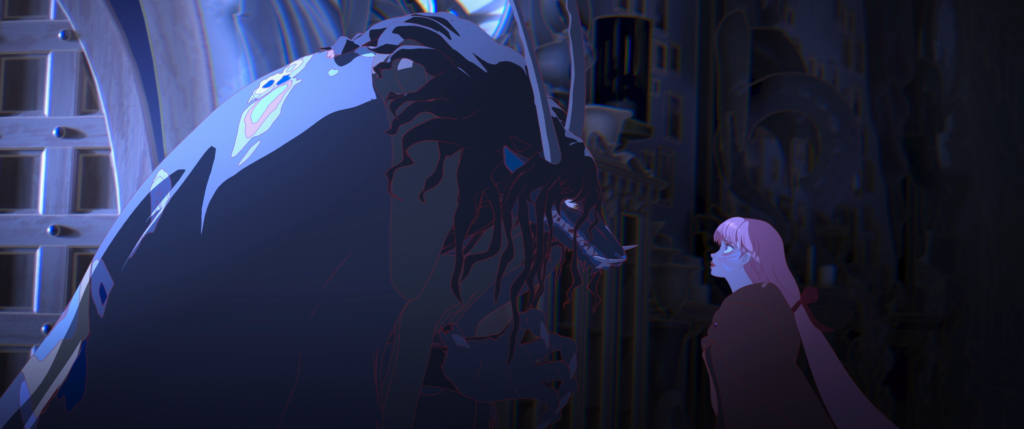
Beast/Dragon and Belle in “Belle” (Image courtesy of Studio Chizu)

“Belle” (2021)

Directed by Mamoru Hosoda

Available in the original Japanese version (with English subtitles) or in a dubbed English-language version.

Culture Representation: This Japanese animated fantasy film takes place primarily in unnamed village and in an online virtual world called U, with teenagers as the lead characters and adults as supporting characters.

Culture Clash: A misfit teenage girl creates an online persona called Belle, who becomes the most popular singer in the universe, and she befriends a hunted creature called Dragon under this new persona in this online world.

Culture Audience: “Belle” will appeal primarily to people who are interested in anime films and unique interpretations of Disney classics.
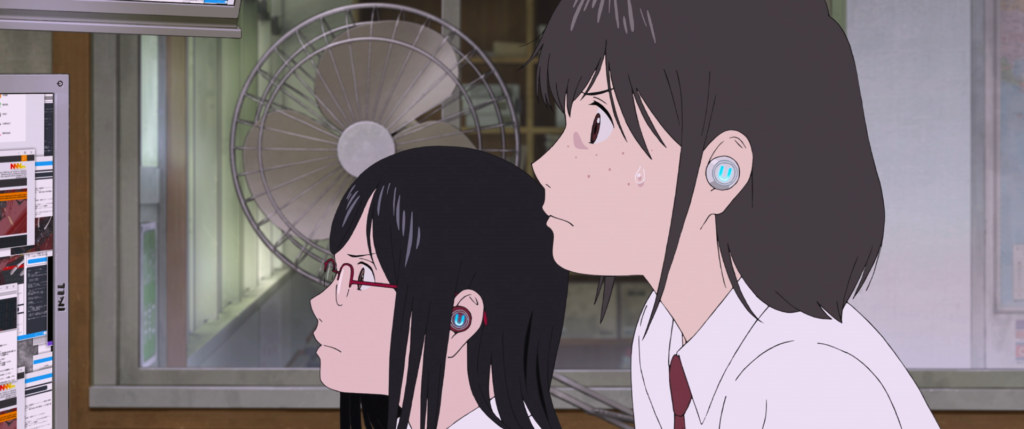
Hiro and Suzu in “Belle” (Image courtesy of Studio Chizu)

“Belle” is more than just another version of “Beauty and the Beast.” It’s a highly imaginative, visually stunning and emotionally stirring film that embodies some of the best anime of the 21st century. Written and directed by Mamoru Hosada, “Belle” captures the essence of “Beauty and the Beast” but also brings many unique elements to the story, so that “Belle” shouldn’t be considered a remake but a true reimagining.

The central character in Belle is a misunderstood student named Suzu, who is about 15 or 16 years old. She lives with her unnamed widower father in a small, unnamed village in Japan. Suzu is somewhat of a loner who has been depressed and grieving over the loss of her mother about five or six years earlier in a tragic accident, when her mother saved a girl from drowning in a river, and Suzu witnessed her mother’s death.

Because of this trauma and grief, Suzu has grown emotionally distant from her father, who tries to connect with Suzu. But she usually acts irritated by him, so they don’t communicate much with each other. Suzu has self-esteem issues too. She doesn’t think she’s as attractive and intelligent as her peers, so she tends to be quiet and emotionally withdrawn from people. She pours her thoughts into her journals, where she writes and sometimes sketches illustrations.

Suzu is haunted by the memory of begging her mother not to go in the river to save the drowning girl. This memory is shown as a flashback multiple times in the movie. Suzu writes in her journal: “Why did mom go in the river and leave me behind? Why was a stranger’s life more important than her life with me?”

At school, Suzu’s only real friend is a sassy computer whiz named Hiro, who sometimes gives pep talks to Suzu to boost her confidence and other times outright insults Suzu when she becomes frustrated by Suzu’s self-pitying ways. Hiro has a blunt way of communicating that might sometimes hurt people’s feelings, but Hiro believes it’s just being brutally honest.

For example, one day at school, Suzu and Hiro admire from afar a pretty and popular student named Ruku, who is described as “the school princess” and president of their student class. When Suzu laments to Hiro that she will never be as pretty and popular as Ruku, Hiro agrees. However, Hiro comes up with an idea that she thinks will help Suzu with her self-esteem issues.

In “Belle,” there’s an online virtual universe called U, where people can create their own personas/avatars, using their real-life DNA. Here’s how U is described in the movie’s opening scene: “U is the ultimate virtual community, created by five sages called the Voices, who preside over the intellect of this world. It’s the biggest Internet society in history that’s still growing with 5 billion registered users.”

The description continues: “U employs body-sharing technology. Your avatar in U is called AS. It is already created, based on your biometric information. You can’t start over in reality, but you can start over in U.”

Hiro suggests that Suzu create a new persona in U. At first, Suzu is reluctant and a little scared to do so. But when she tentatively starts fiddling around with the app to create a U avatar, she accidentally scans a photo of Ruku from a student group photo and can’t reverse this action. And the next thing you know, Suzu has a new U persona: a pink-haired beauty named Belle, whose only facial characteristic that she shares with Suzu are Suzu’s freckles.

One of the things that Suzu is self-conscious about in real life is her singing. But as Belle in U, she immediately becomes not just a hit singer but also the most popular singer in the universe. That’s because, as explained in the movie, the body-sharing technology of U brings out people’s hidden strengths in their U avatars. Belle’s sudden fame gives her millions of fans, but also the inevitable backlash from “haters,” some of whom are other U celebrities who are envious that Belle has surpassed them in popularity.

Seeing this online criticism upsets Suzu. When she complains to Hiro about it, Hiro has this response: “They’re just jealous. If you only get compliments, you only have hardcore fans. Minor league. In U, stardom is built on mixed reception.” Hiro adds, “Be more confident!”

When Suzu worries that people will find out that she’s Belle, Hiro says in response: “Nobody will ever guess that Belle is a mousy country bumpkin like you.” Because Belle has become a rich and famous singer, Suzu feels guilty about getting all this money under a fake persona. And so, Hiro tells Suzu: “Don’t worry. I’ll anonymously donate every dollar to charity.”

There’s a lot more trouble in U than online trolls and bullying. Seven months earlier, a mysterious creature called Beast (also known as Dragon) has been wreaking havoc by physically lashing out at random residents of U. The attacks have gotten so bad, Beast has now become a wanted entity who is sought after by law enforcement for punishment.

Beast has horns and wears a cloak designed to look like there are bruises on the coat. Other than that, no one seems to know who the Beast really is. Eight superheroes called the Justices, who are the protectors of U, are on the hunt for Beast. The leader of the Justices is a blonde alpha male named Justin, who is the most ambitious one in the group who wants to find and capture Beast.

Through a series of circumstances, Belle ends up meeting Beast, who lives as a recluse in his castle. He is very standoffish and rude to her at first. He even orders her to leave on more than one occasion. But eventually, Belle ends up gaining Beast’s trust, and they become close. Belle is aware that Beast is being hunted, but she is determined not to betray him by turning him into the authorities.

Meanwhile, the hunt for Beast and guessing the real identity of Beast have become an obsession for the residents of U. All sorts of people are accused of being Beast, with many having to prove their innocence. And this guessing game becomes big business, as Beast merchandise and other Beast-related ventures become hot-selling moneymakers. It’s this movie’s clever commentary on how gossip and fads quickly spread.

One of the ways that “Belle” is a big departure from other interpretations of “Beauty and the Beast” is that there is no romance between Belle and Beast. Instead, they form a genuine friendship that doesn’t always go smoothly. Suzu/Belle’s feels a connection to Beast, because they are both lost and wounded souls who want to hide their true selves from the world.

“Belle” also offers an incisive view of how people create online personas to feel better about themselves because they don’t like their lives in the real world. The movie also doesn’t shy away from depicting how this fakery can actually backfire in people’s attempts to boost their egos. With Suzu, it somewhat messes with her mind that she’s so popular in U, but she’s still an ignored “nobody” in the real world. People around Suzu go crazy for Belle, so Suzu starts to wonder if they would still feel the same way about Belle if they knew Suzu was the real person behind this avatar.

However, Suzu isn’t quite the outcast that she thinks she is. At school, Suzu seems to be oblivious to attention from a fellow student named Shinobu Hisatake, whom she rejects every time he makes an attempt to hang out with her. Suzu and Shinobu have known each other since childhood. He’s described as someone who proposed marriage to Suzu when she was 6 years old.

Another student at their school is Kamishin, who is bullied by some other students for being eccentric. Kamishin has started a canoe club where he is the only member. He seems comfortable with who he is, but could he be hiding any dark feelings about being a social pariah? Suzu, Hiro and Shinobu all know Kamishin, but they aren’t close friends with him.

Meanwhile, viewers will also be wondering who’s the person behind the Beast avatar, who definitely identifies as male. That’s why in addition to being a story about love between friends, “Belle” is also a mystery. There’s a major plot development in “Belle” that’s a big departure from the usual “Disney princess movie” formula. This twist to the story comes in the last third of the film and results in the movie’s biggest emotional moments.

“Belle” not only has a richly layered story, but the anime visuals are top-notch. The world of U can be dark and foreboding (such as Beast’s castle) or a brightly lit, vibrant paradise filled with fantastical whimsy, such as the environment where Belle does her musical performances. Suzu’s world is also vividly designed as a small town that affected by modern technology. The songs in “Belle” suit the story, but the visuals and screenplay are the movie’s strongest high points.

The voices of the “Belle” characters are portrayed by different actors, depending on which version of “Belle” that you see. The original Japanese version (with English subtitles) has Kaho Nakamura as Suzu/Belle, Takeru Satoh as Beast/Dragon, Lilas Ikuta as Hiro, Ryō Narita as Shinobu, Shōta Sometani as Kamishin, Kōji Yakusho as Suzu’s father, Sumi Shimamoto as Suzu’s mother, Tina Tamashiro as Ruka and Toshiyuki Morikawa as Justin. There’s also a U.S. version, with the dialogue dubbed in English, that has Kylie McNeill as Suzu/Belle, Paul Castro Jr. as Beast/Dragon, Jessica DiCicco as Hiro, Manny Jacinto as Shinobu, Brandon Engman as Kamishin, Ben Lepley as Suzu’s father, Julie Nathanson as Suzu’s mother, Hunter Schafer as Ruka and Chace Crawford as Justin.

Even though “Belle” is a great anime achievement, the movie was not nominated for an Academy Award for Best Animated Feature Film. Hosoda’s 2018 film “Mirai” was Oscar-nominated in this category, even though “Belle” is a far superior movie. We’ll never really know why “Belle” got snubbed by the Academy Awards, but a logical explanation might be that not enough Academy Awards voters saw “Belle.” With or without an Oscar nomination, “Belle” is worth seeing as a visual treat and as an emotionally touching story of substance.

GKIDS released “Belle” for special sneak-preview screenings in select U.S. cinemas on January 12, 2022. “Belle” arrived in wider release in U.S. cinemas on January 14, 2022. The movie was originally released in Japan in 2021.

Copyright 2017-2026 Culture Mix
CULTURE MIX