
Review: ‘Dreams’ (2025), starring Jessica Chastain, Isaac Hernández, Marshall Bell and Rupert Friend

March 1, 2026

by Carla Hay

Isaac Hernández and Jessica Chastain in “Dreams” (Photo courtesy of Teorema/Greenwich Entertainment)

“Dreams” (2025)

Directed by Michel Franco

Some language in Spanish with subtitles

Culture Representation: Taking place in the United States and in Mexico, the dramatic film “Dreams” features a predominantly white and Latin cast of characters (with some Asians and African Americans) representing the working-class, middle-class and wealthy.

Culture Clash: A rich middle-aged socialite and an undocumented immigrant dancer, who’s about 10 to 15 years younger than she is, have a torrid and scandalous affair, which is affected by their differences in socioeconomic status, racial identities, ages, U.S. citizenship status, and their conflicting expectations of what they want out of this relationship.

Culture Audience: “Dreams” will appeal primarily to people who are fans of the movie’s headliners and dramas about age-gap sexual relationships that show some of life’s harsh realities.

Isaac Hernández, Rupert Friend and Jessica Chastain in “Dreams” (Photo courtesy of Teorema/Greenwich Entertainment)

Flawed but well-acted and very compelling, “Dreams” subverts expectations of stories about two obsessive lovers who come from very different worlds. People who want this drama to be an underdog romance or a “Fatal Attraction”-type movie will be disappointed. “Dreams” has a lot to say about the central couple’s differences in their socioeconomic status, racial identities, ages and U.S. citizenship status. However, when the story takes a very dark turn in the last third of the movie, the intent is to show how similar these two people are when they make certain decisions to get what they want.

Written and directed by Michel Franco, “Dreams” had its world premiere at the 2025 Berlin International Film Festival. The movie takes place in various parts of the United States and in Mexico, but most of the story happens in San Francisco and in Mexico City. “Dreams” was filmed on location in San Francisco.

“Dreams” begins in a remote outdoor field in San Antonio, Texas. A group of undocumented Latin American immigrants are locked inside a large truck overnight by the traffickers who illegally transported them there and have temporarily left the immigrants in the truck. The immigrants are panicking and shouting to be let out of the truck.

Eventually, the traffickers open the back door of the truck and order the immigrants to get into another vehicle. However, one of these immigrants—a Mexican man in his early-to-mid 30s named Fernando Rodríguez (played by Isaac Hernández)—decides he’s had enough of being treated like cattle. Fernando walks away by himself, into the field and toward the highway, where he hopes to find motorists who are willing to take him to San Francisco.

Fernando ends up getting several rides until he reaches his destination: an upscale San Francisco townhouse, which he enters. Fernando slips into a bedroom, takes off his clothes, and goes to sleep in the bed. The townhouse’s owner—Jennifer McCarthy (played by Jessica Chastain), a wealthy philanthropist bachelorette in her mid-to-late 40s—arrives home at night and sees Fernando sleeping in her bed. Jennifer calmly asks Fernando how he got there, and he tells her. Jennifer and Fernando then have sex, in one of the movie’s sex scenes that are erotic but not overly graphic.

Who is Fernando and why did he go through the risks of coming to the United States illegally? Bits and pieces of information are revealed in conversations throughout the movie. Fernando is an aspiring professional ballet dancer from Mexico City. He met Jennifer in Mexico City, when he was a student at one of the dance schools and arts programs that get funding from the non-profit foundation that Jennifer co-founded with her younger brother Jake McCarthy (played by Rupert Friend), who also lives in the San Francisco Bay Area.

Jennifer and Jake are the children of a powerful San Francisco-based business mogul named Michael McCarthy (played by Marshall Bell), a widower whose fortune is the backbone of his children’s philanthropic efforts. Jake and Jennifer take pride in helping young people from underprivileged backgrounds. Jennifer and Jake also work for the family’s company, whose specialty is in property development.

Jake is married with children. Jennifer is a divorced loner who is medically infertile. Jake and Jennifer have a cordial sibling relationship. However, there are indications that they’ve had a long-term sibling rivalry over who will get their father’s approval the most. This rivalry is seen when Jennifer and Jake have their occasional bickering.

“Dreams” does not have flashbacks showing how Jennifer’s affair with Fernando began. However, the relationship is passionate enough where Fernando decided to leave his life behind in Mexico to become an undocumented immigrant in San Francisco. It seems as if Jennifer casually told Fernando that he could stay with her if he was ever in San Francisco, but she didn’t think he would take up this offer by illegally crossing the U.S. border to live in San Francisco.

Although Jennifer offers to give Fernando money for financial support, Fernando (who comes from a middle-class family) has no intention of being Jennifer’s “kept man” because he wants to make his own money as a professional dancer. He’s willing to take menial jobs to support himself as he works toward this goal. Later in the movie, Fernando reveals that he was deported from the U.S. years before he knew Jennifer.

A few scenes in the movie show Fernando’s unnamed parents have different reactions to Fernando and Jennifer’s unorthodox relationship. Fernando’s father (played by Eligio Meléndez) is mostly neutral and doesn’t really tell Fernando what to do with his life. Fernando’s mother (played by Mercedes Hernández) is very outspoken in telling Fernando and Jennifer that she disapproves of their relationship because Fernando’s mother says that Jennifer has hurt Fernando before. Needless to say, Fernando’s mother wants him to break up with Jennifer and come back to Mexico City.

At first, Jennifer and Fernando spend a blissful few weeks in each other’s company after he arrives in San Francisco. But then, Fernando sees indications that Jennifer is not ready to fully let Fernando inside her high-society world. Fernando asks Jennifer if she’s embarrassed by him. Jennifer denies it, but Fernando feels continuously disrespected by Jennifer and feels growing resentment toward her that she’s treating him like a “boy toy” or plaything.

This review won’t reveal what happens in this relationship except to say it’s volatile and goes through some twists and turns. The trailer for “Dreams” shows Jennifer stalking Fernando after a breakup. But that’s only part of what happens in the movie.

Jennifer and Fernando care about each other, but is it love? That’s highly debatable. And what do they want out of their relationship besides sex? The movie tends to wander in some scenes, but “Dreams” should maintain the interest of viewers who are curious about what will happen next in this story that can be considered a psychological thriller.

Chastain gives a nuanced and complex performance as Jennifer, who has dual sides to her personality. Jennifer is level-headed and professional in the workplace, but when it comes to her personal life, Jennifer is impulsive and deeply insecure. Hernández’s performance is a little rough around the edges (and so is Fernando’s personality), but he has a naturalistic style that makes Fernando a believable character. The other cast members’ performances are serviceable.

“Dreams” isn’t really a movie about sex or love. It’s about power, control, and what people might do to get, take or hold on to power and control. “Dreams” shows the perspectives of Jennifer and Fernando, as they get caught up in a toxic relationship where their differences both fuel and defy the power struggles in the relationship. It’s a movie that’s intended to make people uncomfortable because it doesn’t follow a typical formula and it doesn’t take a morality stance on some of the awful things that happen in the story.

The movie’s direction and tone skillfully convey the anxieties that each person in the relationship feels. Fernando lives in fear of being reported to United States Immigration and Customs Enforcement (ICE) and becomes alarmed when Jennifer refuses to accept a breakup that Fernando initiates. Jennifer lives in fear of losing control of her double life that she enjoys having (Fernando in one part of her life, and her family in another) and becomes alarmed when she feels that her power is being challenged or taken away.

“Dreams” also depicts the different forms of bigotry that can occur when two people in this type of relationship come from very different backgrounds and demographics. Jennifer and her family have a subtle type of racism, where they think they’re not racists because they do a lot of charity work that benefits a lot of people of color. However, the McCarthy family’s white supremacist racism is shown by how the McCarthys are only comfortable being around people who aren’t white if the people who aren’t white are in subservient or inferior positions to white people such as the McCarthys.

“Dreams” is a divisive movie that will frustrate or annoy people who expect the story to go a certain way, based on how this type of relationship is depicted in many other films. The movie asks provocative questions about how much trust people can have in sex partners whom they might not know very well. There are also disturbing depictions of what certain people will do if they think someone has destroyed that trust or threatens to upend their ideas of how they want their lives to be. Far from being a safe and romantic story, “Dreams” could have this adage as a subtitle: “Life is not a fairytale.”

Greenwich Entertainment released “Dreams” in select U.S. cinemas on February 27, 2026. The movie was released in Mexico on September 11, 2025. “Dreams” will be released on digital and VOD on April 10, 2026.

Review: ‘Huesera: The Bone Woman,’ starring Natalia Solián, Alfonso Dosal, Mayra Batalla and Mercedes Hernández

March 17, 2023

by Carla Hay
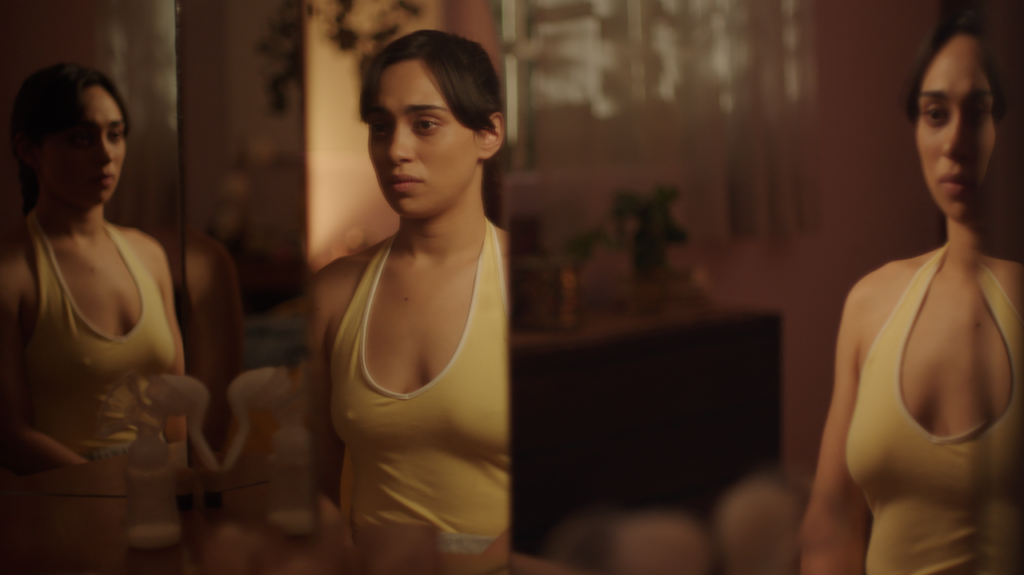
Natalia Solián in “Huesera: The Bone Woman” (Photo courtesy of XYZ Films)

“Huesera: The Bone Woman”

Directed by Michelle Garza Cervera

Spanish with subtitles

Culture Representation: Taking place in Mexico, the horror film “Huesera: The Bone Woman” features a Latino cast of characters representing the working-class and middle-class.

Culture Clash: A woman’s pregnancy and her sanity are threatened when she keeps having nightmarish visions of her bones breaking and women who can contort their limbs and seem to be agents of death. 

Culture Audience: “Huesera: The Bone Woman” will appeal primarily to people who are interested in seeing bizarre horror movies with intriguing stories and striking visuals.

Natalia Solián in “Huesera: The Bone Woman” (Photo courtesy of XYZ Films)

“Huesera: The Bone Woman” delivers plenty of creepy images and convincing acting performances. Just don’t expect a clear and complete explanation for all of the disturbing incidents in this effective horror movie. The movie’s sound effects are just as terrifying as the visuals.

“Huesera: The Bone Woman” is the feature-film debut of director Michelle Garza Cervera, who co-wrote the movie’s screenplay with Abia Castillo. The movie had its world premiere at the 2022 Tribeca Film Festival, where Garza Cervera won the awards for Best New Narrative Director and the Nora Ephron Prize, an award given to emerging female filmmakers. Garza Cervera is certainly a talent to watch, since “Huesera: The Bone Woman” is the type of movie that will immediately hook viewers into the story and won’t let go.

The beginning of “Huesera: The Bone Woman” (which takes place in an unnamed city in Mexico) has a stunning visual of people gathered at the feet of La Virgen de Guadalupe (a giant gold statue of the Virgin Mary), somewhere in wooded area in Mexico. This statue (which is about 100 feet tall) doesn’t exist in real life, but it was created through visual effects for the movie. Religion and motherhood are major themes throughout “Huesera: The Bone Woman.”

The movie’s protagonist is a woman in her 30s named Valeria Hernandez (played by Natalia Solián), who has been married to her mild-mannered husband Raúl (played by Alfonso Dosal) for an untold number of years. Valeria (who makes furniture in her home shop) and Raúl (who works in advertising) seem to be happily married. But soon, viewers find out that the only strain in their marriage is that Valeria and Raúl have been trying unsuccessfully for a long time to have a child.

That disappointment is about to change when Valeria visits her gynecologist (played by Emilram Cossío) for a medical exam because she’s fairly certain that she’s pregnant. The doctor confirms that she’s three months pregnant. Valeria and Raúl are ecstatic about this happy news and start making plans for their first child. Valeria wants to make a crib for the baby, even though her doctor advises her to temporarily stop doing any furniture-making work while she’s pregnant.

Not everyone is thrilled about Valeria’s pregnancy. One day, Valeria and Raúl go to visit Valeria’s parents Luis (played by Enoc Leaño) and Maricarmen (played by Aida López), who are excited to hear that Valeria is going to become a parent. However, Valeria’s older sister Vero (played by Sonia Couoh), a single mother who lives in her parents’ household with Vero’s two kids, is skeptical that Valeria will be a good mother. Also in the household is Maricarmen’s sister Isabel (played by Mercedes Hernández), who has never been married and has no children.

Vero makes snide and sarcastic comments every time Valeria talks about the pregnancy, such as saying that she thought Valeria would never get pregnant because Valeria was getting to be “too old” to conceive a child. Vero also says that she wouldn’t trust Valeria to babysit or be alone with Vero’s two children: Jorge (played by Luciano Martí), who’s about 10 or 11 years old and Paola (played by Camila Leoneé), who’s about 9 or 10 years old. Why is so Vero so uptight and hostile about Valeria being around children?

When the family is gathered for a meal at the dining room table, Vero tells Raúl why she thinks Valeria won’t have good parenting skills: When Valeria was younger (perhaps when she was an adolescent), she was asked to babysit an infant, but Valeria dropped the child on the ground. An embarrassed Valeria tells Raúl that the baby wasn’t injured, but viewers later find out that it’s a lie.

After this uncomfortable family gathering, Raúl and Valeria are driving back to their home when a woman stops the car to talk to them. Her name is Octavia (played by Mayra Batalla), who was close to Valeria when they were in high school together. Octavia and Valeria haven’t seen or spoken to each other in years. They make small talk, as Valeria introduces Raúl to Valeria.

Octavia looks at Raúl suspiciously and immediately gives off “jealous ex-girlfriend” vibes. And sure enough, later in the movie, it’s revealed that Valeria and Octavia were lovers when they were teenagers. Raúl doesn’t know, and neither does Valeria’s family. It’s implied that Valeria has been keeping her queer identity a secret from most people in her life.

Flashbacks in the movie show that teenage Valeria (played by Gabriela Velarde) and teenage Octavia (played by Isabel Luna) were both in a rebelllious, hard-partying clique that included other queer people. Valeria and Octavia even made plans to move away together after they graduated from high school. However, Valeria changed her mind, and that’s what ended her relationship with Octavia, who seems to still be heartbroken and bitter over this breakup. Valeria later finds out that Octavia, who still has a hard-partying lifestyle, lives by herself and is not dating anyone special.

Because “Huesera: The Bone Woman” is a horror movie, it doesn’t take long for some frightening things to happen. Valeria begins to imagine that bones in parts of her body (such as a foot) suddenly break. She also sees faceless women who contort their bodies in grotesque ways and seem to be coming after Valeria to attack her or do something violent.

There’s a scene where Valeria is looking at the apartment building that’s directly across from the apartment building where Valeria and Raúl live. Valeria is horrified to see a faceless young woman contort her body, climb on the balcony, and jump to her death. Valeria even sees the bloodied and mangled corpse on the ground. But when Valeria rushes to tell Raúl about what she saw, and they both go to investigate, there’s nothing there.

“Huesera: The Bone Woman” can get a little repetitive with the over-used horror narrative of a woman seeing terrifying visions that no one else can see, and then people start to think that she’s mentally ill. However, many of the images in “Huesera: The Bone Woman” are truly unique, particularly in the movie’s last 15 minutes. Fire and water are both used effectively in some of the film’s best scenes, by tapping into fears of drowning or burning to death.

And get used to the sound of bones being contorted or fractured. Not only does Valeria have a habit of cracking her knuckles, the visions that haunt her almost always include the sounds of bones breaking. It might be too nauseating for some viewers, but the movie’s sound design and sound mixing are top-notch for achieving the intended horror. The cinematography by Nur Rubio Sherwell is also noteworthy for how it creates a foreboding atmosphere, amid what is supposed to be domestic bliss for a new mother.

“Huesera: The Bone Woman” blurs the lines between what is religion and what is pagan witchcraft. More than once, Valeria visits a spiritualist named Ursula (played by Martha Claudia Moreno) for guidance and some rituals. Valeria’s Aunt Isabel, who is treated like a weirdo in the family, because Isabel never got married and has no children, becomes more important to troubled Valeria, as Valeria starts to question her own life choices.

All of the cast members play their parts well, but “Huesera: The Bone Woman” would not be as memorable without the stellar lead performance of Solián. Even when the story gets a little muddled, and viewers will begin to wonder why it’s taking so long to explain why Valeria is experiencing all this terror, Solián maintains an authenticity to her character throughout the movie. Valeria is not a typical “damsel in nightmarish distress” from horror movies, which often care more about the murdered body count than the interior lives of the protagonists.

Is there a bone woman named Huesera in the movie? In real life, there is a fairly obscure Mexican folk tale about an elderly woman named Huesera, who collected bones and brought these bones back to life, but don’t expect that to be part of the movie’s story. “Huesera: The Bone Woman” could have done the most obvious thing and made the movie into a ghost story, with Huesera haunting Valeria. However, by the end of the film, viewers can understand the intended message: Sometimes, what can haunt people the most is when they try to hide from their true selves.

XYZ Films released “Huesera: The Bone Woman” in select U.S. cinemas on February 10, 2023. Shudder premiered the movie on February 16, 2023. “Huesera: The Bone Woman” was released on digital and VOD on February 17, 2023.

Copyright 2017-2026 Culture Mix
CULTURE MIX