“One Battle After Another” writer/director/producer Paul Thomas Anderson and producer Sara Murphy at the 98th annual Academy Awards at the Dolby Theatre in Los Angeles on March 15, 2026. (Photo by Frank Micelotta/Disney/ABC)
With six prizes, including Best Picture, Warner Bros. Pictures’ action comedy “One Battle After Another” was the top winner at the 98th annual Academy Awards, which were presented at the Dolby Theatre in Los Angeles on March 15, 2026. The ceremony was hosted by Conan O’Brien for the second consecutive year. ABC had the U.S. telecast of the show, which was livestreamed on Hulu. The Academy Awards, also known as the Oscars, are voted for by the Academy of Motion Picture Arts and Sciences. For the 2026 ceremony, eligible movies were those released in the U.S. cinemas or in their native country in 2025.
“One Battle After Another” also won Oscars for Best Director (for Paul Thomas Anderson); Best Supporting Actor (for Sean Penn, who did not attend the ceremony); Best Adapted Screenplay (also for Anderson); Best Casting (for Cassandra Kulukundis, the first winner for this newly debuted category); and Best Film Editing (for Andy Jurgensen). These are the first Oscars for all of these “One Battle After Another” winners, except for Penn, who won his third Oscar because of this movie. “One Battle After Another” (which went into the ceremony with 11 nominations) had been winning top prizes at several preceding award shows for movies, so the movie’s awards dominance at the Oscars was not a huge surprise.
Warner Bros.’ vampire horror film “Sinners” (which went into the ceremony with a record-breaking 16 nominations) was also a notable winner, with four prizes: Best Actor (for Michael B. Jordan); Best Original Screenplay (for Ryan Coogler); Best Cinematography (for Autumn Durald Arkapaw); and Best Original Score (for Ludwig Göransson). These are the first Oscars for all of these “Sinners” winners, except for composer Göransson, who won his third Oscar because of this movie. Durald Arkapaw made Oscar history by becoming the first woman to win an Oscar for Best Cinematography. Prior to her Oscar victory, Best Cinematography was the only Oscar category where a woman had never won.
Other winners in major categories included Jessie Buckley of Focus Features’ Shakespeare family drama “Hamnet” (Best Actress); Amy Madigan of the horror movie “Weapons” (Best Supporting Actress; Neon’s Norwegian filmmaking family drama “Sentimental Value” (Best International Feature Film); Netflix’s South Korean musical “KPop Demon Hunters” (Best Animated Feature Film); and Kino Lorber’s Russian propaganda exposé “Mr. Nobody Against Putin” (Best Documentary Feature Film).
Netflix’s horror remake “Frankenstein”(which had nine nominations going into the ceremony) won all three of the Oscars that the movie was widely predicted to win: Best Costume Design, Best Production Design, and Best Makeup and Hairstyling. Apple Original Films’ Formula 1 action movie “F1” won for Best Sound, while 20th Century Studios’ sci-fi/action film sequel “Avatar: Fire and Ash” won for Best Visual Effects.
Meanwhile, A24’s comedy/drama “Marty Supreme,” about an obsessively ambitious table tennis player, didn’t win in any of the nine categories where the movie was nominated, including Best Picture. Other nominees for Best Picture that didn’t win any Oscars were Focus Features’ comedy/drama “Bugonia,” Netflix’s drama “Train Dreams” and Neon’s Brazilian drama “The Secret Agent.”
For unexplained reasons, the ceremony featured performances of only two of the five nominations for Best Original Song: The “KPop Demon Hunters” singers performed signature tune “Golden” (which won the Oscar), while “Sinners” co-star Miles Caton led a large ensemble performance of the movie’s “I Lied to You.”
Presenters at the show included Will Arnett, Adrien Brody, Javier Bardem, Priyanka Chopra Jonas, Kieran Culkin, Robert Downey Jr., Chris Evans, Anne Hathaway, Chase Infiniti, Nicole Kidman, Jimmy Kimmel, Delroy Lindo, Mikey Madison, Ewan McGregor, Paul Mescal, Demi Moore, Wagner Moura, Kumail Nanjiani, Pedro Pascal, Gwyneth Paltrow, Robert Pattinson, Bill Pullman, Lewis Pullman, Zoe Saldaña, Channing Tatum, Sigourney Weaver, Anna Wintour and Zendaya. The stars of the 2011 comedy “Bridesmaids”—Kristen Wiig, Maya Rudolph, Rose Byrne, Melissa McCarthy and Ellie Kemper—reunited to present an award.
There were special tributes during the “In Memoriam” segment for notable movie industry people who died since the previous Oscar ceremony. Billy Crystal presented a special tribute to filmmaker/actor Rob Reiner. Rachel McAdams presented a tribute to actresses Claudia Cardinale, Diane Ladd, Catherine O’Hara and Diane Keaton. Barbra Streisand presented a tribute to actor/filmmaker Robert Redford.
Raj Kapoor was the ceremony’s executive producer and showrunner Raj Kapoor. Katy Mullan served as executive producer. Matt Berry was the show’s announcer.
Jessie Buckley (Best Actress winner), Michael B. Jordan (Best Actor winner) and Amy Madigan (Best Supporting Actress winner) at the 98th annual Academy Awards at the Dolby Theatre in Los Angeles on March 15, 2026. (Photo by Ser Baffo/Disney/ABC)
Here is the complete list of winners and nominations for the 2026 Academy Awards:
*=winner
Best Picture
“Bugonia” “F1” “Frankenstein” “Hamnet” “Marty Supreme” “One Battle After Another”* “The Secret Agent” “Sentimental Value” “Sinners” “Train Dreams”
Best Director
Paul Thomas Anderson (“One Battle After Another”)* Ryan Coogler (“Sinners”) Josh Safdie (“Marty Supreme”) Joachim Trier (“Sentimental Value”) Chloé Zhao (“Hamnet”)
Best Actor in a Leading Role
Timothée Chalamet (“Marty Supreme”) Leonardo DiCaprio (“One Battle After Another”) Ethan Hawke (“Blue Moon”) Michael B. Jordan (“Sinners”)* Wagner Moura (“The Secret Agent”)
Best Actress in a Leading Role
Jessie Buckley (“Hamnet”)* Rose Byrne (“If I Had Legs I’d Kick You”) Kate Hudson (“Song Sung Blue”) Renate Reinsve (“Sentimental Value”) Emma Stone (“Bugonia”)
Best Actor in a Supporting Role
Benicio Del Toro (“One Battle After Another”) Jacob Elordi (“Frankenstein”) Delroy Lindo (“Sinners”) Sean Penn (“One Battle After Another”)* Stellan Skarsgård (“Sentimental Value”)
Best Actress in a Supporting Role
Elle Fanning (“Sentimental Value”) Inga Ibsdotter Lilleaas (“Sentimental Value”) Amy Madigan (“Weapons”)* Wunmi Mosaku (“Sinners”) Teyana Taylor (“One Battle After Another”)
Best Adapted Screenplay
“Bugonia,” written by Will Tracy “Frankenstein,” written by Guillermo del Toro “Hamnet,” written by Chloé Zhao and Maggie O’Farrell “One Battle After Another,” written by Paul Thomas Anderson* “Train Dreams,” written by Clint Bentley and Greg Kwedar
Best Original Screenplay
“Blue Moon,” written by Robert Kaplow “It Was Just an Accident,” written by Jafar Panahi, in collaboration with Shadmehr Rastin, Nader Saïvar and Mehdi Mahmoudian “Marty Supreme,” written by Ronald Bronstein and Josh Safdie “Sentimental Value,” written by Eskil Vogt and Joachim Trier “Sinners,” written by Ryan Coogler*
Best Cinematography
“Frankenstein,” Dan Laustsen “Marty Supreme,” Darius Khondji “One Battle After Another,” Michael Bauman “Sinners,” Autumn Durald Arkapaw* “Train Dreams,” Adolpho Veloso
Best Film Editing
“F1,” Stephen Mirrione “Marty Supreme,” Ronald Bronstein and Josh Safdie “One Battle After Another,” Andy Jurgensen* “Sentimental Value,” Olivier Bugge Coutté “Sinners,” Michael P. Shawver
Best Casting
“Hamnet,” Nina Gold “Marty Supreme,” Jennifer Venditti “One Battle After Another,” Cassandra Kulukundis* “The Secret Agent,” Gabriel Domingues “Sinners,” Francine Maisler
Best Sound
“F1″* “Frankenstein” “One Battle After Another” “Sinners” “Sirāt”
Best Original Score
“Bugonia,” Jerskin Fendrix “Frankenstein,” Alexandre Desplat “Hamnet,” Max Richter “One Battle After Another,” Jonny Greenwood “Sinners,” Ludwig Göransson*
Best Original Song
“Dear Me” from “Diane Warren: Relentless” – Music and lyrics by Diane Warren “Golden” from “KPop Demon Hunters” – Music and lyrics by Ejae, Mark Sonnenblick, Joong Gyu Kwak, Yu Han Lee, Hee Dong Nam, Jeong Hoon Seon and Teddy Park* “I Lied to You” from “Sinners” – Music and lyrics by Raphael Saadiq and Ludwig Göransson “Sweet Dreams of Joy” from “Viva Verdi!” – Music and lyrics by Nicholas Pike “Train Dreams” from “Train Dreams” – Music and lyrics by Nick Cave
Best Animated Feature Film
“Arco” “Elio” “KPop Demon Hunters”* “Little Amélie or the Character of Rain” “Zootopia 2”
Best International Feature Film
“It Was Just an Accident” (France) “The Secret Agent” (Brazil) “Sentimental Value” (Norway)* “Sirāt” (Spain) “The Voice of Hind Rajab” (Tunisia)
Best Documentary Feature
“The Alabama Solution” “Come See Me in the Good Light” “Cutting Through Rocks” “Mr. Nobody Against Putin”* “The Perfect Neighbor”
Best Makeup and Hairstyling
“Frankenstein”* “Kokuho” “Sinners” “The Smashing Machine” “The Ugly Stepsister”
Best Costume Design
“Avatar: Fire and Ash,” Deborah L. Scott “Frankenstein,” Kate Hawley* “Hamnet,” Malgosia Turzanska “Marty Supreme,” Miyako Bellizzi “Sinners,” Ruth E. Carter
Best Production Design
“Frankenstein”* “Hamnet” “Marty Supreme” “One Battle After Another” “Sinners”
Best Visual Effects
“Avatar: Fire and Ash”* “F1” “Jurassic World Rebirth” “The Lost Bus” “Sinners”
Best Documentary Short Film
“All the Empty Rooms”* “Armed Only with a Camera: The Life and Death of Brent Renaud” “Children No More: ‘Were and Are Gone'” “The Devil Is Busy” “Perfectly a Strangeness”
Best Animated Short Film
“Butterfly” “Forevergreen” “The Girl Who Cried Pearls”* “Retirement Plan” “The Three Sisters”
Best Live-Action Short Film
“Butcher’s Stain’ “A Friend of Dorothy” “Jane Austen’s Period Drama” “The Singers”* (tie) “Two People Exchanging Saliva”* (tie)
Culture Representation: Taking place in unnamed locations in the United States, the action film “One Battle After Another” (inspired by the 1990 novel “Vineland”) features a racially diverse cast of characters (African American, white and Latin) representing the working-class, middle-class and wealthy.
Culture Clash: A former member of a radical, left-wing militant group goes on a mission to rescue his biracial teenage daughter when she becomes the target of a secretive and powerful white supremacist group.
Culture Audience: “One Battle After Another” will appeal primarily to people who are fans of the movie’s headliners, filmmaker Paul Thomas Anderson, and sprawling action movies that take a dark comedic approach to sociopolitical issues, such as racism and income inequalities.
Teyana Taylor and Sean Penn in “One Battle After Another” (Photo courtesy of Warner Bros. Pictures)
“One Battle After Another” is a sometimes-rambling, sometimes-taut blend of being a dark screwball action comedy and a preachy anti-racism drama. The performances and action scenes are better than how the movie handles racial issues. “One Battle After Another” seems to be filmmaker Paul Thomas Anderson’s response to criticism that his previous movies didn’t have enough racial diversity. But some areas of “One Battle After Another” are cringeworthy in how it tries too hard to be a politically progressive statement film.
Written and directed by Anderson, “One Battle After Another” is inspired by Thomas Pynchon’s 1990 novel “Vineland,” a story about a California former radical hippie and his teenage daughter who go on the run from government officials. “One Battle After Another” can be considered a contemporary Wild West movie, with themes about loyalties to family versus loyalties to the government. In “One Battle After Another,” the “heroes” are members of a violent, radical, left-wing anti-government group, and the “villains” are the U.S. government and a secretive group of white supremacists who are in positions of power. Many of the scenes involving car chases and fights take place in remote desert areas where the only laws that seem to matter are the laws of survival.
“One Battle After Another” (which was filmed in California and the Texas city of El Paso) begins somewhere near the U.S./Mexico border. A radical activist named Perfidia Beverly Hills (played by Teyana Taylor) goes to a remote area in the desert to meet her group of colleagues in a left-wing anarchist group called the French 75. The members of the French 75 believe that the best way to bring attention to their causes is by committing violent crimes. They do things such as blow up buildings and rob banks.
On this particular day, about 20 members of the French 75 (who call themselves “revolutionaries”) will be raiding a U.S. Immigration and Customs Enforcement (ICE) detention center. The French 75’s goal is to free the immigrant detainees and imprison the military detention guards in the same cages that were built for the detainees. In another part of the movie, the French 75 blows up the campaign office of a politician who voted to ban abortion in his state.
The French 75 is a collective with no official leader. But if they did have an official leader, it would be Perfidia. She is hardcore in her beliefs, infatuated with violence, and fearless in getting what she wants. Perfidia is also one of the most one-note characters in the movie, which flubs opportunities to present her as a more complex and more interesting character.
Bob Ferguson (played by Leonardo DiCaprio) is a drifter/stoner, who desperately wants to be accepted into the French 75. On the day of this ICE detention invasion, Bob is seen arriving with a wagon of weapons (such as guns and tear gas) at a French 75 meeting place and telling Perfidia that he has any weapons that they might need. Perfidia has a tough persona, but she soon reveals that she has a soft spot for Bob because they have a noticeable attraction to each other.
Before the members of the French 75 raid the ICE detention center, they chant, “Free borders, free choices, free bodies, and freedom from fucking fear.” The French 75’s raid is victorious, as they achieve their goal of freeing the detainees and locking up the detention center guards. Perfidia takes pleasure in putting a gun to the head of the detention center’s leader: Colonel Steven J. Lockjaw (played by Sean Penn), who has an erection when she takes him from his room and leads him to the cage where he gets locked up. She also takes his gun and hat.
Perfidia and Bob hook up soon after the ICE detention raid and become a couple. If they fall in love, then Bob is definitely more in love with Perfidia than she is with him. Bob and Perfidia move in together. He thinks she’ll want to settle down for a happy domesticated life, but he is very wrong about that assumption.
Meanwhile, it’s shown many times in the movie that Steven (who is an unmarried loner with a rigid personality) has a secret sexual fetish for black women. Steven becomes obsessed with Perfidia and masturbates when he stalks her. Perfidia finds out that he’s been following her when he corners her in a public restroom. He tells her that he doesn’t care what she does, as long as she returns his gun and hat to him.
Of course, those items are not what Steven really wants. Perfidia and Steven have sex in the bathroom, in an encounter where he lets her dominate him. They have a similar sexual encounter in another scene that’s also more about power than sex.
Within an unnamed number of months after Perfidia and Bob become a couple, Perfidia finds out that she’s pregnant. Bob is elated about becoming a parent. Perfidia has a “wait and see” attitude about parenthood.
After Perfidia’s mother Sandrae (played by Vanessa Ganter) finds out about the pregnancy, she candidly tells Bob: “You are unsuitable for my daughter. We come from a long line of revolutionaries. She’s a runner. You’re a stump.” (Who talks like that in real life? Only people in a movie like this one.)
It eventually becomes obvious that Perfidia’s real love is causing chaos with her version of radical activism. Nowhere is this exemplified more than in a scene where a very pregnant Perfidia, with her belly exposed, gleefully shoots off rounds of a machine gun somewhere in a desert area where the other French 75 members have gathered. It’s a visually striking scene but one of many scenes in which Perfidia seems to be objectified as a black female fetish.
After Perfidia gives birth to a daughter named Charlene (played by Otillia Gupta as a newborn baby and Nia Leon as an older infant), Perfidia says in a voiceover that she thinks Bob loves the baby more than he loves Perfidia. In other words, Perfidia gets jealous because she can’t stand not being the center of attention in her own home. And the truth is, Bob is a more attentive and more loving parent than Perfidia.
So what does narcissist Perfidia do? She abandons her family when Charlene is less than 6 months old and tries to make Bob look “soft” by telling him that she’s more committed to the French 75 cause than he is. Perfidia says to Bob, “You and your crumbling male ego will never do the revolution like I will.”
Bob attempts to persuade her to stay, but he eventually gives up when he sees that Perfidia has made up her mind and won’t come back. The last thing Bob says to Perfidia in a resigned voice is, “Do the revolution, baby.” After this breakup, Perfidia does something to betray the French 75. This betrayal has consequences for years to come. What happens to Perfidia is eventually revealed in the movie.
“One Battle After Another” then fast-forwards 16 years later to show that many years ago, Bob left the French 75 and has raised his daughter as a single parent in an “off-the-grid” area with desert terrain. The daughter is now named Willa (played by Chase Infiniti), who knows that Perfidia abandoned her and Bob. Because Bob left the French 75 under acrimonious circumstances, and because he was directly responsible for many of the group’s bombings and other violent crimes, he is paranoid about being found. His paranoia is also fueled by his continuous abuse of drugs and alcohol.
In some ways, Willa is a typical teenager who’s at a stage in her life where she’s embarrassed by her parents and wants more independence. In other ways, she’s not a typical teenager because she’s been raised from an early age to defend herself from getting murdered. Willa is skilled at using guns. Bob encourages her to take lessons in martial arts. And because Bob wants to live as undetected as possible, he doesn’t like Willa’s use of technology.
“One Battle After Another” makes a big deal out of how racism is the reason for most of the movie’s conflicts. And yet, “One Battle After Another” is quite cowardly in sidestepping any realistic conversations that white Bob and biracial Willa would have about racial issues. The movie spends more time pointing out that Willa has a friend with “they/them” pronouns than having Willa talk about her mixed-race heritage. When being black is mentioned by anyone in this movie, it’s only in the context of pain and acrimony, not joy and harmony. Racism becomes its own fetish for the purposes of this film.
Meanwhile, as Bob and Willa navigate their changing relationship, Steven is invited to interview for membership in a secret white supremacist group called the Christmas Adventurers Club. The members of the club are high-ranking politicians, military leaders, judicial officials, business moguls and other powerful people. The Christmas Adventurers Club hails St. Nicholas as part of a group ritual. The senior leader of the Christmas Club is Roy More (played by Kevin Tighe), whose name seems to be an obvious nod to real-life right-winger Roy Moore, a controversial former Alabama supreme court justice.
Other members of the Christmas Adventurers Club have names that are the same or similar to other famous people: Sandy Irvine (played by James Downey) is most definitely not the 22-year-old British mountaineer who died while trying to climb Mount Everest in 1924. William Desmond (played by D.W. Moffett) has a name that is similar to Irish American actor-turned-director William Desmond Taylor, whose 1929 murder (when he was 49) remains an unsolved mystery. The only female Christmas Adventurers Club member who’s shown in the movie is Roy More’s wife Alice More (played by Patricia Ridgely Storm), who is briefly seen and has a subservient role.
Christmas Adventurers Club member Virgil Throckmorton (played by Tony Goldwyn) is a politician who reaches out to Steven to recruit Steven as a possible member of the Christmas Adventurers Club. Steven is eager to join the club and is flattered that he was asked. But first, he must go through a vetting process that’s required for all potential members. Because “One Battle After Another” reveals very early on in the story that Steven has a secret sexual fetish for black women, you can easily predict where the movie is going to go in this vetting process.
The second half of the movie is mostly about Willa going missing and Bob on a frantic quest to find her. It results in madcap and violent chase scenes and fights that include an eccentric mercenary character named Sensei Sergio St. Carlos (played by Benicio del Toro), Willa’s karate teacher whom Bob enlists to help him; a Christmas Adventurers Club “fixer” named Tim Smith (played by John Hoogenakker); and a French 75 member named Deandra (played by Regina Hall), who becomes a maternal figure to Willa and helps her hide in a convent of nuns called the Sisters of the Brave Beaver, who grow marijuana. Steven also gets involved in this search for Willa.
“One Battle After Another” has elements that seem to want to be like a Coen Brothers movie and a Spike Lee movie at the same time. “One Battle After Another” wants to be quirky and amusing while delivering serious social messages about racism. The combination works well in some areas and doesn’t work as well in other areas. When it comes to the movie’s dark comedy, “One Battle After Another” is like a comedian who constantly laughs at the comedian’s own jokes before getting to the punchlines.
Some of the dialogue in “One Battle After Another” is so cheesy and cornball, it’s comical. The cast members in the movie do a great job of selling it, with some (such as DiCaprio, Penn and del Toro) seeming to be in on the not-so-subtle ways that this movie is trying to be a satire. And although “One Battle After Another” is obvious in its attempt to present Willa as an action hero instead of a stereotypical damsel in distress, make no mistake: This is a very male-centric movie, where the men get the best dialogue, and the story is told mainly from the perspectives of the male characters.
Characters such as Perfidia and Deandra come and go in the story and are ultimately overshadowed by other characters. Deandra barely gets any dialogue until the part in the movie where she’s supposed to be a protective mother figure to Willa. And because “One Battle After Another” is so focused on the buffoonish antics of Bob and Steven, the movie sidelines or ignores many of the characters who deserved more screen time in this long-winded, 170-minute film.
The French 75 is the catalyst for everything that happens in “One Battle After Another.” However, one of the movie’s missed opportunities is in not telling enough about any of the French 75 characters who aren’t Bob and Perfidia. Who are they as people, where did they come from, and what motivated them to join this radical group? Don’t expect the movie to answer any of those questions.
One of the French 75 is a nerdy guy named Sommerville (played by Paul Grimstad), who is in charge of a lot of the technical planning. That’s about all you’ll find out about him. Many of the French 75 characters have deliberately cartoonish nicknames—such as Mae West (played by Alana Haim), Junglepussy (played by Shayna McHayle) and R.A. Rippey (played by Sachi DiSerafino), whose name references 1970s child star Rodney Allen Rippy—that are practically begging for interesting backstories to be revealed. But these French 75 characters are merely shown quickly in scenes where they participate in violent crimes in the name of their activism.
“One Battle After Another” excels in its immersive cinematography (by Michael Bauman) that ramps up the movie’s tension in the action scenes. People who get easily queasy when watching movie cameras dip and rise like a rollercoaster should be warned in advance about a part of the movie where there’s a chase scene on a very hilly road. Jonny Greenwood’s unique musical score for “One Battle After Another” stands out for its unconventional piano motifs, but it is music that won’t be to everyone’s liking because it can’t be described as “crowd-pleasing.”
The biggest assets in “One Battle After Another” are the entertaining performances by this very talented cast. DiCaprio, Penn, Infiniti, del Toro and Taylor are all compelling in their roles. But their characters are written in ways that their characters’ humanity doesn’t feel entirely real, because they are near-caricatures in a movie that wants to shock more than awe. “One Battle After Another” isn’t as progressive and innovative as it thinks it is. Ultimately, it’s a very long action movie where the ending and the people who have the most importance in the story can easily be predicted.
Warner Bros. Pictures will release “One Battle After Another” in U.S. cinemas on September 26, 2025.
Culture Representation: Taking place in 1973 in California’s San Fernando Valley, the comedy/drama “Licorice Pizza” features a predominantly white cast of characters (with a few African Americans, Asians and Latinos) representing the working-class, middle-class and wealthy.
Culture Clash: A 15-year-old boy and a 25-year-old woman become unlikely business partners and friends, while she has conflicting feelings about his desire to be more than friends with her.
Culture Audience: “Licorice Pizza” will appeal primarily to people who are fans of filmmaker Paul Thomas Anderson and movies set in the 1970s with a quirky but emotion-driven storyline.
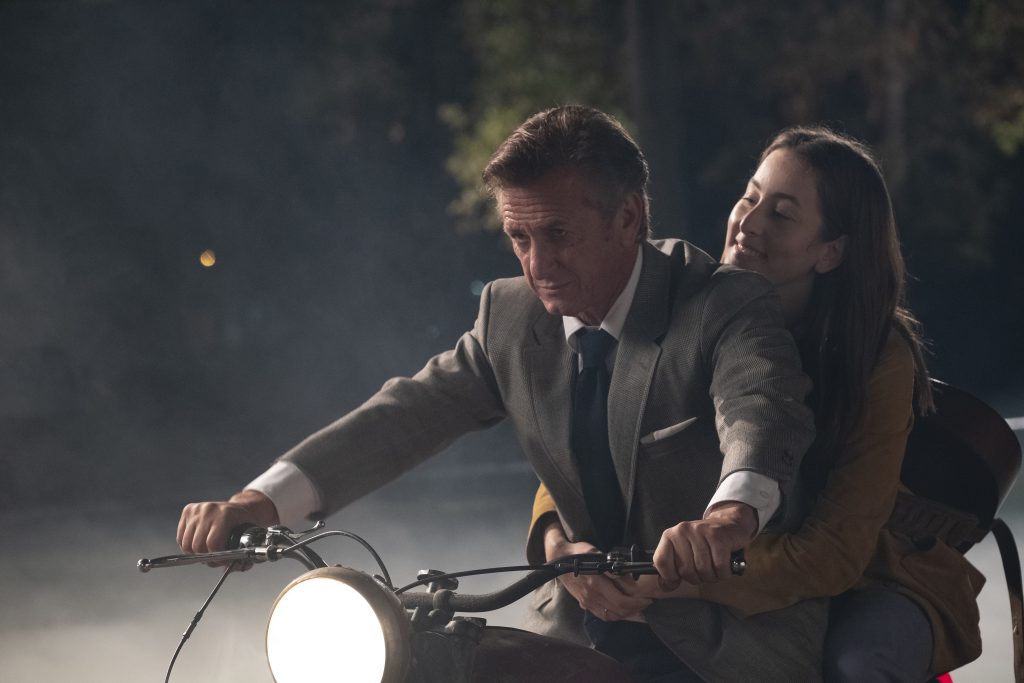
Sean Penn and Alana Haim in “Licorice Pizza” (Photo by Melinda Sue Gordon/Metro Goldwyn Mayer Pictures)
The rollicking and occasionally far-fetched dramedy “Licorice Pizza” tests the boundaries of if it’s appropriate to celebrate that a 15-year-old boy wants to seduce a 25-year-old woman. The movie doesn’t waste time with this story concept because it’s delivered in a very “only in a movie” way in the film’s opening scene, where characters who are supposed to be total strangers immediately and unrealistically exchange snappy banter that sounds exactly like what it is: well-rehearsed dialogue. This over-familiarity between strangers sets the tone for much of what happens in “Licorice Pizza,” which writer/director/producer Paul Thomas Anderson presents as a version of a heightened reality.
Any controversy about underage teen sexuality is avoided because there’s no sex in the movie, but there is a lot of adult language about sex and sexuality. “Licorice Pizza” (which is set in 1973, in California’s San Fernando Valley) is a movie were viewers will have to suspend some disbelief. That’s because a great deal of the story is about how this same “lovestruck” teenager is able to go from being a socially awkward student to being a confident and hustling business owner in the space of what seems to be a few short months.
“Licorice Pizza” is also a movie that is supposed to make some viewers uncomfortable, as well as make viewers laugh at the unpredictable comedy, feel tearkerking empathy during some of the drama depicting unpleasant realities, and get heartwarming joy from some of the romantic scenes. This is Anderson’s filmmaking style. People who watch his movies probably know it already. Anderson’s screenplays aren’t always perfect or consistently believable, but he casts his movies with talented actors who give memorable performances. Even the worst of Anderson’s movies have scenes and acting that people will remember.
“Licorice Pizza” mostly triumphs because of the cast members’ performances and when the movie is about the comedy that can be found in human flaws and quirks. “Licorice Pizza” tends to be less charming when it seems to both ridicule and embrace certain tropes in romantic movies. You can’t really have it both ways in the same film, and if you try to do that, it just makes filmmaking choices look wishy-washy or confused.
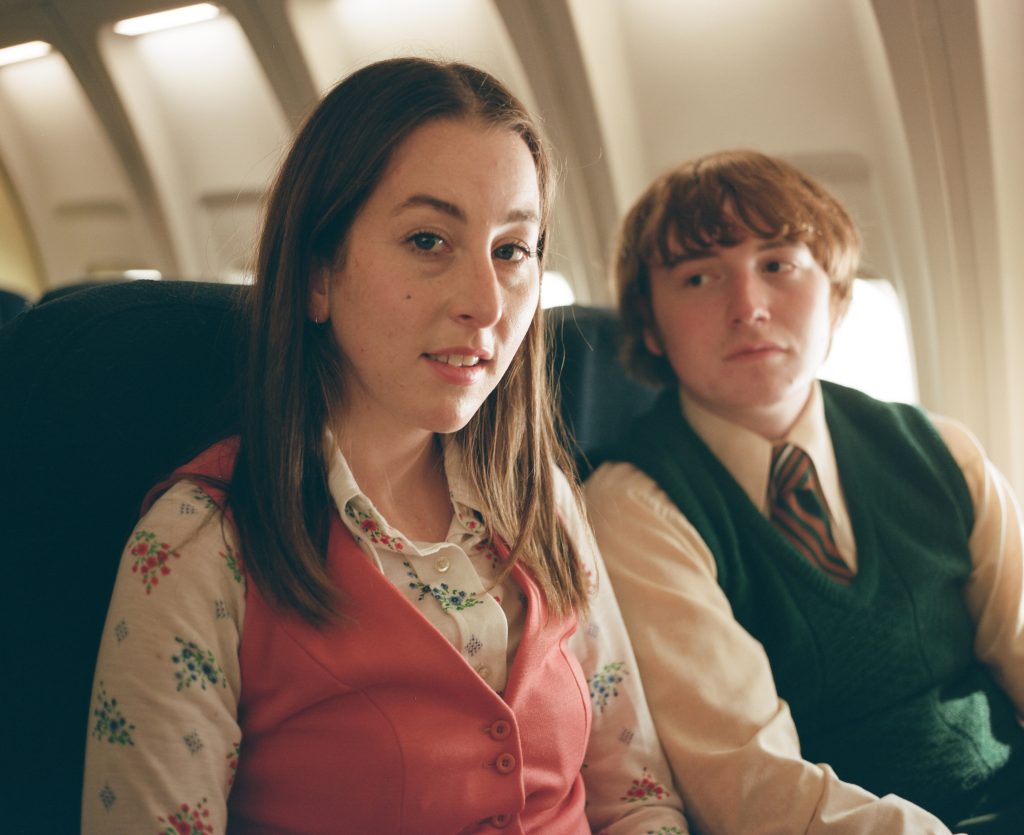
For example, there’s a recurring emphasis on the would-be “Licorice Pizza” couple—15-year-old Gary Valentine (played Cooper Hoffman) and 25-year-old Alana Kane (played by Alana Haim)—having scenes where one is running toward the other. They run either to help the other in a moment of distress; they run together while holding hands; or they run to indicate, “I’m so happy to see you that I can’t wait to hug you!”
These running scenes (some of which happen very abruptly) seem to be a spoof on clichés that are over-used in sappy romantic movies, as if this would-be couple might suddenly begin singing too. But there are moments when “Licorice Pizza” earnestly wants these running scenes to be taken seriously, in order to tug at viewers’ heartstrings. It’s this somewhat off-kilter tone that might be a turnoff to some viewers, but other viewers might think it’s compelling.
“Licorice Pizza” has some subtle and not-so-subtle commentary on the rigid gender roles that affect people’s perceptions of who should be the pursuers when it comes romance and sex. After all, reactions to “Licorice Pizza” would probably be very different if the movie had been about a 15-year-old girl who wants to date a 25-year-old man. “Licorice Pizza” certainly isn’t the first movie to be about an underage teenager who “falls in love” with an adult. But it’s impossible not to notice that a lot of what Gary gets away with would not be allowed for a female character of the same age, even if the movie were set in the present day.
It’s more of a commentary on sexism in society than Anderson’s personal filmmaking choices. However, “Licorice Pizza” still clings to the old-fashioned teen movie tropes of a nerdy teenage guy pining over a love interest and all the things he does to try to impress this love interest. It automatically sets up the teenage boy as the underdog. Movies like this almost never have an unhappy ending. The main difference between “Licorice Pizza” and most of the other teen-oriented movies that follow this over-used formula is that Anderson comes up with much better dialogue and more interesting characters portrayed by skillfull cast members. These are all the saving graces of “Licorice Pizza.”
Gary is a mix of insecurity and bravado when it comes to how he’s going to win over Alana, as well as how he becomes an aspiring business mogul. In the movie’s opening scene, it’s yearbook portrait day at Gary’s high school. Alana is an assistant at the photography studio that’s doing the student portraits on the school’s campus. The photo studio is called Tiny Toes, which implies that its specialty is doing children’s photography.
Gary is standing in a line outside the school to get his photo taken. He first sees Alana, looking bored, as she walks past the queuing students to offer a comb and mirror to anyone who needs these items. People mostly ignore Alana, except for Gary, who seems to have a “love at first sight” moment and tells Alana that he wants to use a comb and mirror.
Gary doesn’t waste time in letting Alana know that he’s interested in her. He immediately asks Alana out on a dinner date. She essentially laughs in his face and tells him, “You’re 12 … How are you going to pay?” Gary proudly tells Alana that he’s actually 15 (as if that makes a difference in his underage status) and he earns money by being an actor.
He starts listing his acting credits, which are mostly in commercials or bit parts in TV shows. However, Gary has his biggest role so far as a supporting actor in a movie musical called “Under One Roof,” in which he plays one of several orphans in an orphanage. It’s this movie role that ends up being a catalyst for how Gary and Alana’s relationship develops.
Alana bluntly tells Gary that it would be illegal for her to date him, but Gary is undeterred. He replies, “You give me hope. This is fate that brought us together!” Who talks like that to someone they just met? Alana gives a more realistic reply: “I doubt it, but we’ll see.” During this first conversation, Gary and Alana find out that she lives in Encino, while he lives in Sherman Oaks, which are about six miles apart from each other.
Alana still refuses Gary’s invitation for a dinner date. She thinks it’s somewhat amusing that this teenager is ardently pursuing her after they just met. “Don’t call it a date,” Gary says in an effort to convince Alana to meet him at his favorite local restaurant, which is called Tail o’ the Cock. (Cue the double entendre jokes.) Gary tells Alana that all he wants is for her to “just come by and say hello.”
Gary has a brother named Greg (played by Milo Herschlag), who’s about 8 or 9 years old. Gary often has the responsibility to look after himself and Greg because their single mother Anita (played by Mary Elizabeth Ellis), who’s an independent publicist, frequently has to travel away from home because of her job. (Gary’s father is not seen or mentioned in the movie.) At the time that Gary and Alana have met, Anita is temporarily in Las Vegas to do public-relations work for a hotel.
After school that day, Gary excitedly tells Greg, “I met the girl I’m going to marry one day!” Gary rushes to get ready for his “date” with Alana. There’s no guarantee that she’ll show up at the restaurant, but Gary is still hopeful. And sure enough, Alana shows up, with an expression on her face that seems to say, “I can’t believe I’m actually doing this.”
Gary is so elated and smitten that he intensely stares at Alana when they talk. She can also hear his heavy breathing. All of it makes her uncomfortable and she tells him to stop. “Stop breathing?” Gary asks. “Yes,” Alana says. It’s the first indication that Alana wants to be the “boss” of this relationship.
Later in the movie, there’s a great scene where Gary impulsively calls Alana but doesn’t say anything when she answers the phone. She can hear his breathing though, and quickly figures out that Gary is on the other line. He hangs up, but she calls him back, and she does the same thing that he did to her. It’s a very funny scene that says a lot about the kind of relationship that they have, which inevitably goes though ups and downs when issues of jealousy and control enter the mix.
Shortly after Gary and Alana’s “first date,” Anita calls Gary to tell him that she has to stay in Las Vegas longer than expected, so she can’t be his required guardian/chaperone on an upcoming trip to New York City for the press tour of “Under One Roof.” Gary doesn’t seem too disappointed because he knows that all he needs is someone over the age of 18 to accompany him on this trip. As soon as Gary’s mother tells him that she can’t go, you immediately know whom Gary will get to be his chaperone for this trip.
The movie cuts to Gary and Alana sitting together on the plane to New York City. At this point, Alana has been firm in telling Gary that she only wants to be his platonic friend. Gary tests her feelings when he openly flirts with an attractive flight attendant in her 20s, who seems to be impressed with Gary only because he confirms her assumption that he’s one of the actors in the movie’s cast.
Gary really isn’t interested in the flight attendant because he only wants to see Alana’s reaction to him flirting with another woman. Alana puts on a poker face, and then it’s her turn to play games with Gary. Soon after the flight attendant walks away, one of the actors in “Under One Roof” approaches Alana and makes it known that he thinks Alana is attractive and that he wants to date her.
His name is Lance Brannigan (played by Skyler Gisondo), and he’s in his late teens or early 20s. Alana enthusiastically flirts back with Lance. The look on Gary’s face indicates that he’s not happy about it, but he tries to play it cool and act like it doesn’t bother him. Expect to see more of these mind games between Gary and Alana when they see each other on dates with other people during the course of the movie.
In New York, the stars of “Under One Roof” go on a TV talk show called “The Jerry Best Show” and do an interview and a brief performance from the movie. Seated in the studio audience is Alana, who proudly tells the people sitting next to her that she’s Gary’s chaperone. The movie’s headliner is an actress named Lucy Doolittle (played by Christine Ebersole), who’s supposed to have an image that’s a combination of Lucille Ball and Shirley Jones. On camera, she’s personable with a bubbly personality.
Behind the scenes, Lucy is not the fun-loving actress that she appears to be. She’s a control freak who loses her temper easily. In a comedic scene, Gary says a sexual double entendre on the live broadcast. After the interview, Lucy gets so angry backstage that she yells at Gary and repeatedly hits him. Her lashing out is so bad that she has to be pulled off of Gary and carried away by security personnel.
This trip is a turning point in Gary and Alana’s relationship because it’s the first time that Alana sees what showbiz is like behind the scenes, and she sees that Gary gets a lot more freedom than most other teenagers who are his age. She thinks being an actor is much more glamorous than her boring life. And so, Alana starts to warm up to Gary (and Lance), and it isn’t long before Gary is helping her become an actress. Gary gets Alana a meeting with a talent agent named Mary Grady (played by Harriet Sansom Harris), who is probably Gary’s agent too.
Before the meeting, Gary advises Alana to lie and say she can do anything that is asked of her. For example, if a role requires horseriding skills, Gary says Alana should lie and say that she knows how to ride horses. He tells her that actors tell these lies all the time in auditions, and they figure out a way to quickly learn the skill if they get the role.
Gary is in the meeting with Alana and Mary, so he knows everything that’s being discussed. But once again, issues of jealousy and control come up when Alana tells Mary that she’s open to doing nude scenes. Gary reacts exactly how you think he would react. It’s quite the display of entitlement from an underage teenager toward a woman who isn’t even his girlfriend.
Alana ultimately gives a cringeworthy response to get Gary to stop whining about her willingness to do a nude scene. It is not one of the movie’s finer moments. However, it seems to be in the movie as an example of how lonely and desperate Alana is to get a certain amount of approval from Gary so that she can be in Gary’s life. Slowly but surely, viewers see that Alana is not as confident as she first appears to be.
Alana lives with her parents and her two older sisters, who are played by Alana Haim’s real-life parents and sisters. (In real life, the Haim sisters are the pop/rock trio Haim.) Alana’s father Moti (played by Moti Haim) is conservative and religious, while her mother Donna (played by Donna Haim) doesn’t say much. “Licorice Pizza” mentions several times that Alana and her family are Jewish, almost to the point where you wonder if the filmmakers intended the Kane family’s Jewishness to be some type of punchline.
Alana has a contentious relationship with oldest sister Este (played by Este Haim), who thinks that Alana is kind of a loser and isn’t afraid to say it to Alana. It’s not unusual for Alana and Este to have curse-filled arguments with each other. Alana has a much better relationship with middle sister Danielle (played by Danielle Haim), who seems to be Alana’s closest confidante. At one point, Alana asks Danielle if she thinks it’s weird that Alana is hanging out with teenagers like Gary and his friends. Danielle tries not to be judgmental and says no, but you can tell that Danielle might have just said that in order to not hurt Alana’s feelings.
Because really: It is weird for a 25-year-old to be hanging out with underage teenagers. It soon becomes clear that Alana has no friends of her own age and she’s trying to find her identity. She hasn’t quite figured out how she wants to make a living. But what she does know is that she wants to move out of her parents’ home and out of San Fernando Valley.
Alana thinks her ticket to a more glamorous life might be Lance, whom she begins dating, but Gary is never out of the picture. (One of the funniest scenes in the movie is when Alana brings Lance home for dinner to meet her family for the first time.) Eventually, Alana becomes involved in Gary’s plans to get rich by starting his own businesses. And this is where the movie takes a turn into some absurdity.
Gary is an aspiring entrepreneur. Without giving away too many details in this review, he ends up starting a business called Fat Bernie’s, where he sells water beds with the brand name Soggy Bottom. (Cue the scenes with more double entendres.) At another point in the movie, Gary opens a pinball arcade too.
Alana ends up working with Gary in his water-bed business, where they spend a lot of time doing phone sales. She also does in-person sales at the bed store. Another cringeworthy moment comes when Gary convinces Alana to wear a bikini and stand near the front door to attract customers. Alana seems ambivalent about how much she wants to use sex appeal for sales. Before the bikini scene happens, she gives Gary a verbal takedown when he tells her that she needs to sound sexier during her phone sales.
Yes, “Licorice Pizza” has a huge part of the story where a 15-year-old boy becomes a wheeler dealer business owner quicker than most kids complete a semester in school. There’s no logical explanation offered for it. Realistic details are never discussed in the movie, such as how he was able to rent all that retail/office space or how he got a delivery truck when he’s not even old enough to have a driver’s license. (It can be presumed he got the money to stock up on products from his actor income.) “Licorice Pizza” expects people to overlook that children under the age of 18 can’t sign contracts without a parent or guardian’s consent, unless the child is emancipated. Gary is not emancipated.
Because “Licorice Pizza” leans heavily into the subplot of Gary trying to become a business mogul, eventually his mother is never seen or mentioned in the movie again, and Gary is never seen in school again. He’s seen going to an industry trade show by himself, where he promotes his water-bed business at a booth. His only employees seem to be his brother, some local teenagers and Alana. These unrealistic aspects of the plot are undoubtedly the movie’s biggest flaws.
To make up for these gaps in reality, “Licorice Pizza” takes viewers on a topsy-turvy ride into Gary’s business antics and his continual pursuit to make Alana his girlfriend. There are some notable cameos from well-known actors who fulfill the expected eccentric roles in Anderson’s movies. Maya Rudolph (Anderson’s real-life partner) portrays a casting agent named Gale during one of Gary’s auditions for commercials. John C. Reilly has an uncredited cameo as a trade show attendee dressed in a Herman Munster costume. If Reilly isn’t the person in the actual costume, then it’s his voice that’s used for that character.
John Michael Higgins portrays Jerry Frick, the owner of a Japanese restaurant that hires Gary’s mother Anita to do publicity for the restaurant. The movie pokes fun at Jerry’s tone-deaf racism in the way that he speaks in a condescending, fake Japanese accent to his Japanese wife Mioko (played by Yumi Mizui), whom he later dumps for a younger Japanese wife named Kimiko (played by Megumi Anjo). Jerry treats Kimiko in the same way that he treated Mioko: as if he thinks he’s a culturally superior husband and she’s his inferior immigrant trophy wife.
Sean Penn portrays a famous actor named Jack Holden, who seems to be a character inspired by William Holden. Alana has auditioned for a role in one of Jack’s movies. Jack uses this pickup line on Alana, by name-dropping Grace Kelly, one of his past co-stars: “You remind me of Grace,” he tells Alana with a sleazy smirk. Jack invites Alana to have dinner with him at Tail o’ the Cock, where they are joined by the movie’s kooky director Rex Blau (played by Tom Waits), who seems to be wacked out on drugs.
And what a coincidence: Gary happens to be in the same restaurant too. Gary is there with a few of his friends, including a teenager named Wendi Jo (played by Zoe Herschlag), whom Gary has been casually dating. Gary can see that Alana is dazzled by Jack, while Alana wonders who’s the cute teenage girl who’s with Gary. Alana and Gary exchange furtive, jealous glances at each other at their respective restaurant tables.
Later, Rex leads Jack, Alana and a small crowd of restaurant customers outside to a park near the restaurant for an impromptu stunt that he wants to film with a hand-held camera. Rex encourages Jack to ride a motorcycle with Alana as his passenger on the park grass. Gary is one of the crowd observers. And something happens that leads to one of the movie’s scenes where someone runs toward another as a romantic gesture.
Bradley Cooper has the best and most hilarious scenes in the movie, as hair-stylist-turned-movie-producer Jon Peters, who becomes a customer of Gary’s water-bed business. In real life, Peters was Barbra Streisand’s live-in lover at the time. Streisand’s name is mentioned multiple times in the movie, but no one portrays Streisand in “Licorice Pizza.”
Cooper gives an unhinged, hot-tempered performance as Peters. When Gary, Alana, Greg and a teenage friend show up at the Streisand/Peters home to do a water-bed installation, Peters makes this threat to Gary: “I’m going to kill you and your family if you fuck up my house,” he says in all seriousness. It’s around the time of this house visit that rationing began for car gas, due to the Organization of Petroleum Exporting Countries (OPEC) embargo, so the gas shortage is used in the plot for some laugh-out-loud moments.
In real life, Peters is a self-admitted playboy, so that aspect of his personality is shown in the movie with his incessant boorishness when he makes unwanted sexual advances on women or when he talks about all the sex he’s had with women. (Trivia note: Peters was a producer of the 1976 version of “A Star is Born,” starring Streisand, and he was a producer of Cooper’s 2018 remake of “A Star Is Born.”) Alana becomes the target of his sexual harassment too, right in front of Gary, who looks on helplessly and does nothing to stop it.
Alana experiences other occasional forms of sexual harassment and sexism in the movie. For example, there’s a scene where she walks by a man (who’s a total stranger to her) who slaps her on her rear end as she passes him. This type of harassment is dealt with in a way that was typical for 1973: The person being harassed just shrugs it off and says nothing. These days, many people still react to harassment in the same way, but with the #MeToo movement, harassment is now less likely to be tolerated, and people are speaking up about it more.
Even though there are plenty of comedic moments in “Licorice Pizza,” the movie never lets viewers forget the serious issue of the big difference in age and maturity between Alana and Gary. There’s a very telling scene where Alana is sitting on a sidewalk after going through a harrowing experience. As she tries to collect her composure, Alana sees Gary and a few of his friends goofing off with some gas cans nearby. She says nothing out loud, but the expression on her face shows how she’s feeling inside: “What the hell am I doing here hanging out with these kids? Has my life really come to this?”
Gary is a horny teenager, so his immediate reasons for wanting to be with Alana are very transparent. He’s also very open in telling Alana that he’s sexually interested in her, but he’s not rude and aggressive about it. Gary is usually polite and respectful. Alana is the more complex character in this relationship. The movie never really explains why she has no friends of her own age. It expects viewers to just accept that Alana is a lost soul.
In “Licorice Pizza,” Hoffman and Alana Haim both make impressive feature-film debuts as actors. One of the refreshing things about the movie is that Anderson did not choose glossy-looking Hollywood actors for these two central roles. Gary looks like a real teenager (acne and all), while Alana looks like how most real women look, with teeth that aren’t perfectly straight or skin that has some blemishes. In other words, she doesn’t look like a Hollywood robot with too much plastic surgery. Too often, movies about teenage dating tend to cast actors who look too old to play teenagers, and the “dream girl” is someone who looks like a near-perfect model.
More importantly in the casting of Hoffman (who’s the son of the late Philip Seymour Hoffman) and Alana Haim is how they’re entirely believable as the characters of Gary and Alana, even if not all the scenarios written for them are believable. Do they have chemistry together? Yes, as two friends who are navigating the tightrope when one friend wants to date the other, even though they know taking the relationship beyond friendship would be illegal. There’s a fine line between making a relationship like this seem sweet or tacky, and it usually has to do with how much sexual contact the people in the relationship have with each other.
Although there are many things about Alana’s relationship with Gary that are downright inappropriate, she still puts up certain barriers so that the relationship doesn’t cross the line into statutory rape. Alana is no angel, but even she has enough ethics not to sexually take advantage of Gary. What Alana struggles with—and what Alana Haim portrays so well—is the moral ambuguity about how emotionally close she should get to an underage teenager who wants to date her. How long can she keep him in the “friend zone”?
“Licorice Pizza” takes another sudden turn when Alana decides to do something more meaningful with her life besides selling water beds. She volunteers to work on the political campaign of a city council member named Joel Wachs (played by Benny Safdie), who is running for mayor. In the last third of the movie, Alana finds out something about Joel where she gets a certain awakening and a certain reckoning that turn “Licorice Pizza” from a lightweight romp to a movie of more substance.
Don’t expect the movie to explain why it’s called “Licorice Pizza.” There is no explanation in the movie, but Anderson has said in real life that he named the movie after a former chain of California music stories called Licorice Pizza. Anderson is known for making excellent soundtrack choices for his films. Fans of retro rock and pop will love the “Licorice Pizza” soundtrack, although music aficionados will notice that one of the soundtrack songs was released after 1973: Chris Norman and Suzi Quatro’s 1978 duet “Stumblin’ In.” However, songs that existed in 1973, such as like Paul McCartney & Wings’ “Let Me Roll It” and David Bowie’s “Life on Mars?,” are used perfectly in certain scenes to immerse viewers in the mood that each scene is trying to convey.
If viewers can tolerate the most unrealistic parts of “Licorice Pizza,” then they should prepare themselves for a ride that’s a rollercoaster of emotions with some admirable acting. The unique characters in Anderson’s movies and the anticipation of seeing what will happen to these characters during each story make an irresistible combination. You might not want to hang out with a lot of these characters in real life, but it’s hard not to be entertained by them when watching them in a movie.
Metro Goldwyn Mayer Pictures and Focus Features will release “Licorice Pizza” in select U.S. cinemas on November 26, 2021. The movie’s release expands to more U.S. cinemas on December 25, 2021.
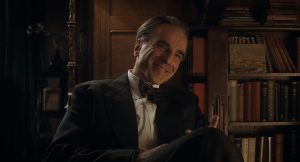
Daniel Day-Lewis in “Phantom Thread” (Photo by Laurie Sparham/Focus Features)
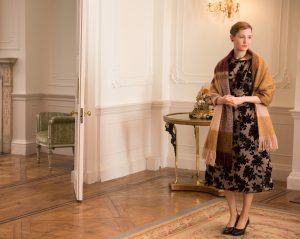
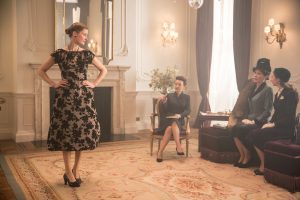
Set in the glamour of 1950’s post-war London, “Phantom Thread” is the story of renowned dressmaker Reynolds Woodcock (played by Daniel Day-Lewis) and his sister Cyril (played by Lesley Manville), who are at the center of British fashion, dressing royalty, movie stars, heiresses, socialites, debutantes and dames with the distinct style of The House of Woodcock. Women come and go through Woodcock’s life, providing the confirmed bachelor with inspiration and companionship, until he comes across a young, strong-willed woman, Alma (played by Vicky Krieps), who soon becomes a fixture in his life as his muse and lover. Once controlled and planned, he finds his carefully tailored life disrupted by love. With his latest film, Paul Thomas Anderson paints an illuminating portrait both of an artist on a creative journey, and the women who keep his world running. “Phantom Thread” is Paul Thomas Anderson’s eighth movie, and his second collaboration with Daniel Day-Lewis.
Here are videos and photos from “Phantom Thread”:
Daniel Day-Lewis in “Phantom Thread” (Photo courtesy of Focus Features)
Daniel Day-Lewis and writer/director Paul Thomas Anderson on the set of “Phantom Thread” (Photo courtesy of Focus Features)
Vicky Krieps in “Phantom Thread” (Photo by Laurie Sparham/Focus Features)
Lesley Manville (center) Vicky Krieps (far right) in “Phantom Thread” (Photo by Laurie Sparham/Focus Features)
Lesley Manville (far left) in “Phantom Thread” (Photo by Laurie Sparham/Focus Features)
Lesley Manville in “Phantom Thread” (Photo by Laurie Sparham/Focus Features)
Vicky Krieps in “Phantom Thread” (Photo by Laurie Sparham/Focus Features)
Lesley Manville in “Phantom Thread” (Photo by Laurie Sparham/Focus Features)
Vicky Krieps in “Phantom Thread” (Photo by Laurie Sparham/Focus Features)
Vicky Krieps (far left) and Lesley Manville (second from left) in “Phantom Thread” (Photo by Laurie Sparham/Focus Features)
Cosutme designer Mark Bridges (left) on the set of “Phantom Thread” (Photo by Laurie Sparham/Focus Features)
Daniel Day-Lewis and Lesley Manville in “Phantom Thread” (Photo by Laurie Sparham/Focus Features)
Lesley Manville in “Phantom Thread” (Photo by Laurie Sparham/Focus Features)
Writer/director/producer Paul Thomas Anderson on the set of “Phantom Thread” (Photo by Laurie Sparham/Focus Features)
Vicky Krieps and Daniel Day-Lewis in “Phantom Thread” (Photo by Laurie Sparham/Focus Features)
Daniel Day-Lewis in “Phantom Thread” (Photo by Laurie Sparham/Focus Features)
Daniel Day-Lewis and Vicky Krieps in “Phantom Thread” (Photo by LaurieSparham/Focus Features)
Daniel Day-Lewis in “Phantom Thread” (Photo by LaurieSparham/Focus Features)
Daniel Day-Lewis and Vicky Krieps in “Phantom Thread” (Photo by LaurieSparham/Focus Features)
Daniel Day-Lewis in “Phantom Thread” (Photo by Laurie Sparham/Focus Features)