
Review: ‘Anaganaga Oka Raju,’ starring Naveen Polishetty and Meenakshi Chaudhary

January 20, 2026

by Carla Hay

Naveen Polishetty and Meenakshi Chaudhary in “Anaganaga Oka Raju” (Photo courtesy of Sithara Entertainments)

“Anaganaga Oka Raju”

Directed by Maari

Telugu with subtitles

Culture Representation: Taking place in the fictional Indian cities of Gouravapuram and Peddapalem, the comedy film “Anaganaga Oka Raju” features a predominantly Asian cast of characters (with a few white people) representing the working-class, middle-class and wealthy.

Culture Clash: A political dynasty heir, who feels he is entitled to be rich, sets out to marry a wealthy woman and launches a campaign to become president of his municipality.

Culture Audience: “Anaganaga Oka Raju” will appeal primarily to people who are fans of the movie’s headliners and formulaic comedies that drag on for too long.

Tarak Ponnappa (center) in “Anaganaga Oka Raju” (Photo courtesy of Sithara Entertainments)

“Anaganaga Oka Raju” is yet another overly long movie (its total running time is 147 minutes) that’s stretched out to very irritating lengths, in order to pad out its very flimsy plot. This scatter-brained comedy wants to be two movies in one and doesn’t creatively succeed with either story about marriage and politics. The wealth-obsessed protagonist learns predictable life lessons.

Directed by Maari (who co-wrote the movie’s screenplay with Naveen Polishetty and
Chinmay), “Anaganaga Oka Raju” takes place in the fictional Indian cities of Gouravapuram and Paddapalem. The movie was filmed mostly in the East Godavari district of Andhra Pradesh, India. “Anaganaga Oka Raju” translates to “Once Upon a Time, There Was a King” in Telugu.

“Anaganaga Oka Raju” begins in Gouravapuram, where a man in his mid-30s named Raju (played by Naveen Polishetty) dreams of having an affluent life of leisure. Raju’s wealthy grandfather was Gouravapuram Zamindar Gokaraju, a “revolutionary and reformist,” who gave all of his wealth away in his will. Raju has a lot of resentment that he couldn’t inherit any of this wealth. He’s determined to become rich by any means necessary.

The first half of the movie shows Raju scheming to marry a wealthy woman. He meets an attractive and friendly heiress named Charulata (played by Meenakshi Chaudhary) and is instantly smitten with her. Raju comes up with various ways to get Charulata to fall in love with him.

For example, when Raju finds out that Charulata adores dogs, he stages a scenario in front of Charulata so that it looks like he saved a dog from drowning. Charulata is impressed and introduces herself to Raju. They have a whirlwind courtship.

It’s already revealed in the movie’s trailer that Raju and Charulata get married. Charulata is from Paddapalem, which is where she and Raju live after they get married. Something happens during their relationship that motivates Raju to find another way to get rich as soon as he can.

The second half of the movie is about Raju launching a career as a politician as a way to accumulate wealth. He runs for president of Paddapalem. His opponent in this race is Erribabu (played by Tarak Ponnappa), who is about the same age as Raju. Erribabu is stereotypically corrupt and egotistical. Raju uses the same political strategy that his grandfather used, by having an image and campaign advocating for underrepresented and overlooked people.

Charulata’s father is Pedapalem Bhupathi Raju (played by Rao Ramesh), who has mixed feelings about Raju, which leads to a few minor conflicts. Raju’s father-in-law is one of several underdeveloped characters in the movie. Raju has four male sidekick friends, who are by his side so often, it’s almost creepy. However, the movie never shows or tells anything meaningful about these friends, and viewers won’t be able to find out anything about these friends’ individual personalities.

“Anaganaga Oka Raju” gallops along at a manic speed during the first third of the film, it slows down considerably in the middle of the film, and then the pace picks up again during the last third of the movie. The cast members, particularly Polishetty, strain to be hilarious. That’s because most of the movie’s dialogue and gag set-ups are very stale and corny. The song-and-dance numbers are forgettable. The action scenes are unremarkable.

J. Yuvraj’s cinematography and Mickey J. Meyer’s music score are of two the few areas of “Anaganaga Oka Raju” that don’t fail in the movie’s efforts to have a vibrant and freewheeling tone. However, the movie’s uneven pacing and the bloated editing drag everything down. Certain filmmakers need to learn that making a movie much longer than it needs to be won’t make viewers feel like they’re getting their money’s worth if they’ve paid to watch the movie. It actually makes viewers annoyed that they’ve wasted time watching a lightweight story that’s been turned into an inflated mess.

Sithara Entertainments released “Anaganaga Oka Raju” in select U.S. cinemas on January 16, 2026. The movie was released in India on Janaury 14, 2026.

Review: ‘Andhra King Taluka,’ starring Upendra, Ram Pothineni and Bhagyashri Borse

November 27, 2025

by Carla Hay

Ram Pothineni in “Andhra King Taluka” (Photo courtesy of Prathyangira Cinemas)

“Andhra King Taluka”

Directed by Mahesh Babu Pachigolla

Telugu with subtitles

Culture Representation: Taking place in India, primarily in 2000, with flashbacks to 1990, the comedy/drama film “Andhra King Taluka” features an all-Asian cast of characters representing the working-class, middle-class and wealthy.

Culture Clash: A superfan of a famous actor starts a fundraising initiative to donate money for the actor’s stalled 100th film, and the fan gets bullied and shunned by many people because the actor is considered a has-been with a string of recent flops.

Culture Audience: “Andhra King Taluka” will appeal primarily to people who are fans of the movie’s headliners and superficial movies about fandom.

Rajeev Kanakala, Upendra and Sindhu Tolani in “Andhra King Taluka” (Photo courtesy of Prathyangira Cinemas)

“Andhra King Taluka” is an epic but empty film about a superfan of a famous actor. This bloated and redundant 163-minute comedy/drama is a mess. Upendra is a headliner and the movie’s title character, but he’s in the film for less than 20 minutes. What makes Upendra’s limited screen time so insulting to viewers is that it’s a “bait and switch” manipulation for this “cash grab” movie. Upenda portrays the movie star who is the catalyst for everything that happens in the movie, and yet he’s barely seen in the movie.

Written and directed by Mahesh Babu Pachigolla, “Andhra King Taluka” takes place in India mostly in 2000, but there are some flashbacks to 1990. The movie is oddly paced and wastes opportunities to be an interesting story about how far someone can take fandom before it becomes an unhealthy obsession. Instead, “Andhra King Taluka” just becomes a very boring slog of repetitive scenes showing the movie’s “superfan” getting into fights and having a romance that doesn’t look believable. The acting performances are mediocre-to-terrible.

“Andhra King Taluka” begins by showing famous actor Surya Kumar (played by Upendra, also known as Upendra Rao) performing a monologue in a scene while he’s on the set of an action film (which is also called “Andhra King Taluka”) that is his 100th movie. Surya is mostly known for doing action movies and dramas. It’s explained a little later in the movie that Surya also has the nickname Andhra King.

After he is finished with the scene, Surya is in his dressing room trailer when he is visited by the movie’s unnamed chief producer (played by Raghu Babu), who is there to deliver some very bad news. The producer tells Surya that the movie has been canceled, and production must shut down immediately, because there is no more funding for the movie. The producer explains to a shocked Surya that the chief investors for “Andhra King Taluka” think that the movie is going to flop, so they pulled the funding. It doesn’t help that Surya’s three most recently released movies have been flops.

Surya’s ego is wounded by this news about his 100th movie being canceled. He has a flashback memory to 1990, when he won a Best Actor prize at an awards show where the winners are chosen by votes from the public. After the ceremony, where he was mobbed by adoring fans, Surya was in the back seat of a limo with his manager Nayak (played by Rajeev Kanakala), when Surya noticed that his trophy was partially broken because a tip of the trophy was missing. The trophy had briefly fallen on the ground during the chaos of getting into the car.

Nayak offers to contact the awards show staff to get the trophy replaced, but Surya declines the offer. He tells Nayak that the reasons for winning the award are more important than the trophy. Surya says he will be forever grateful to his fans, whom he credits as the biggest reason why he has had a long and successful career. Toward the end of the movie, it’s revealed what happened to the missing part of the trophy.

Now, 10 years later, Surya’s career is in a slump, and he doesn’t know if can recover from this latest setback. At home, a dejected Surya tells his unnamed wife (played by Sindhu Tolani) that his 100th movie has been canceled. She suggests that Surya should ask for help from someone in his large fan base who can provide financing to complete the movie.

Surya takes that advice and calls a wealthy investor (played by VTV Ganesh), explains the situation with the movie being canceled, and asks for a loan of ₹ 3 crores (₹ 300 million) that the movie needs to be completed. The investor says he can give the loan on one condition: Surya’s 100th movie must be a film that the investor’s son is starring in, and Surya would have a supporting actor role as the father of the son’s character.

Surya hasn’t had a supporting role in years, so he is insulted by this offer. He also thinks he should be the lead actor in his 100th movie. Surya tells the investor that he’s going to decline the offer. The investor thinks that Surya will be desperate enough to reverse that decision. Surya is too proud to sell things such as his mansion and luxury cars to raise money for the project.

The situation with Surya’s canceled film goes from bad to worse. Much of the film was crowdfunded. And when it’s reported in the news that the movie has been canceled, an embarrassed Surya denies the story and says the movie has been put on hold, not canceled. Despite this denial, an angry crowd of protestors gather in front of Surya’s mansion to demand that he give an apology to the journalist who broke the story. The protestors also demand that the movie’s crowdfunders get refunds.

In the midst of this PR crisis, Surya gets some unexpected news: His manager tells Surya that someone has mysteriously deposited ₹ 3 crores into Surya’s bank account. An investigation is conducted into who is the mystery source of this deposit.

The movie then goes into flashback mode to 1990, when an enthusiastic boy named Sagar (played by Arun Dev), who’s about 10 or 11 years old, is taken to the movies by his unnamed father (played by Rao Ramesh) to see a film starring Surya, who is Sagar’s favorite actor. Sagar’s father encourages Surya to be a cinema enthusiast and doesn’t mind that Sagar is a big fan of Surya.

At the movie theater, Sagar spontaneously writes the words “Andhra King” on a T-shirt and hangs the a T-shirt on the front of the movie theater near the poster for Surya’s latest movie. A crowd outside the theater cheers when they see this fan spectacle. This corny and unrealistic scene is supposed to show how Surya got the nickname Andhra King.

Later in the movie, it’s revealed why Sagar has such an emotional attachment to Surya. Sagar used to have a stutter. He was bullied about his stutter by schoolmates and other peers. His father physically abused Sagar in a very misguided attempt to “beat” the stutter out of Sagar.

However, after Sagar heard Surya given an inspirational speech on the radio, Sagar’s stutter magically disappeared. Sagar began to excel in school, and he gained the respect of his father and other people. Sagar is convinced that Surya is the reason why Sagar’s life improved, so Sagar becomes a devoted fan of Surya. Sagar’s unnamed mother (played by Tulasi) is concerned that Sagar’s fandom will turn into an obsession, but Sagar’s father tells her not to worry.

In the year 2000, Sagar (played by Ram Pothineni) is a college student and the president of Surya’s fan club, but has not yet met Suyra. Sagar isn’t even sure if Surya knows who Sagar is. The vice president of the fan club is Sagar’s best friend Eshwar (played by Rahul Ramakrishna), who is a stereotypical goofy sidekick.

Sagar likes to host and promote events where Surya’s movies are shown at a local movie theater called Mahalakshmi Cinemas. The movie theater’s snobbish and mean-spirited owner Purushottam (played by Murali Sharma) named the movie theater after his daughter Mahalakshmi (played by Bhagyashri Borse), who is about the same age as Sagar. Purushottam has a lot of contempt and condescension for his working-class employees. In one scene, Purushottam unleashes a shouting rant where he calls them “lowlifes” just because he thinks they are low-class and stupid.

At one of these Surya Kumar fan events, a restless crowd has been kept waiting outside because the film hasn’t arrived at the theater yet. (Remember, this is in the year 2000, when many cinemas had projection rooms that used film equipment, not digital equipment.) Some rowdy people in the crowd start throwing things at the theater, and a window gets broken in a second-floor room where Mahalakshmi and Purushottam have been watching the growing unrest.

Some of the broken class gives Mahalakshmi a minor cut on her face. Purushottam is enraged and blames Sagar, who notices Mahalakshmi and is immediately smitten with her. Mahalakshmi notices Sagar too. Cue the lovey-dovey music.

The Surya Kumar film is finally delivered to the theater, and the event takes place. However, Purushottam holds a grudge against Sagar for Mahalakshmi getting injured and for the violent vandalism. Throughout the movie, Purushottam encourages a gang of about eight or nine local bullies to harass Sagar and get into fights with Sagar.

And when a movie has a disapproving father of a pretty daughter who has a mutual attraction to the movie’s protagonist, you know what happens: The movie’s protagonist and the daughter will fall in love and have a “forbidden romance.” It’s all so predictable. And unfortunately, this romance is very dull because there’s no believable chemistry between Sagar and Mahalakshmi, who is treated in the film as nothing more than eye candy whose only purpose is to support Sagar.

“Andhra King Taluka” then goes on an increasingly irritating repeat loop of Sagar getting into various fights and conflicts when he finds out that Surya’s 100th movie needs money to be revived, and Sagar is determined to lead the mission to get the money and “save” Saurya’s career. Several people don’t believe that Sagar can achieve this goal. In between these disputes, there are some song-and-dance numbers awkwardly shoved into the story.

The movie plays a not-suspenseful-at-all guessing game of whether or not Surya will find out who’s behind the mysterious deposit, and whether or not Sangar will finally meet Surya. This flimsy story could’ve been told in half of its time length and it still wouldn’t be substantial enough to be entertaining. And the movie seems to condone situations where a fan makes a celebrity the focal point of the fan’s own identity, to the detriment of the fan’s health and the relationships in the fan’s life.

Sagar’s unrelenting fixation on Surya often causes Sagar to disregard many important people and issues his life, but this fixation is excused because it’s cloaked in supposedly charitable fundraising. Simply put: “Andhra King Taluka” glorifies this type of unhealthy fan obsession. And that is the worst and most unredeemable thing about this poorly made and shallow movie.

Prathyangira Cinemas released “Andhra King Taluka” in select U.S. cinemas and in India on November 27, 2025.

Review: ‘The Girlfriend’ (2025), starring Rashmika Mandanna and Dheekshith Shetty

November 10, 2025

by Carla Hay

Dheekshith Shetty and Rashmika Mandanna in “The Girlfriend” (Photo courtesy of Prathyangira Cinemas)

“The Girlfriend” (2025)

Directed by Rahul Ravindran

Telugu with subtitles

Culture Representation: Taking place in India, the dramatic film “The Girlfriend” features an all-Asian cast of characters representing the working-class and middle-class.

Culture Clash: A woman in her early 20s gets trapped in a relationship with an abusive and controlling boyfriend.

Culture Audience: “The Girlfriend” will appeal primarily to people who are fans of the movie’s headliners and dramas about toxic romances.

Dheekshith Shetty and Anu Emmanuel in “The Girlfriend” (Photo courtesy of Prathyangira Cinemas)

“The Girlfriend” is prone to melodrama that is saved by Rashmika Mandanna’s memorable performance. Despite an over-the-top showdown scene, the movie remains grounded by the serious issue of being trapped in a toxic relationship. There’s a love triangle in “The Girlfriend,” but the movie should be commended for not making the love triangle completely cliché.

Written and directed by Rahul Ravindran, “The Girlfriend” has many elements that have been seen and done before in other movies about a woman who falls in love with the wrong person and ends up in an abusive relationship. The movie is also a little too long (150 minutes) for a plot that’s fairly simple. However, “The Girlfriend” has mostly credible performances (except for cringeworthy hamminess for one principal cast member) and can serve as a cautionary tale about what warning signs to look for in an abuser.

“The Girlfriend” takes place during two years in the life of grad student Bhooma Devi (played by Mandanna), who attends Ramalingaiah College in an unnamed city in India. Bhooma, who is in her early 20s, is enrolled in the college to get her master of arts degree in English literature. Her dream is to write books aimed at teens and young adults. The movie begins on the first day of her first year as a grad student at Ramalingaiah College, where she lives in an on-campus hostel.

Bhooma is friendly, a little bit introverted, and very inexperienced, when it comes to dating. She comes from a strict household, where her widower father S. Vara Prasad (played by Rao Ramesh), who is a medical doctor, has high expectations for her to succeed. He is very protective and supportive of her, but he also has conservative views of how much parents can and should interfere in an adult child’s romantic relationships.

Someone else who is in her first year as a Ramalingaiah College grad student is Durga (played by Anu Emmanuel), who is studying to become an actress. In many ways, Durga is the opposite of Bhooma: Durga is sassy, confident and a shameless flirter. Bhooma dresses modestly in traditional clothes. Durga likes to wear a lot of makeup and trendy fashions.

The third person in the movie’s love triangle is another Ramalingaiah College grad student: Vikram, nicknamed Vicky (played by Dheekshith Shetty), is studying computer science. He’s the charismatic leader of a tight-knit group of male friends, who hang out together like fraternity brothers. Over time, it becomes apparent that Vikram acts more like a destructive cult leader to the five other guys who are in the group.

Vikram first catches Durga’s attention during an outdoor gathering on campus, where Vikram is showing off his dance moves to a crowd of students. Durga is instantly smitten. She’s also the type of person who isn’t shy about letting Vikram know that she’s interested in dating him. However, Vikram tells Durga that he only likes her as a platonic friend.

Vikram is interested in dating Bhooma, but she keeps him at an emotional distance because she’s a little shy and she wants to focus on her academic studies. Vikram is the type of person who doesn’t like to hear “no” for an answer when he wants something. He continues to pursue Bhooma and only shows her his charming side when he courts her.

The movie then fast-forwards a year later. Durga still has an unrequited crush on Vikram, who is still trying to get Bhooma to date him. In this pivotal year, Bhooma sees Vikram’s dark side, but she ultimately ignores these warning signs and succumbs to his relentless courtship tactics.

The first time that Bhooma sees Vikram’s nasty and violent temper, it’s on a night where she and a female friend are riding a moped together. The two women get stuck on a street when the moped breaks down. A creepy middle-aged guy in a car begins to sexually harass the two women.

Vikram and his sycophantic buddies happen to be nearby and see what’s happening. Vikram leads the way in physically roughing up the harasser until the terrified man tearfully says he’s sorry and drives away. Bhooma and her friend see this incident as Vikram “coming to the rescue” and are grateful for the help.

It turns out the harasser was an off-duty police officer, who retaliates by getting his cop friends to arrest Vikram and his five pals on assault charges. While in police custody, the pals experience police brutality, with Vikram getting the worst of the police beatings. Vikram ends up in a hospital. And so now, Vikram not only looks like a “rescuer” to Bhooma, but he also looks like a “martyr.”

When Bhooma visits Vikram in the hospital, she treats some of his wounds and shows signs that she might be attracted to him. Vikram uses this apparent attraction to his advantage by flirting with her in a way that is too aggressive for Bhooma. She expresses discomfort about the way he is behaving with her, so she abruptly leaves.

Bhooma isn’t impressed with Vikram during another incident where Vikram uses violence to intimidate someone. A fellow college student named Vinay (played by Mahaboob Basha), who lives in the same hostel as Bhooma, has a crush on Bhooma and tells her. She politely tells Vinay that she’s not interested in dating him. Vikram overhears this conversation.

Vikram then orders Bhooma to stay away from Vinay. Vikram tells Bhooma, “I’m madly in love with you.” And he says that she has to stay away from Vinay, or else it will make Vikram look bad if Bhooma stays in touch with Vinay. Bhooma is appalled by this request and says so to Vikram.

After Bhooma leaves, Vikram and his goon friends go to Vinay’s dorm room and physically assault him. Vikram slaps Vinay and yells at Vinay to stay away from Bhooma. Because Vinay’s door is open, Bhooma happens to see this assault and rushes into the room to stop this attack. She is disgusted with Vikram’s extreme and violent reaction and seems to want nothing to do with Vikram.

Bhooma makes an apology to Vinay, but Vinay’s reaction shows that he’s no gentleman either. Vinay is embarrassed about being assaulted in front of Bhooma. He angrily orders Bhooma to leave his room and acts like the assault was somehow her fault.

After this assault, Vikram uses a typical abuser tactic to try to excuse his actions: He makes profuse apologies to Bhooma and “love bombs” her with intense declarations of love for her. Over time, this tactic works, because Vikram is able to wear down Bhooma, who is flattered by his attention. Vikram and Bhooma end up dating each other and become lovers.

Meanwhile, Durga and Bhooma are in the same theater class, where the class is rehearsing for a stage play. Durga excels and is considered the “star” of the class. By contrast, Bhooma’s acting is stiff, and she has trouble remembering her lines.

In many other movies, this would be the point in the story where Durga would be portrayed as a spiteful rival who uses Bhooma’s inferior acting talent as a reason to humiliate Bhooma. But that doesn’t happen. Bhooma, who doesn’t know at this point that Durga has a crush on Vikram, compliments Durga on her acting skills and asks Durga for help to improve Bhooma’s acting skills.

Durga generously helps Bhooma. And the two women end up becoming friends. But how long can Durga keep her crush on Vikram a secret from Bhooma? That question is eventually answered in the movie.

Most of the “The Girlfriend” shows the turbulent relationship between Vikram and Bhooma. It’s Bhooma’s first big romance and it’s confusing to her. On the one hand, Vikram can be exciting and romantic. On the other hand, he’s very controlling and jealous. And when he gets angry, look out: Someone could get hurt emotionally and/or physically.

Vikram uses another typical abuser tactic of controlling a love partner by isolating her from her family and other loved ones. Needless to say, Bhooma’s father doesn’t approve of Vikram. And it causes a rift between Bhooma and her father.

Vikram also tries to squash Bhooma’s joy when Bhooma enjoys something that isn’t about him. Bhooma’s acting improves, and she gets a positive reaction from the audience when she performs in the play. Vikram sees this reaction, and he’s jealous, so he pressures Bhooma to quit the play and stop acting.

None of this should be surprising to anyone who’s seen movies about these types of abusive relationships. The only questions that viewers of “The Girlfriend” will have is: “Will Dhooma break up with Vikram and reclaim her self-esteem to live the life that she deserves? And if so, how is this breakup going to happen?”

Much of “The Girlfriend” relies on Mandanna’s ability to make Dhooma a character who is easy to root for during her increasingly terrible relationship with Vikram. Unfortunately, Shetty’s performance as Vikram often looks like excessively fake acting, especially when Vikram goes into rages. The supporting cast members are sufficiently adequate, with Emmanuel getting a few moments to shine as Durga.

There’s a very effective scene in “The Girlfriend” when Vikram forces Dhooma to skip her classes one day so that he can take her on a trip to visit his widowed mother (played by Rohini), who doesn’t have a name in the movie. This review won’t reveal too many details about this visit except to say that it’s an eye-opening experience for Dhooma, who begins to see more clearly what she wants and does not want in a romantic relationship.

“The Girlfriend” is a title that seems intended to be somewhat ironic. When Dhooma and Vikram begin dating each other, she thinks that being Vikram’s girlfriend is something that she wants as part of her identity. But as time goes on, she begins to understand that there’s more to her than being someone’s girlfriend—especially if the person claiming to love her is actually mistreating her. Her journey and this movie’s story are ultimately a tribute to anyone who has the self-esteem and courage to stop or prevent an abusive relationship.

Prathyangira Cinemas released “The Girlfriend” in select U.S. cinemas and in India on November 7, 2025.

Review: ‘HIT: The Third Case,’ starring Nani, Srinidhi Shetty, Ravindra Vijay and Prateik Babbar

May 2, 2025

by Carla Hay

Nani in “HIT: The Third Case” (Photo courtesy of Wall Poster Cinema)

“HIT: The Third Case”

Directed by Sailesh Kolanu

Telugu with subtitles

Culture Representation: Taking place in India, the action film “HIT: The Third Case” (the third movie in the “HIT” series) features an all-Indian cast of characters representing the working-class and middle-class.

Culture Clash: A vigilante police detective discovers a cult of serial killers, goes undercover to infiltrate the group, and becomes a murderer on a killing spree. 

Culture Audience: “HIT: The Third Case” will appeal primarily to people who are fans of the movie’s headliners and the “HIT” series, but this movie abandons the intriguing detective drama concept and makes it an unimaginative and gory massacre movie.

Nani and Srinidhi Shetty in “HIT: The Third Case” (Photo courtesy of Wall Poster Cinema)

“HIT: The Third Case” ruins this movie franchise’s original intent of being a compelling story series about police solving murder mysteries. Instead, this “HIT” movie is a bloated action schlockfest of excessive violence that glorifies police brutality. It just another trashy movie that panders to the lowest common demoninator by copying too many other action movie abominations that have terrible screenplays and exploitative violence and are churned out on a regular basis.

The “HIT” series began with 2020’s “HIT: The First Case” (which had a 2022 Hindi-langauge remake also titled “HIT: The First Case”) and continued with 2023’s “HIT: The 2nd Case.” Each movie features a different police detective as the movie’s protagonist. All the “HIT” movies so far have been written and directed by Sailesh Kolanu, which is why it’s so disappointing that “HIT: The Third Case” (the third move in the series) has taken such a tacky and lazy turn for the worse. The only apparent explanation is that Kolanu and the movie’s other filmmakers thought they would make more money with a mindless and gruesomely violent action flick instead of a thought-provoking and intelligent police detective drama.

In “HIT: The Third Case,” Arjun Sarkaar (played by Nani) is a superintendent of police for the Indian Police Service’s Homicide Intervention Team (HIT) in Visakhapatnam, India. Arjun is an angry and corrupt official who frequently commits police brutality. As shown in the movie, he doesn’t hesitate to break bones and beat up people whom he interrogates in custody or whom he catches in the act of committing crimes. He sometimes does this illegal police brutality in front of his colleagues, who do little or nothing to stop him.

Arjun is in therapy for his anger management problems, and he has trouble sleeping. But this therapy is clearly not working. When Arjun is shown in a therapy session, all he seems to care about is getting a higher dosage for his prescription medication. “HIT: The Third Case” is such a shallow film, there is no explanation for why Arjun is the way that he is, but his aggressive style of policing has apparently gotten a lot of people arrested.

“HIT: The Third Case” tries to have some comedy relief early on in the movie, when Arjun’s unnamed widower father (played by Samuthirakani) plays matchmaker for bachelor Arjun by signing up Arjun on a dating app without Arjun’s consent. It leads to a montage of Arjun going on numerous disasatrous dates that always end abruptly because Arjun scares or turns off the women by interrogating them like a harsh police officer. The women on these dates make excuses to use the restroom and they never come back.

Arjun is extremely judgmental, emotionally immature, and socially backwards in his thinking. However, Arjun seems to get lucky when he meets Mridula (played by Srinidhi Shetty) through the dating app where Arjun’s father created a profile for Arjun. When Arju and Mridula go on their first date, she says she admires his blunt honesty. They begin dating and fall in love with each other. Mridula has a secret that is revealed later in the movie.

Arjun is investigating a series of murders where corpses are found hanging upside down from trees in isolated wooded areas. The dead people’s throats have been slashed. It’s eventually discovered that the murderers are members of a serial killer cult named CTK (an acronym for Capture Torture Kiil), which is operating on the Dark Web. In order to join the CTK cult, prospective members have to kill at least two people in this way and video record these murders.

Arjun infiltrates the CTK cult by going undercover as a prospective member. His murder victims are criminals, whom he thinks all deserve to be killed. A huge plot hole in the movie is that Arjun is supposed to be a famous police detective (famous enough for strangers to know who he is when he’s out in public), and yet CTK’s leaders—two sadists named Samuel Joseph (played by Ravindra Vijay) and Alpha (played by Prateik Babbar)—don’t even recognize Arjun when he joins the cult. Arjun makes no effort to disguise himself.

Supporting characters in “HIT: The Third Case” are one-dimensional and have very hollow personalities. Three of these generic characters are Arjun’s HIT colleagues: director of general police Nageswara Rao (played by Rao Ramesh); assistant superintendant of police Varsh (played by Komalee Prasad); and sub-inspector Diwakar (played by Chaithu Jonnalagadda), who don’t do much in the story except enable and cater to Arjun’s nasty temper and out-of-control antics. None of the acting is impressive in this junkpile movie.

“HIT: The Third Case” (which has an overly long running time of 157 minutes) just becomes a mind-numbing, obnoxiously loud and terrible mess of heinous violence where the “hero” is no better than the villains. In fact, the “hero” murders and attacks more people than any other murderer and attacker in the movie. The action scenes also look ridiculous. Don’t expect a real detective mystery in “HIT: The Third Case.” This horrible movie is just an excuse to show vile and disgusting assaults and murders, with a meaningless story and a very warped portrayal of law enforcement and justice.

Wall Poster Cinema released “HIT: The Third Case” in select U.S. cinemas and in India on May 1, 2025.

Review: ‘Bachchala Malli,’ starring Allari Naresh and Amritha Aiyer

January 2, 2025

by Carla Hay

Allari Naresh in “Bachchala Malli” (Photo courtesy of Parthyangira Cinemas)

“Bachchala Malli”

Directed by Subbu Mangadevvi

Telugu with subtitles

Culture Representation: Taking place in the Indian village of Suravaram, the dramatic film “Bachchala Malli” features an all-Indian group of people representing the working-class, middle-class and wealthy.

Culture Clash: A brutish man, who has longtime anger issues because his father abandonded him, abuses alcohol and gets into fights to cope with his emotional pain while he tries to have a romance with a kind and patient woman.

Culture Audience: “Bachchala Malli” will appeal primarily to people who are fans of the movie’s headliners and don’t mind watching forgettable dramas that have mindless violence.

Allari Naresh and Amritha Aiyer in “Bachchala Malli” (Photo courtesy of Parthyangira Cinemas)

“Bachchala Malli” is a lackluster drama where the movie’s title character gets into fights and has self-pity about his turbulent personal life and father’s neglect. This bloated 140-minute movie is a chore to watch because it’s so uninteresting and hollow. After a while, “Bachchala Malli” goes on a repeat loop of misery where the movie’s characters don’t seem to learn much when it comes to personal growth. It’s all just so tedious to watch.

Written and directed by Subbu Mangadevvi, “Bachchala Malli” takes place from 1985 to 2005, in the Indian village of Suravaram. it’s where Bachchala Malli (played by Allari Naresh) has lived his entire life. For most of the movie, Bachchala is a brute who frequently gets drunk, smokes too much, and is ready to get into bloody brawls with anyone, at any time.

Why is Bachchala so angry? A flashback to 1985 shows that when he was in 10th grade (about 15 or 16 years old), Bachchala was actually a good kid who was an academic achiever. Bachchala’s father (played by Kota Jayaram) and Bachala’s mother Rajayam (played Rohini) were proud of Bachchala—especially Bachchala’s father.

However, Bachchala’s life is shattered when he finds out that his father has a mistress named Padma (played by Hari Teja), and she has a son named Bachchala Ramana, who was a toddler in 1985. Padma shows up at Bachchala’s family home one day to demand child support. Bachchala’s paternal grandfather tells Bachchala’s father that he has to choose to live with Rajayam or Padma. Bachchala’s father chooses his mistress Padma and becomes an absentee father to Bachchala.

Most of “Bachchala Malli” takes place in the 1990s, when Bachchala is in his 20s. He meets and falls in love with a woman named Kaveri (played by Amritha Aiyer), who tries to get Bachchala to give up his decadent ways. Kaveri is also the daughter of a police officer (played by Rao Ramesh), who predictably doesn’t trust Bachchala because of Bachchala’s reputation for being a drunken rogue.

“Bachchala Malli” is a tiresome and dull melodrama, with Bachchala and Kaveri having an on-again/off-again romance that is threatened when she gets engaged to another man. There’s also a subplot about Bachchala and his younger half-brother Bachchala Ramana (played by Ankith Koyya) having a vicious feud. Expect to see the usual unrealistic fight scenes, with tacky shots in slow motion. The romance in the movie is utterly boring.

The acting performances in “Bachchala Malli” are mostly mediocre, although Naresh seems to make an effort to portray Bachchala as more complicated than Bachchala really is. The musical numbers, which are awkwardly placed in the movie, have silly lyrics and generic dancing. “Bachhala” wants desperately for audiences to feel empathy for Bachchala, but this entire movie is so soullness, the only feeling that “Bachchala Malli” viewers might have is impatience for this entire messy movie to be over as soon as possible.

Parthyangira Cinemas released “Bachhala Malli” in select U.S. cinemas and in India on December 20, 2024.

Review: ‘Ravanasura,’ starring Ravi Teja

April 13, 2023

by Carla Hay

Faria Abdullah, Ravi Teja and Hyper Aadi in “Ravanasura” (Photo courtesy of Abhishek Pictures)

“Ravanasura”

Directed by Sudheer Varma

Telugu with subtitles

Culture Representation: Taking place in Hyderabad, India, the action film “Ravanasura” features a predominantly Indian cast of characters (with some white people) representing the working-class, middle-class and wealthy.

Culture Clash: A defense attorney agrees to a wealthy woman’s request to represent her father who has been accused of murder, but all is not what it seems to be in this twist-filled story. 

Culture Audience: “Ravanasura” will appeal primarily to people who are fans of star Ravi Teja and don’t mind watching idiotic action films that drag on for far too long.
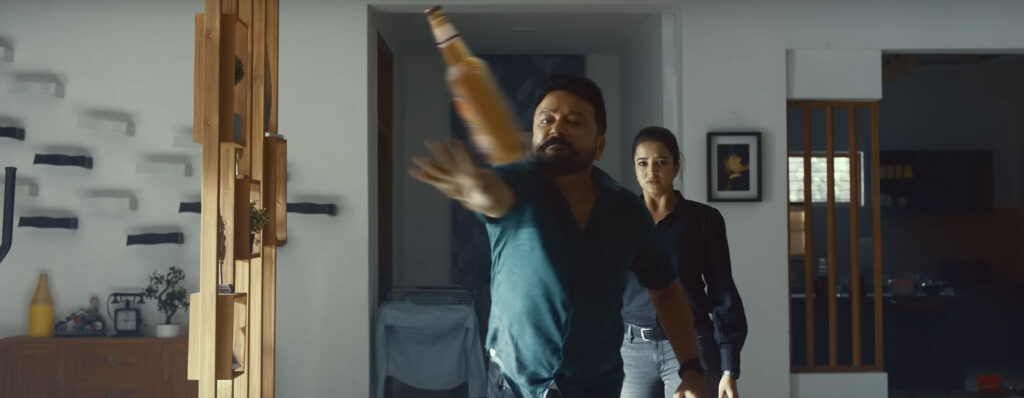
Jayaram and Pujita Ponnada in “Ravanasura” (Photo courtesy of Abhishek Pictures)

In a world filled with terrible movies, “Ravanasura” has some of the most moronic plot twists you could ever see. The acting performances are horrendous. And this 140-minute action flick is too long for a movie this vapid. Perhaps the only real creative thought that was put into “Ravanasura” was for the choreography and staging of the occasional musical numbers, but the song lyrics in these musical scenes are utterly witless and generic.

Directed by Sudheer Varma (who co-wrote the atrocious screenplay with Srikanth Vissa), “Ravanasura” has a major plot twist that’s revealed about halfway through the movie and changes the entire trajectory of the story. It’s enough to say that this plot twist is so stupid, it wants viewers to forget that DNA testing exists. The plot twist also doesn’t take into account that certain characters have different body sizes and different heights. Other plot twists in the movie are much more predictable, but the big “shocker” in “Ravanasura” will just have viewers rolling their eyes in disgust at how bad this idea is.

In the beginning of “Ravanasura” (which takes place in Hyderabad, India), criminal defense attorney Ravindra, nicknamed Ravi (played by Ravi Teja), works as a junior lawyer with his ex-girlfriend Kanaka Mahalakshmi (played by Faria Abdullah), who is Ravi’s boss at the small law firm owned by Kanaka. Ravi and Kanaka briefly dated when they were college students, but she never had strong romantic feelings for him. Kanaka is now happily married to a man named Sekhar Mahalakshmi (played by Sriram, aslo known as Srikanth), who is openly affectionate with her, much to Ravi’s disdain.

Ravi keeps half-jokingly telling Kanaka that she is eventually going to marry Ravi, who constantly asks her out on dates that she firmly rejects. Ravi says insulting things about Kanaka’s marriage and about Sekhar. Ravi also makes other inappropriate, sexist comments to Kanaka while they’re on the job. It’s blatant sexual harassment.

And to make matters worse, Ravi isn’t very good at his job, since he does things such as show up late for courtroom appearances. An early scene in the movie shows that Ravi ruined a case by showing up too late with a crucial witness for a courtroom trial. The case was then dismissed by the trial judge.

All of this nonsense is shown early enough in the movie that viewers will immediately be wondering why Kanaka (who obviously dislikes Ravi) hasn’t fired Ravi already. Because “Ravanasura” is such a cesspool of idiocy, there is no explanation. The marriage of Kanaka and Sekhar is used for one of the movie’s many poorly conceived subplots and twists.

Ravi gives the impression that he’s a socially awkward jokester who can be very irresponsible, but he has some heartache in his life: His father lives in a hospital and appears to have dementia. The only thing that his father seems capable of saying is the name of a woman named Shanti. Ravi tells people that Shanti is the name of a nurse who used to take care of his father, and he grew very attached to this nurse.

Ravi has a goofy sidekick friend/attorney co-worker named Babji (played by Hyper Aadi), whose only purpose in the movie is going along with whatever Ravi says. One day, Ravi and Babji are at a library when they are approached by an attractive young woman named Harika Talwar (played by Megha Akash), who asks Ravi to be her father’s attorney. Harika’s father is a wealthy pharmaceutical mogul named Vijay Talwar (played by Sampath Raj), who has been accused of brutal murdering a man.

This murder, which took place in a restaurant, is shown as the opening scene of “Ravanasura.” The murder happened in front of several witnesses, who all identified Vijay as the killer. However, Vijay insists he’s been wrongfully accused and he wasn’t even near the restaurant when the murder happened. The problem for Vijay is that his alibi can’t be verified. Harika works as the head of research and development for her father’s company, which is called Syncox Pharma.

Kanaka doesn’t want her law firm to take the case, but Ravi uses blackmail to force the firm to take the case and to let Ravi be Vijay’s attorney. What Ravi does for the blackmail is to catch Kanaka off-guard by asking to take a selfie photo with her, and right when the picture is taken, he planted a romantic kiss on her cheek. Ravi tells Kanaka that he will show the photo to Kanaka’s husband Sekhar and tell him that Kanaka and Ravi are having an affair, unless she agrees to let Ravi be Vijay’s attorney. Yes, the movie really is this ridiculous.

The police officers who are the most involved in investigating the case are a deputy inspector general of police named Narasimha Murthy (played by Murli Sharma); an assistant commissioner of police named Hanumanth Rao (played by Jayaram), who takes the lead in the investigation and is very persistent; and police inspector named Ruhana (played by Pujita Ponnada), who Hunmanth’s subordinate and is often more perceptive than Hunmanth. And somewhere along the way, a home minister named Mudi Reddy (played by Rao Ramesh) is revealed to have a connection to this case. Other characters who have pivotal roles in the story include a makeup artist named Saketh (played by Sushanth); Saketh’s girlfriend Jaanu (played by Daksha Nagarkar); and a woman named Keerthana (played by Anu Emmanuel), who has a romantic interest in Ravi.

The last half of “Ravanasura” gets more and more tangled up in ludicrous revelations, until nothing in this movie is believable at all. It’s just a brainless story, bombastically told to make the action a not-very-convincing distraction from all the bad filmmaking on display. Most of the cast members over-act in the worst ways. Scenes that are supposed to be comedic look too forced and fake.

“Ravanasura” star Teja is one of the movie’s producers, so he’s partly to blame for how horrendous this movie is. However, “Ravanasura” director/co-writer Varma ultimately made a lot of the dreadful decisions that resulted in this movie being such a garbage dump. “Ravanasura” could have been a brain-teasing thriller. But instead, this noisy, overly long and aggressively foolish abomination is more likely to give viewers a headache.

Abhishek Pictures released “Ravanasura” in select U.S. cinemas and in India on April 7, 2023.
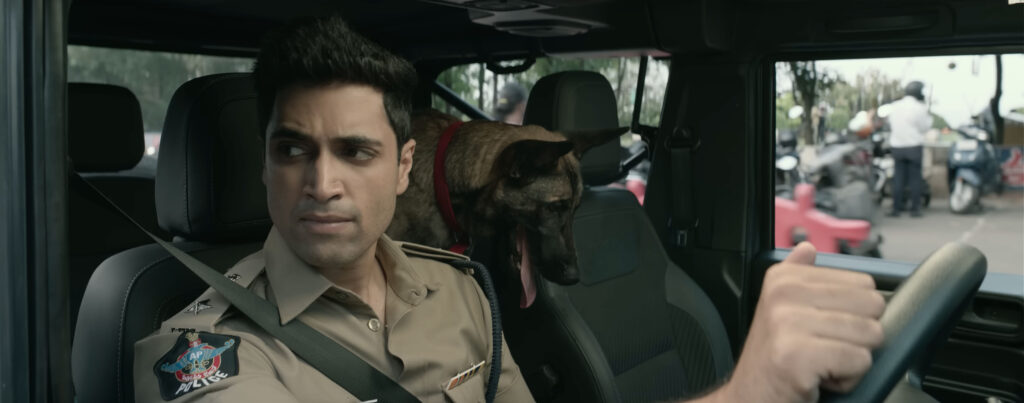
Review: ‘HIT: The 2nd Case,’ starring Adivi Sesh and Meenakshi Chaudhary

December 17, 2022

by Carla Hay

Adivi Sesh in “HIT: The 2nd Case” (Photo courtesy of Wall Poster Cinema)

“HIT: The 2nd Case”

Directed by Sailesh Kolanu

Telugu with subtitles

Culture Representation: Taking place in Visakhapatnam, India, the action film “HIT: The 2nd Case” features an all-Indian cast of characters representing the working-class and middle-class.

Culture Clash: A self-assured police detective goes on the hunt for a serial killer, who murders women and who leaves their body parts at the crime scenes were his other murder victims are found. 

Culture Audience: “HIT: The 2nd Case” will appeal primarily to people who are fans of “HIT: The First Case” and suspenseful movies about police investigations of serial killings.

Adivi Sesh and Meenakshi Chaudhary in “HIT: The 2nd Case” (Photo courtesy of Wall Poster Cinema)

“HIT: The 2nd Case” is a captivating thriller from beginning to end. It’s a winning example of a sequel that’s better than the original movie. The story’s mystery is wider in scope and told in a more compelling way than in “HIT: The First Case,” a movie originally released in 2020 as a Telugu-language film, and then remade as a Hindi-language film released in 2022. It’s also a great idea to make each “HIT” movie with a different detective protagonist.

“HIT” movie series creator Sailesh Kolanu has written and directed all the “HIT” movies so far. “HIT: The First Case” ended on somewhat of a cliffhanger for the movie’s protagonist, police inspector Vikram Rudraraju. “Vikram: The 2nd Case” has a brief mention of what happened to Vikram, but otherwise, it’s a completely separate story. What each “HIT” movie has common so far is that it’s a story about a hotshot investigator in a police department called Homicide Intervention Team (HIT) located somewhere in India.

“HIT: The 2nd Case” follows police inspector Krishna “KD” Dev (played by Adivi Sesh), as he investigates the case of a twisted serial killer who dismembers his victims and leaves their various body parts at the crime scene where the killer’s other victims have been found. All of the victims are women n their 20s and 30s. The first known victim is a woman in her 20s named Sanjana, whose torso has been found in Visakhapatnam, India. KD makes a promise to Sanjana’s devastated, widowed father (played by Tanikella Bharani) that he will find the killer and make sure that there is justice for Sanjana.

In “HIT: The First Case,” police protagonist Vikram had post-traumatic stress disorder. In “HIT: The 2nd Case,” KD doesn’t have any psychiatric issues that affect how he does his job. However, KD’s biggest weakness is his arrogance. Early on in the movie, KD tells a group of reporters who ask for his comments about an unrelated case where KD captured a man who killed his own brother: “Generally, these criminals are very dumb.” It’s a comment that will come back to haunt him when the serial killer does things to outsmart KD.

KD’s cockiness also shows in how unkind he is to one his female colleagues. His ex-girlfriend Varsha (played by Komalee Prasad) has been appointed as one of his subordinates. He tells Varsha: “Seeing your face is very annoying to me.” The movie never really goes into details over why Varsha and KD broke up, but it was a romance that obviously did not end well. KD is very unhappy that Varsha has been assigned to help him with this serial killer case. KD also has his trusty police dog, a German Shepherd named Max, who is a constant companion when KD is on duty.

Whatever negative feelings that KD has toward Varsha, they are in direct contrast to his adoration of his girlfriend Aarya (played by Meenakshi Chaudhary), who is a confident and independent feminist who also expects chivalry from men. When KD asks Aarya to move in with him, she’s reluctant at first because she doesn’t want to give up having her own place. But she eventually changes her mind, because she and KD are in love with each other and want to build a life together.

Aarya works at female empowerment center called HER Welfare Association, which helps female victims of domestic violence, and offers other female-oriented services. A flashback scene in the beginning of the movie shows how, 20 years earlier, women from HER Welfare Association staged protests in support of a woman named Jhansi (played by Neela Ramana), who accused her husband Ram Prasad Koduri (played by Harsha Vardhan) of raping her, after he caught her cheating on him with another man. The HER Welfare Association plays a prominent role in the story.

Other characters who are connected to this story include KD’s female police sidekick Shradda (played by Pavani, also known as Pavani Reddy); Sanjana’s roommate Rajitha (played by Divya Narni); Rajitha’s boyfriend Kumar (played by Suhas); Sanjana’s childhood friend Raghavudu (played by Majili Shiva); KD’s police colleague Abilash (played by Maganti Srinath), nicknamed Abi; KD’s immediate supervisor Shinde (played by Brahmaji); and director of general police Nageswara Rao (played by Rao Ramesh).

Describing the rest of “HIT: The 2nd Case” would be giving away too much spoiler information. It’s enough to say that the movie is a non-stop ride of suspense and intrigue, with all of the actors playing their roles very well. The movie’s big showdown scene comes across as a little too contrived, but it’s still packed with a lot of tension. Mostly, “HIT: The 2nd Case” succeeds in how this investigation unfolds in a riveting way and how solving this mystery has a few fascinating surprises.

Wall Poster Cinema released “HIT: The 2nd Case” in select U.S. cinemas and in India on December 2, 2022.

Copyright 2017-2026 Culture Mix
CULTURE MIX