
Review: ‘Becoming Led Zeppelin,’ starring Jimmy Page, Robert Plant and John Paul Jones

February 6, 2025

by Carla Hay

A “Becoming Led Zeppelin” photo of John Paul Jones, Robert Plant, John Bonham and Jimmy Page at the Bath Festival of Blues on January 28, 1969. (Photo courtesy of Paradise Pictures/Sony Pictures Classics)

“Becoming Led Zeppelin”

Culture Representation: The documentary film “Becoming Led Zeppelin” features the three surviving members of British hard rock band Led Zeppelin talking about the band’s origins and the band’s history through 1970, for Led Zeppelin’s first two albums.

Culture Clash: Led Zeppelin was popular with audiences but was disliked by many music critics in the early years of the band’s career.

Culture Audience: Besides appealing to the obvious target audience of Led Zeppelin fans, “Becoming Led Zeppelin” will appeal primarily to people who are interested in documentaries about rock music from the late 1960s.

A “Becoming Led Zeppelin” photo of Robert Plant, Jimmy Page and John Paul Jones at the Royal Albert Hall in London on January 18, 1970. (Photo by Paul Popper via Getty Images/Paradise Pictures/Sony Pictures Classics)

“Becoming Led Zeppelin” is worth watching for its previously unreleased archival material and exclusive interviews. However, this documentary is limited to Led Zeppelin’s history for the band’s origins and first two albums up to 1970. This two-hour movie seems like the first two episodes of what should have been a series with at least six episodes.

Directed by Bernard MacMahon, “Becoming Led Zeppelin” had its world premiere at the 2021 Venice International Film Festival, where it was shown as a work in progress. The British rock band Led Zeppelin formed in 1968, and burst onto the music scene in 1969, with a distinctive brand of blues-influnced hard rock. Led Zeppelin became one of the most popular music acts in the world, with a string of hit albums and blockbuster tours.

Long before the Internet existed and during a time when several mainstream media outlets ignored or dismissed Led Zeppelin, the band built a fan base through touring and word of mouth. Led Zeppelin broke up after the 1980 death of drummer John Bonham, who died from choking on his own vomit while intoxicated. He was 32.

Since the breakup of Led Zeppelin, the surviving members of the band—lead singer Robert Plant, lead guitarist Jimmy Page and bass player/keyboardist John Paul Jones—have gone on to solo careers and various other projects. Plant, Page and Jones have reunited on four occasions for a rare live performance together, the most recent being the Ahmet Ertegun Tribute Concert at the O2 Arena in London, on December 10, 2007. John Bonham’s son Jason Bonham was the drummer for that concert, which was released in 2012 as Led Zeppelin’s “Celebration Day” concert film and album.

Plant, Page and Jones also participate in official Led Zeppelin retrospective projects, such as Led Zeppelin’s first official memoir book, titled “Led Zeppelin,” published in 2018. “Becoming Led Zeppelin” is the first time that Plant, Page and Jones have participated in a Led Zeppelin documentary. They are the only people interviewed for the movie. Considering the narrow time period that’s covered in the documentary, there didn’t really need to be anyone else interviewed. Many of the other key people responsible for Led Zeppelin’s success are now deceased.

The two-hour “Becoming Led Zeppelin” spends the first 30 minutes on the childhoods of the band members (who were all born in the mid-to-late 1940s) and earliest influences. Plant names Little Richard and Sonny Boy Williamson as his biggest influences, while Page names British skiffle musician Lonnie Donegan as his biggest musical influence. Jones says his earliest experiences as a paid organist in church helped his improvisational skills as a musician and helped pay for his first bass guitar, which is the instrument he said he really wanted to play.

The documentary includes a previously unreleased audio interview with John Bonham, who rarely did interviews. In the interview (whose source is not mentioned), he says Johnny Kidd and the Pirates were strong influences on him when he first started to play the drums. John Bonham also talks about how James Brown’s music was also a big influence because “the drum sound was amazing.” (Clyde Stubblefield and John “Jabo” Starks were Brown’s best-known drummers.)

What comes through loud and clear (especially with Plant) is that African American artists were the biggest influences on Led Zeppelin. Plant repeatedly says that he has had a long fascination with African Amercian music and America, which he thought of as the Promised Land from a very young age. “America was my dream because it was a totally different world than what we were living in,” comments Plant. Led Zeppelin has gotten criticism in the past for not properly acknowledging how much they were influenced by or borrowed from African American artists, but this documentary seems like an attempt to correct some of those perceived wrongs.

The band’s interest in mystical fantasy stories (such as J.R.R. Tolkein’s “The Lord of the Rings” books) can also be heard in Led Zeppelin lyrics. “The Lord of the Rings” location Mordor and the villain Gollum are name-checked in Led Zeppelin’s hit “Ramble On” from “Led Zeppelin II.” Plant, who was Led Zeppelin’s chief lyricist, says in the documentary that mystical references in Led Zeppelin’s music were influenced by not only these types of stories in literature but also the castle-filled places in England that his parents would take him to as a child for tourist visits.

During their teenage years, the future members of Led Zeppelin had varying degrees of parental support in pursuit of musical career. Page says his parents (especially his mother) were supportive of his music career. Page still speaks fondly of his earliest memories of learning how to play guitar and says he and his guitar were “inseparable.” He comments on discovering the art of playing guitar as a showman through Donegan: “It was like a portal. It gave access to a kind of freedom you hadn’t witnessed in England.”

On the opposite end of the spectrum, Plant (who describes his childhood as “sheltered”) says his parents didn’t approve of his choice to not become an accountant and become a musician instead. Plant dropped out of school, moved to London, and says he was semi-estranged from his parents until he found out that he was going to be a father and wanted to introduce his future wife Maureen to his parents. Plant says his parents approved of his career choice only after Led Zeppelin became a success.

Jones grew up in a showbiz family: His parents were semi-famous vaudeville entertainers Marjorie Castle and Joe Brown. Jones says that his parents encouraged him to be a musician, but his father advised him that the saxophone, not bass guitar, would be a better instrument to play if Jones wanted steady employment as a musician. Jones chuckles that his father was wrong.

Die-hard Led Zeppelin fans already know the story about how the band was formed. Page and Jones were established London-based session musicians, having worked with artists such as Donovan (“Sunshine Superman”), Shirley Bassey (“Goldfinger”) and Lulu (“To Sir With Love”). Plant and John Bonham, who used to be in Band of Joy together, had already known each other in the local rock music scene in England’s suburban West Midlands.

For their public personas, Page and Jones were the quieter, more introverted members of the band. Plant and John Bonham were the rowdier extroverts. However, that doesn’t mean that Page and Jones didn’t indulge in the debauchery that was associated with Led Zeppelin during the band’s fame. Some members of the band were just more private about their hedonistic activities than others, according to many unauthorized books about Led Zeppelin.

It was Page’s idea to form Led Zeppelin after his previous band (The Yardbirds) broke up. Page became Led Zeppelin’s producer for all of the band’s albums. Led Zeppelin’s first rehearsals were at Page’s waterfront home at the time. (The documentary shows Page going back to the house but only lookng at it from the outside.) And although all four band members shared songwriting credit on almost all of Led Zeppelin’s songs, Plant was the primary lyricist, while Page often came up with the riffs that were the basis of the songs’ music.

Led Zeppelin was originally named the New Yardbirds. The documentary includes footage of the band (then known as the New Yardbirds) performing “Communication Breakdown” in the band’s first live show. The concert took place at Gladsaxe Teen Club at the Egegård School Festive Hall, in Gladsaxe, Denmark, on September 7, 1968. Some people in the audience don’t look impressed, with some covering their ears. Other audience members are politely attentive but don’t seem very engaged in the performance, which is slightly off-key and very loud with some speaker equipment feedback.

A well-known story is that the name Led Zeppelin was inspired by The Who members Keith Moon (drums) and John Entwhistle joking to Page that this New Yardbirds band idea would be as popular as a lead balloon, so they should call the band Lead Balloon. Page then changed the name to Led Zeppelin. However, in “Becoming Led Zeppelin,” Page says that Led Zeppelin’s manager Peter Grant was actually the one who suggested the name for the band.

Individually, the members of Led Zeppelin were often considered masters of their craft, although music critics who disliked Led Zeppelin often insulted the band for being too bombastic. Plant had a strutting, hair-tossing persona on stage and was known for his stunning vocal range of howls and high notes. Page, who is considered to be a guitar legend, is somewhat soft-spoken and intensely focused on his vision for the band. During Led Zeppelin’s heyday, he often played his guitar with a violin bow on stage and liked to do experimental jamming in performances.

Bonham was a powerhouse on the drums and is often ranked as one of the top rock drummers of all time. Jones was the steady workman of the group and the least likely to get involved in the outrageous rock star antics that Led Zeppelin became known for in the band’s heyday. This documentary doesn’t have those decadent stories, but Plant makes a reference to how the band’s first tours of America were eye-opening experiences that he enjoyed, in terms of the easy availability of drugs and women.

Under the management of Grant (who had a reputation for being very tough), Led Zeppelin didn’t have any long struggles in getting a record deal. Within a year of forming, Led Zeppelin signed a lucrative deal with Atlantic Records, which was led at the time by Ahmet Ertegun. The band’s first two albums—”Led Zeppelin” and “Led Zeppelin II,” both released in 1969—were smash hits. Unlike many other artists, Led Zeppelin got to own the band’s music catalog.

Page, Plant and Jones don’t say anything too revealing in their interviews that hasn’t already been covered by the numerous books and articles about Led Zeppelin. They mostly talk about the music that they made together and the camaraderie they had. The documentary includes photos of the band members when they were children and teenagers, as well as family photos of their parents and spouses. (Plant, Jones and John Bonham got married to their respective wives shortly before Led Zeppelin became famous. Page was an unmarried bachelor during Led Zeppelin’s existence. He got married and divorced twice, much later in his life.)

Plant is the most forthright about any behind-the-scenes conflicts, by saying that John Bonham’s wife Pat was vehemently against John working with Plant, whom she thought was a troublemaker. (The documentary includes pre-Led Zeppelin photos of Plant featured in a newspaper article about hippies doing protest marches in London to make marijuana legal.) Plant also talks about his struggles to find the right band before Led Zeppelin and how he refused to join Led Zeppelin unless John Bonham was the drummer.

Multiple scenes in the documentary show Plant, Page and Jones looking back on photos and film footage of themselves and making comments. The documentary also shows their reactions to hearing John Bonham’s rare audio interview. Plant, who knew Bonham the longest out of all the band members, gets a little misty-eyed when hearing Bonham describe how all the band members got to know each other better while on tour.

Page gives some insight to musical experimentation that he wanted for the recording of “Whole Lotta Love,” the band’s biggest hit (from “Led Zeppelin II”) during the time period that’s covered in the documentary. Plant gets candid about being homeless at the time he was chosen to be in Led Zeppelin. Page, Plant and Jones all say that Led Zeppelin took over their lives for years, especially when they toured and were away from their families.

The movie’s biggest strengths are in the archival material, such as rare live performances of “Dazed and Confused” and “Communication Breakdown.” Audio performances include Led Zeppelin’s 1969 concert at The Fillmore in San Francsico and the 1969 Bath Festival of Blues in England. The documentary also includes the complete performance of “How Many More Times” from a 1969 televised Danmarks Radio appearance, which is footage that was previously released. And, of course, the band’s original studio recordings can be heard in the documentary, such as the aforementioned songs, as well as “Good Times Bad Times,” “Your Time Is Gonna Come,” “Babe I’m Gonna Leave You” and “What Is and What Should Never Be.”

The documentary doesn’t include “Stairway to Heaven” (Led Zeppelin’s most famous song) because “Stairway to Heaven” was on Led Zeppelin’s 1971 untitled fourth album, which is often described as “Led Zeppelin IV.” “Becoming Led Zeppelin” strictly sticks to the timeline of stopping in the year 1970. Considering that many people think Led Zeppelin’s best album is either the band’s fourth album or 1975’s “Physical Graffiti” (Led Zeppelin’s sixth album), there’s a lot of important Led Zeppelin history omitted from the documentary, which is why the movie feels like it ends on a “to be continued” note.

One thing that “Becoming Led Zeppelin” doesn’t mention is that even though the members of Led Zeppelin had a fascination with America and wanted to have massive success in America, the band rarely courted American TV media. That’s why you won’t find old footage of Led Zeppelin performing on American TV shows. Considering how many bad reviews the first Led Zeppelin album got, the band members were selective about which print media outlets got to do interviews with them. Most of the print media coverage shown in the documentary are clippings of news articles or music reviews, not Led Zeppelin interviews.

The mass medium that Led Zeppelin seemed most comfortable with was radio, where the band was extremely popular. Led Zeppelin still remains one of most-played artists on classic rock radio. The documentary includes some semi-amusing recordings of a 1969 interview that Plant did with American radio DJ Wolfman Jack, who took live questions from callers. One unidentified female fan, who is in awe of Plant, says breathlessly that she’s having a heart attack because she’s talking to him. Plant quips that she should be talking to a doctor instead.

The film editing for “Becoming Led Zeppelin” is a mixed bag. Some of the performances are skillfully edited, while others look like an audio track that’s put over grainy footage shown on repeat, with the audio not completely in sync with the video. News clips of various world events are edited into the movie to give context to what was happening during the time period described in the interviews. (Expect to see footage of turmoil over the Vietnam War and civil rights, as well as news footage of Apollo 11’s historic “first men on the moon” voyage.)

“Becoming Led Zeppelin” spends a little too much time in the beginning talking about the band members’ early influences. Most viewers want to hear more behind-the-scenes stories about Led Zeppelin, not see some old footage of Donovan hanging out on a grassy field with his producer Mickie Most. “Becoming Led Zeppelin” is most definitely a very squeaky-clean version of the band’s story, which is not surprising because Led Zeppelin was never a “tell-all confessional” type of band.

“Becoming Led Zeppelin” will not satisfy viewers who are looking for a complete and comprehensive biography of the band. The documentary is just an introduction to how Led Zeppelin became one of the biggest rock bands in history. The movie doesn’t have much discussion about the band’s personal lives, other than Plant, Page and Jones talking about their childhoods and brief mentions of parents and wives. However, this documentary is good enough for anyone interested in Led Zeppelin’s earliest years, including some rare footage with exclusive commentary from Page, Plant and Jones.

Sony Pictures Classics will release “Becoming Led Zeppelin” in U.S. cinemas (exclusively on IMAX screens) on February 7, 2025, with an expansion to more U.S. cinemas on February 14, 2025. A sneak preview of the movie was shown in U.S. cinemas on February 5, 2025.

Review: ‘Up From the Streets: New Orleans: The City of Music,’ starring Terence Blanchard, Wynton Marsalis, the Neville Brothers, Harry Connick Jr., Irma Thomas, Robert Plant and Keith Richards

May 15, 2020

by Carla Hay
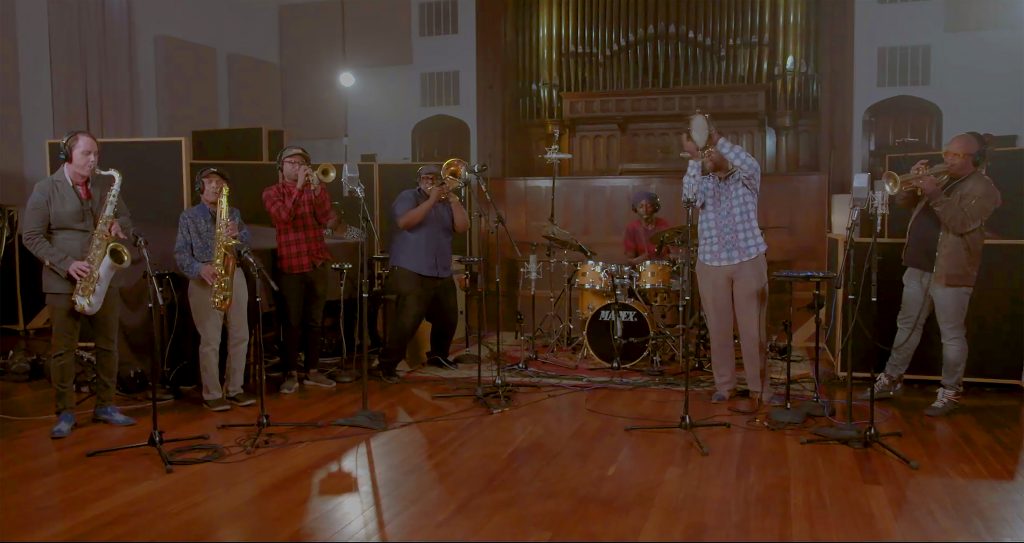
Terence Blanchard (far right) and the Preservation Hall Jazz Band in “Up From the Streets: New Orleans: The City of Music” (Photo courtesy of Eagle Rock Entertainment)

“Up From the Streets: New Orleans: The City of Music”

Directed by Michael Murphy

Culture Representation: The documentary “Up From the Streets: New Orleans: The City of Music” interviews a racially diverse (African Americans and white people) group of people, including musicians, concert promoters, journalists and music historians.

Culture Clash: The impact of slavery and other forms of racism have shaped the music of New Orleans.

Culture Audience: “Up From the Streets: New Orleans: The City of Music” will appeal mostly to people with diverse musical tastes, as well as people who want to learn more about the cultural history of New Orleans.
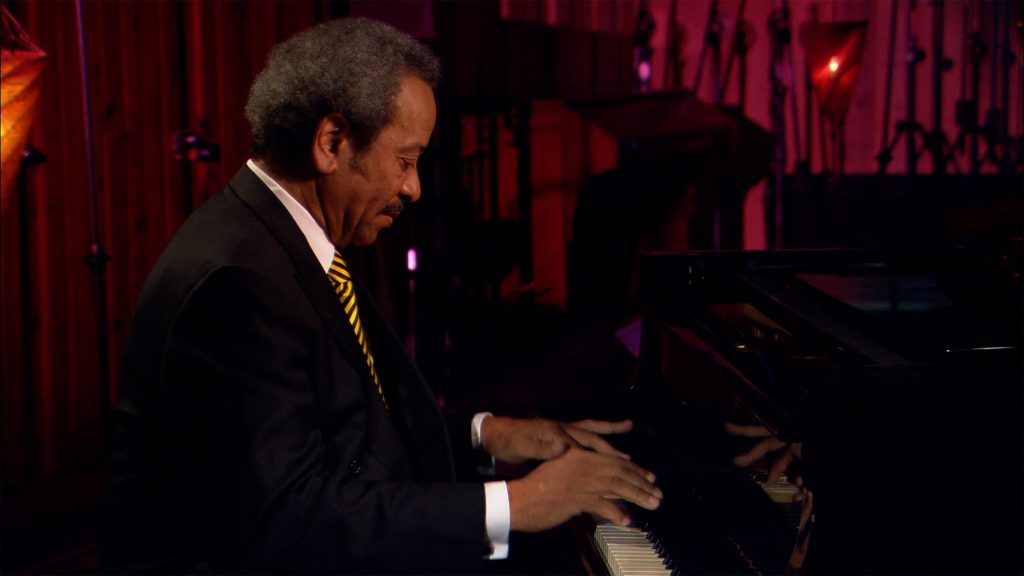
Allen Toussaint in “Up From the Streets: New Orleans: The City of Music” (Photo courtesy of Eagle Rock Entertainment)

Making a documentary about the entire history of music in New Orleans is a very ambitious project, especially if it’s edited into a feature-length film instead of being spread out into an episodic series. But writer/director/producer Michael Murphy has crafted a definitive chronicle of New Orleans music in a film with an impressive range that’s as entertaining as it is educational. Grammy-winning musician Terence Blanchard (one of the documentary’s executive producers) narrates this 104-minute film, which features a “who’s who” of people who are part of New Orleans music history or are connected to it in some way.

In addition to Blanchard, musicians interviewed in the documentary include Big Freedia, Germaine Bazzle, Jon Cleary, Harry Connick Jr., DJ Raj Smoove, Mannie Fresh, Steve Gadd, Leroy Jones, Dave Malone (of the Radiators), Branford Marsalis, Delfeayo Marsalis, Jason Marsalis, Wynton Marsalis, PJ Morton, Aaron Neville, Art Neville, Charmaine Neville, Ivan Neville, Robert Plant, Bonnie Raitt, Keith Richards, Herlin Riley, Alfred “Uganda” Roberts, Reggie Scanlon (of the Radiators), Sting, Bill Summers, Irma Thomas, Reggie Toussaint, Don Vappie, Walter Washington and Dr. Michael White.

Other talking heads in the documentary include Quint Davis, CEO of Festival Productions Inc. New Orleans; Preservation Hall creative director Ben Jaffe; Hogan Jazz Archive curator emeritus Bruce Raeburn; Black Top Records co-founder Hammond Scott; audio engineer Roberta Grace; Center for the Study of the American South associate director William Ferris; and journalists Arthel Neville (daughter of Art Neville) and Alan Light.

Interspersed through the documentary are live performances that are exclusive to the film, from artists such as Blanchard performing with the Preservation Hall Jazz Band; Dr. Michael White and the Original Liberty Jazz Band; a duet with Aaron and Ivan Neville; influential R&B diva Thomas; the Neville Brothers; the Radiators; and Dumpstaphunk.

The film took several years to make, since some of the interviews took place in 2004, according the film’s production notes. And some of the footage filmed for the documentary is of people who have since passed away, such as Art Neville and Dr. John, who both died in 2019.

The movie takes a mostly chronological look at the history of New Orleans music, starting with how the brutality of slavery led to African American slaves developing their own form of music that became the foundation of jazz and the blues, which later influenced the creation of rock and roll, soul/R&B, funk and hip-hop. At times, during the documentary, narrator Blanchard gives a tour to some of the historical sites of New Orleans music, such as the Dew Drop Inn, J&M Recording Studio and the Black Pearl neighborhood that’s known for giving rise to Mahalia Jackson. The Tremé neighborhood (also known as the Cradle of Jazz) is mentioned frequently in the film, since New Orleans is the city that gets the most credit for being the birthplace of jazz.

Several influential New Orleans musicians are given praise and credit for making New Orleans an outstanding music city. Louis Armstrong, Fats Domino, Jelly Roll Morton, Sidney Bechet, Louis Prima, Louis Moreau Gottschalk, Pete Fountain, Al Hirt, Earl Palmer, singer Thomas, Allen Toussaint, Professor Longhair, Dr. John, James Booker, the Neville Brothers, the Marsalis family and Earl King all get special mentions in the film.

In the beginning of the film, Blanchard visits St. Augustine Church, established in 1841 as the oldest African American Catholic parish in the United States. He points out how the outer pews were purchased/reserved for slaves by free people of color so that the slaves would not be shunned at the church services. “Growing up in the church, I have always believed you could never separate spirituality from creativity,” Blanchard says.

Sting (whose first band as a solo artist included Branford Marsalis and other musicians with a jazz background) comments: “New Orleans seems to have a complexity about it that other American cities lack, maybe because of the history built on the tragedy of human trafficking. Let’s be honest about that. But what was created out of that—jazz, the blues—is something that the whole human race should be grateful for. It’s not to be an apologist for that tragedy, but at the same time, it’s amazing how resilient the human spirit is.”

Wynton Marsalis notes that when the slave owners allowed Africans to play drums in Congo Square during the years when slavery was legal, this artistic freedom had an enormous impact on the music culture in New Orleans: “The fact that a slave could be free on a Sunday afternoon for five hours [to play music] made [New Orleans] different from the United States of America. That expression of freedom still echoes.”

Preservation Hall director Jaffe, whose parents founded the world-famous venue, says that New Orleans multiculturalism of Europe (especially France and Spain), Africa and the Caribbean (especially Cuba) is reflected in the melting pot of musical styles that have thrived in New Orleans. The documentary includes a segment on how the drumming styles in New Orleans also affected the rhythms that distinguished New Orleans jazz (or Dixieland jazz) from jazz in other areas of the United States.

Jazz is the most famous type of music to come out of New Orleans, so it’s the music genre that gets most of the screen time in the first half of the documentary. The concept of an instrumental solo in jazz is largely credited to influential jazz musicians such as Armstrong and Morton. Connick says: “New Orleans jazz music will never die, because the feeling we get as performers who play it is the greatest drug in the world.”

The documentary also mentions New Orleans was one of the first big cities in the U.S. that established an opera house, due in large part to composer/pianist Gottschalk, one of the first American musicians to become a star in Europe in the mid-1800s. And the influence of Cuban music in New Orleans also gets its own segment in the documentary.

“Up From the Streets” also addresses how sexism affected female artists who were part of the early New Orleans music scene. Traditionally, women performers were usually allowed to only be singers or piano players. But slowly, the barriers started to open up during the Jazz Age, when bands started to accept women in other roles besides as a vocalist or pianist.

Singer/bass player Bazzle comments on the gender barrier faced by female musicians in New Orleans: “There was a line until we started doing it [crossing the line].” She adds there’s nothing about musical instruments that say only one gender can play those instruments, but there used to be a mentality that women couldn’t play certain instruments—a sexist belief that wasn’t unique to New Orleans but it affected the opportunities that women had in the New Orleans music scene’s earliest decades.

Branford Marsalis remembers how tough his parents, especially his late mother Dolores, used to be when it came to demanding excellence from her musical children. However, he says, “I appreciated having stern parents.” And he says that his parents would constantly remind the Marsalis children about how fortunate they were to benefit from the civil-rights movement and to not take it for granted.

The movie also notes that although New York City is the birthplace of rap/hip-hop, there’s a New Orleans hip-hop scene that really began to thrive in the 1990s with Master P, Birdman, Mystikal and Juvenile, and has continued in the 21st century with Lil Wayne, Big Freedia and the “bounce” craze. However, in its coverage of New Orleans music artists who are influential in the 21st century, the documentary makes one glaring omission, by failing to mention Frank Ocean.

As for people outside the U.S. who are influenced by New Orleans music, British musicians are among the most enthusiastic. Plant says that he and his former Led Zeppelin bandmates Jimmy Page and John Paul Jones were “obsessed with the music of New Orleans, so we always made it our business to ensure that when we were on tour, we came to New Orleans. It’s just about the quality of music that I could relate to and just how it really had such a profound effect.” In the documentary, Plant also cites Allen Toussaint as one of his favorite musicians, which is why Plant and Alison Krauss’ 2007 Grammy-winning duet album “Raising Sand” included a cover version of Toussaint’s “Fortune Teller.”

Rolling Stones guitarist Richards praises Earl Palmer (who worked with dozens of artists, including Little Richard and Sam Cooke) as a “real rock and roll drummer. A lot of drummers since then have been able to rock, but very few that have been able to put the roll in.” Richards also says of Ivan Neville (son of Aaron Neville), who’s worked with Richards on several of Richards’ solo projects: “I feel like his older brother or an uncle. I’ve seen him go through a lot of difficulties and pain and seen him come out of it.”

Aaron Neville says of the origins of the Neville Brothers as a musical act: “One thing our parents always wanted was to see all of us together. In New York, we got to go in the studio with the Meters. We didn’t rehearse anything. We already knew what their part was, and it just came out naturally. And we decided to do the Neville Brothers from then on.”

And, of course, one of New Orleans’ hallmarks is that it’s very common for big bands to perform in the middle of streets and have Second Line parades. Morton and Jaffe remembers that one of the devastating effects of Hurricane Katrina in 2005 was how the city of New Orleans was like a ghost town deprived of street music for a long period of time before the recovery from the hurricane.

Davis, whose Festival Productions produces the annual New Orleans Jazz & Heritage Festival (also known as Jazz Fest), talks about how JazzFest in 2006—the first Jazz fest after Hurricane Katrina—was an example of how music helped bring New Orleans heal from hurricane disaster. The Ellis Marsalis Center for Music (which opened in 2011) was also founded as a result of helping New Orleans rebuild after Hurricane Katrina.

However, some of the people interviewed, including Wynton Marsalis and Mannie Fresh, note that although music can bring people together in New Orleans, after a concert or performance ends, people often go back to living racially segregated lives in the city. Despite the city’s problems, New Orleans has a unique culture that’s been able to thrive largely because of the music. And as Blanchard says in the film, much of New Orleans’ strength comes from “the power of music, the power that it has to change hearts and minds … The most important thing is that it’s not over. This is not the end of the story.”

Eagle Rock Entertainment released “Up From the Street: New Orleans: The City of Jazz” in select U.S. virtual cinemas on May 15, 2020. A portion of the proceeds from ticket sales will be donated to the New Orleans Jazz & Heritage Foundation’s Jazz & Heritage Music Relief Fund, a statewide relief initiative supporting Louisiana musicians who have lost income amid the COVID-19 pandemic.

https://www.youtube.com/watch?v=wYnDVGCFKf8

Copyright 2017-2026 Culture Mix
CULTURE MIX