
Review: ‘Freakier Friday’ starring Jamie Lee Curtis, Lindsay Lohan, Julia Butters, Sophia Hammons, Manny Jacinto and Mark Harmon

August 5, 2025

by Carla Hay

Julia Butters, Lindsay Lohan, Jamie Lee Curtis and Sophia Hammons in “Freakier Friday” (Photo by Glen Wilson/Disney Enterprises, Inc.)

“Freakier Friday”

Directed by Nisha Ganatra

Culture Representation: Taking place in the Los Angeles area, the comedy film “Freakier Friday” (a sequel to the 2003 film “Freaky Friday,” which was based on the 1972 young adult novel of the same name) features a predominantly white cast of characters (with some Asians and African Americans) representing the working-class, middle-class and wealthy.

Culture Clash: Music manager Anna Coleman and her psychotherapist mother Tess Coleman find themselves in another body swap situation— this time, with two teenage girls: Anna’s daughter Harper and Harper’s snobbish school enemy Lily Reyes, who despise each other but are about to become stepsisters because Anna is marrying Lily’s widower father Eric.  

Culture Audience: “Freakier Friday” will appeal primarily to people who are fans of the movie’s headliners, the 2003 “Freaky Friday” movie, and “body swap” comedies that are about the ups and downs of families and friendships.

Manny Jacinto and Lindsay Lohan in “Freakier Friday” (Photo by Glen Wilson/Disney Enterprises, Inc.)

When a movie sequel arrives more than 20 years after its predecessor, it can either imitate the predecessor or forge ahead with an entirely new story. “Freakier Friday” does both. Some of this comedy sequel trips over its own awkward tangled web, but “Freakier Friday” finds its stride in the movie’s second half. “Freakier Friday” is best appreciated by people who’ve seen 2003’s “Freaky Friday.”

Directed by Nisha Ganatra and written by Jordan Weiss, “Freakier Friday” has many of the same characters who were in 2003’s “Freaky Friday.” The original “Freaky Friday” story (about a mother and her teenage daughter whose bodies are switched on a freaky Friday) was a young adult novel written by Mary Rodgers and published in 1972. The book’s first movie adaptation was 1976’s “Freaky Friday,” starring Barbara Harris and Jodie Foster as the mother and daughter.

Since then, there have been different versions of the “Freaky Friday” story with the same title: a 1995 ABC TV-movie, starring Shelley Long and Gaby Hoffmann; a 2016 to 2017 regional stage musical, starring Emma Hunton and Heidi Blickenstaff; and a 2018 Disney Channel TV-movie, starring Cozi Zuehlsdorff and Blickenstaff, which was a filmed version of the stage musical. Other movies have used the “Freaky Friday” concept, but with different titles and main characters who were not a mother and a daughter.

In 2003’s “Freaky Friday” (which takes place in the Los Angeles area), psychotherapist Tess Coleman (played by Jamie Lee Curtis) and her 15-year-old daughter Anna Coleman (played by Lindsay Lohan) do not get along with each other. Anna is a slightly rebellious, wannabe rock star who plays lead guitar in a teenage band called Pink Slip. Tess is an intellectual who likes her life to be orderly and well-planned.

Most of the friction in “Freaky Friday” comes from Anna and Tess expecting each other to live their lives in a certain way. Anna doesn’t want her widowed mother Tess to marry Tess’ fiancé Ryan (played by Mark Harmon), a good man who has no children. Meanwhile, Tess disapproves of Anna’s romantic interest in motorcycle-riding schoolmate Jake (played by Chad Michael Murray), who’s slightly older than Anna.

Tess is afraid that Jake will break Anna’s heart. Anna is afraid that Tess will love Ryan more than Anna’s deceased father. Tess and Anna each think that each other’s lives are easier than their own lives. Anna also has less-serious conflicts with her younger brother Harry Coleman (played by Ryan Malgarini), an adolescent brat who irritates Anna, but he secretly admires her and does things to get attention from her.

A visit to Pei Pei’s Chinese restaurant changes the lives of Tess and Anna when the restaurant manager Pei-Pei (played by Rosalind Chao) and Pei-Pei’s unnamed mother (played by Lucille Soong) overhear Tess and Anna arguing. Tess and Anna open a fortune cookie given to to them by Pei-Pei’s mother, and an earthquake happens that only Tess and Anna can feel.

The next morning, Tess and Anna wake up and find out that their bodies have been switched, just a few days before Tess’ wedding to Ryan and about two days before Anna has an important audition with Pink Slip. Tess and Anna are told by Pei-Pei’s mother that the only way their bodies can be switched back is if Tess and Anna do something out of selfless love.

All of this information is important to know before seeing “Freakier Friday” because the body swap comedy is even more complicated in “Freakier Friday” than in “Freaky Friday.” It’s explained in the beginning of “Freakier Friday” that Tess and Anna (who live near each other in Los Angeles) now have a better relationship than they did when Anna was a teenager. They still argue with each other, but their conflicts aren’t serious enough to cause an estrangement.

Anna is now a single mother to a 14-year-old daughter named Harper (played by Julia Butters), who is going through the same rebellious and teenage argumentative stage of life that Anna went through with Tess. Harper’s biological father is not seen or mentioned in “Freakier Friday,” but Tess says in a voiceover that Anna chose to be a single parent. Anna now uses a lot of her mother’s “Zen” techniques to calm down during conflicts. The worst things that Anna and Tess argue about (as shown in the beginning of “Freakier Friday”) are who is going to drive Harper to school.

Tess is still married to Ryan, who appears to be retired. Tess hosts a podcast called Rebelling With Respect. Anna quit Pink Slip years ago when she became a single parent, but she secretly still writes and records songs. Anna is now the manager of a pop star named Ella (played by Maitreyi Ramakrishnan), who is signed to Capitol Records.

In the first third of the movie, there’s a clumsy and uninteresting subplot about Anna having to prevent Ella fromhaving a debilitating meltdown because Ella’s music star ex-boyfriend Trevor (who is never seen or heard in the movie) released a song about their breakup called “Better Than the Last One.” This subplot is ultimately a waste of time. Almost every scene with Ella didn’t need to be in the movie.

Harper is a lot like Anna was in high school: a somewhat disheveled teen who loves music but who doesn’t really fit in with any of the cliques in the school. Harper is having a miserable time in school because she’s stuck being the lab partner of a British snob named Lily Reyes (played by Sophia Hammons), a trendy social media influencer who does things such as brag about going to fashion shows and interacting with Anna Wintour.

Lily’s widowed father Eric Reyes (played by Manny Jacinto) is a successful restaurateur who owns an upscale eatery named Lily’s. Eric and Lily relocated from London to Los Angeles after the death of his wife/Lily’s mother. Lily makes it known to anyone she meets that she prefers living in London, which she thinks is a more “cultured” city than Los Angeles.

During the school’s annual bake sale, Lily and Harper get into an argument and instigate a massive food fight that involves several students. They both get detention as punishment. And when Anna and Eric both show up at the school to meet with Principal Waldman (played by X Mayo), there’s an instant attraction between Anna and Eric. The inevitable happens: Anna and Eric begin dating each other.

The movie shows a montage of the courtship of Anna and Eric. And six months later, Anna and Eric are engaged to be married and plan to move to London with their daughters. This engagement obviously horrifies Harper and Lily, who agree on one thing: They both want to stop this marriage from happening. Meanwhile, Tess approves of Eric but she doesn’t want Anna and Harper to move far away from her.

The “body swap” begins after something that happens at Anna’s bachelorette party at a nightclub. This review won’t go into all the details, but it involves a psychic named Madame Jen (played by Vanessa Bayer), who was hired to be entertainment for the party in a side room. The movie pokes fun at gig economy workers by making Madame Jen someone who has several different jobs that she tries to promote at the same time.

Tess and Anna see Madame Jen for fun but quickly leave when they sense another body switch could happen to them again. And then, Harper and Lily go to Madame Jen to get a psychic reading on how to end Anna and Eric’s relationship. A familiar earthquake happens.

The next morning, there’s a quadruple body switch: Tess and Lily now have each other’s bodies, while Anna and Harper now have each other’s bodies. Although “Freaky Friday” was originally about the comedy of a mother and a daughter switching bodies, the best and funniest aspects of “Freakier Friday” have to do with the body swap between Tess and Lily, who aren’t related to each other. Some viewers won’t like this unique aspect of “Freakier Friday” but others will embrace it because it’s such a unique departure from the original story.

Even for people who saw 2003’s “Freaky Friday,” “Freakier Friday” is a lot to asborb, because of how much “Freakier Friday” wants to cram in the body swap story of four people (who all have very opinionated personalities), in addition to catering to nostalgia while also trying to be relevant to the 2020s time period in which this movie was released. It’s a juggling act that doesn’t always work well, particularly in some slapstick comedy scenes. The movie’s best comedy is in verbal joking, not the physical stunts.

“Freakier Friday” makes a lot of cutting commentary about generation gaps and aging. In one scene, Facebook is called a “database for old people,” and Coldplay is described as a band for old people. Tess, who believes in aging naturally, is mortified when she finds out what Lily (in Tess’ body) does to make Tess’ lips look younger. Not as funny is an unnecessary scene where Tess (inhabited by Lily) and Ryan are in a pickleball tournament against a very competitive opponent named Veronica (played by June Diane Raphael), with comedians George Wallace and Sherry Cola inexplicably portraying themselves as announcers at the tournament. The outcome of this scene is inconsistent with the movie’s joke that Lily can’t handle being in Tess’ older body.

There’s also plenty of fan service for those who like 2003’s “Freaky Friday.” Murray reprises his role as Jake, a bachelor who’s still a heartthrob. Jake is now the owner/manager of a record store called the Record Parlour. Jake gets unwittingly pulled into a scheme to break up Anna and Eric. And toward the end of the movie, “Freakier Friday” shows an amusing reference to a “Freaky Friday” subplot when Jake briefly had a crush on Tess when Anna was in Tess’ body.

“Freakier Friday” also has cameos from other alumni of 2003’s “Freaky Friday”: Stephen Tobolowsky reprises his role as Elton Bates, the high school’s mean-spirited teacher who has a grudge against Tess and her family because decades ago, Tess rejected his invitation to take Tess to their school prom. When Harper asks Mr. Bates why he hasn’t retired yet, there’s a hilarious answer.

Chao and Soong return as Pei-Pei (who is called Mama P in “Freakier Friday”) and Pei-Pei’s mother (whose name is listed in the end credits as Grandma Chiang), who do the catering for Anna’s bachelorette party. Malgarini makes a quick appearance as Anna’s younger brother Harry. And don’t be surprised if certain Pink Slip members show up in “Freakier Friday.” Some of these cameos are predictable, but they’re handled very well.

Curtis, who was the MVP of 2003’s “Freaky Friday,” continues to be the standout cast member who is the most convincing and the funniest in the body swap scenes. She also handles the emotionally dramatic scenes with great aplomb. Butters shows a lot of talent and admirable comedic timing, even though “Freakier Friday” has an understandably more mature and calmer version of Anna. Lohan and Hammons do well in their roles, although they’re not consistently great in their body swap scenes.

Of the supporting cast members, Bayer is a scene stealer who makes everything she does very funny. Jacinto does the best that he can with a generic character. Murray gamely pokes fun at his sex-symbol image, especially since “Freakier Friday” makes Jake more confused than ever by the antics of Anna and Tess.

“Freakier Friday” is an ambitious film whose flaws have to do with trying to be many things at the same time: a screwball “body swap” comedy, a romantic saga, an emotional family film, and a nostalgia-filled sequel. Much of the cluttered tone of the movie has to do with the introduction of several new characters. Credit should be given to director Ganatra for reigning in most of the mess that could have been made. Anyone who sees “Freakier Friday” is better off seeing 2003’s “Freaky Friday” first, or else risk getting drowned in some confusion.

Walt Disney Pictures will release “Freakier Friday” in U.S. cinemas on August 8, 2025.

Review: ‘Bride Hard,’ starring Rebel Wilson, Anna Camp, Anna Chlumsky, Da’Vine Joy Randolph, Gigi Zumbado, Stephen Dorff and Justin Hartley

June 20, 2025

by Carla Hay

Colleen Camp, Da’Vine Joy Randolph, Gigi Zumbado, Anna Camp, Rebel Wilson and Anna Chlumsky in “Bride Hard” (Photo by Stefania Rosini/Magenta Light Studios)

“Bride Hard”

Directed by Simon West

Culture Representation: Taking place in Savannah, Georgia, and briefly in Paris, the action/comedy film “Bride Hard” features a predominantly white cast of characters (with a few African Americans, Latin people and Asians) representing the working-class, middle-class and wealthy.

Culture Clash: A woman who is an undercover spy gets her secret work life exposed when a criminal and his gang of mercenaries invade her best friend’s wedding.

Culture Audience: “Bride Hard” will appeal primarily to fans of the movie’s headliners and mindless comedies that have broad slapstick and weak jokes.

Rebel Wilson in “Bride Hard” (Photo by Stefania Rosini/Magenta Light Studios)

The misguided action comedy “Bride Hard” is a tiresome mixture of silly and boring. This tacky story about a spy’s hijinks during her best friend’s wedding is like being forced to watch annoying people do terrible drunk karaoke at a wedding. The well-known cast members look like they know they’re in an embarrassing mess but they didn’t want to pass up whatever salary they were paid to be in one of the worst movies of their careers.

Directed by Simon West and written by Shaina Steinberg, “Bride Hard” (whose title is inspired by the 1988 action film “Die Hard”) is built on a very flimsy concept: An undercover spy, who’s in a bridal party for her best friend’s wedding, battles against a criminal gang that invades the wedding and has to teach the bride and bridesmaids some combat skills along the way. With a good screenplay, competent direction and skillful performances, this concept might have been passable entertainment.

Instead, “Bride Hard” is just blunder after blunder of cringeworthy jokes, sloppily staged action and substandard acting that are all more likely to have viewers rolling their eyes with exasperation rather than roaring with laughter. “Bride Hard” also pretends to have a “female empowerment” message, but spends most of the film depicting women as dimwitted, shallow and vindictive against each other. The movie runs into the run ground early and often its very outdated “joke” about women being more inept than men in handling weapons.

“Bride Hard” begins by showing the two female best friends at the center of the story—Sam and Betsy—30 years ago when they were about 11 years old and had to say goodbye each other as Sam moves away from their hometown of Savannah, Georgia. (“Bride Hard” was filmed on location in Savannah.) It’s mentioned later in the movie that Sam’s mother has been married at least six times and raised Sam in a working-class household. By contrast, Betsy comes from an upper-middle-class and stable family.

As adults, sarcastic Sam (played by Rebel Wilson) and perky Betsy (played by Anna Camp) are still best friends, but Betsy doesn’t know at the time that Sam is a secret spy for the U.S. government. (Sam has an Australian accent, which is Wilson’s real accent.) Sam’s fake job that she uses as a cover is being an artist who designs and sells cat prints. Sam is supposed to be the maid of honor at Betsy’s upcoming wedding.

They’re having the bachelorette party in Paris to accommodate Sam, who says that she has to work in Paris. Also attending the bachelorette party (which is being held at a pub that has male exotic dancers as entertainment) are the bridesmaids: Lydia (played by Da’Vine Joy Randolph), a sassy bachelorette who’s looking for love; Zoe (played by Gigi Zambado), a demanding and moody wife who’s very pregnant; and Virginia (played by Anna Chlumsky), Betsy’s snobby future sister-in-law, who’s jealous of the close friendship that Sam and Betsy have. (It’s the bridesmaid/maid of honor rivalry in “Bride Hard” is an obvious ripoff of a subplot in the 2011 classic comedy “Bridesmaids.”)

During this party (where rock star Yoshiki has a cameo role as himself), Sam gets an emergency alert from her spy colleague Nadine (played by Sherry Cola) that a terrorist named Magnus Paulson is about to obtain a bio-weapon that’s small enough to put in briefcase. Sam is under orders to not interfere but she abruptly leaves the party to race to where she knows Magnus is and thwarts the deal. A very ridiculous scene of chasing and fighting then ensues.

Sam is able to get the bio-weapon away from Magnus, but her insubordination gets her taken off of the case by her supervisor Edgar (played by Mark Valley), who doesn’t respect Sam because he thinks she’s too reckless and impulsive. When Sam goes back to the bachelorette party, she finds out that Betsy was so insulted by Sam leaving the party with no explanation, Betsy decided to make Virginia the maid of honor.

The wedding is being held on a private island in Savannah. Betsy’s fiancé Ryan Cauldwell (played by Sam Huntington) is a nice and humble man who comes from a wealthy family that has owned a successful liquor business for at least 200 years. Ryan is Virginia’s brother. The Cauldwell family’s company has one of its main distilleries not far from where the wedding will take place on a private island.

Betsy’s widower father Frank O’Connell (played by Michael O’Neill) is a decorated military veteran. Ryan’s parents Mark Cauldwell (played by Craig Anton) and Diane Cauldwell (played by Colleen Camp, no relation to Anna Camp) approve of Betsy, who is the type of person who wants everyone around her to be happy but she doesn’t tolerate flakiness. Colleen Camp, who is one of the producers of “Bride Hard,” has some of the worst lines of dialogue in the movie, which has an overabundance of stale jokes.

Sam is trying not to be bitter that her role in the wedding party was “demoted” from maid of honor to just being a regular bridesmaid. At a wedding rehearsal, Sam meets Chris (played by Justin Hartley), who is Ryan’s good-looking best man. Sam and Chris flirt with each other, which Virginia notices from a distance. Virginia later tells Sam to stay away from Chris because Virginia and Chris were romantically “linked” in the past. Virginia shows Sam a magazine article to prove it.

Chris is the subject of gossip because his father, who was Mark’s former business colleague, is in prison for fraud. At the rehearsal dinner, which is being held outdoors, the Betsy and the bridesmaids do a dance on the lawn, but Sam is excluded because the bridesmaids learned this dance at the Paris bachelorette party where Sam was mostly absent. Virginia makes a point of gloating abut Sam being excluded.

To get revenge on Virginia, Sam watches from a distance and uses a peashooter to hit Virginia with a rock. Virginia gets whacked in the head with the rock and falls into a bed of thorny flowers. To Virginia’s horror, several thorny flowers are stuck to her cleavage and have to be painfully removed, leaving bloody scratch marks on her upper chest. This is the type of “comedy” that’s in the movie.

Lydia shows a romantic interest in wedding officiator Reverend Tom (played by Kristian Kordula), who is an eligible bachelor. Zoe spends much of her screen time berating her husband Dave (played by Remy Ortiz) for not being attentive enough to her. And a comedy has a pregnant woman who’s almost ready to give birth , you can easily predict what will happen to the pregnancy during an inconvenient time.

At the wedding, things are going smoothly until right before the bride and groom say their vows. A gunslinging criminal named Kurt (played by Stephen Dorff) shows up with some of his thugs to invade the wedding. The gang hold everyone hostage because Kurt demands money from the Cauldwells and the release of some prisoners he knows.

The rest of “Bride Hard” is exactly what you think it will be: Sam has to figure out a way to be a hero who can rescue everyone, with help from the bridesmaids. None of it is funny or entertaining to watch. Expect to hear a lot of annoying shrieking because “Bride Hard” thinks it’s hilarious to see women in bridesmaid dresses being ditzy while pretending to be badasses. Wilson and Anna Camp co-starred in the first three “Pitch Perfect” movies, but “Bride Hard” has none of the charm of even the worst “Pitch Perfect” film.

One of the problems with “Bride Hard” is the uneven direction of the cast members’ performances. Dorff (who’s been typecast as a gruff villain for most of his career) acts like he’s in a serious movie. Cola looks like she wants to be in an intelligent independent film but is stuck in this the junky “Bride Hard.” And everyone else acts like “Bride Hard” is exactly what it is: a witless train wreck that’s not worth the effort to give good performances.

Magenta Light Studios released “Bride Hard” in U.S. cinemas on June 20, 2025.

Review: ‘Shortcomings’ (2023), starring Justin H. Min, Sherry Cola, Ally Maki, Tavi Gevinson, Debby Ryan, Sonoya Mizuno, Jacob Batalon and Timothy Simons

October 22, 2023

by Carla Hay
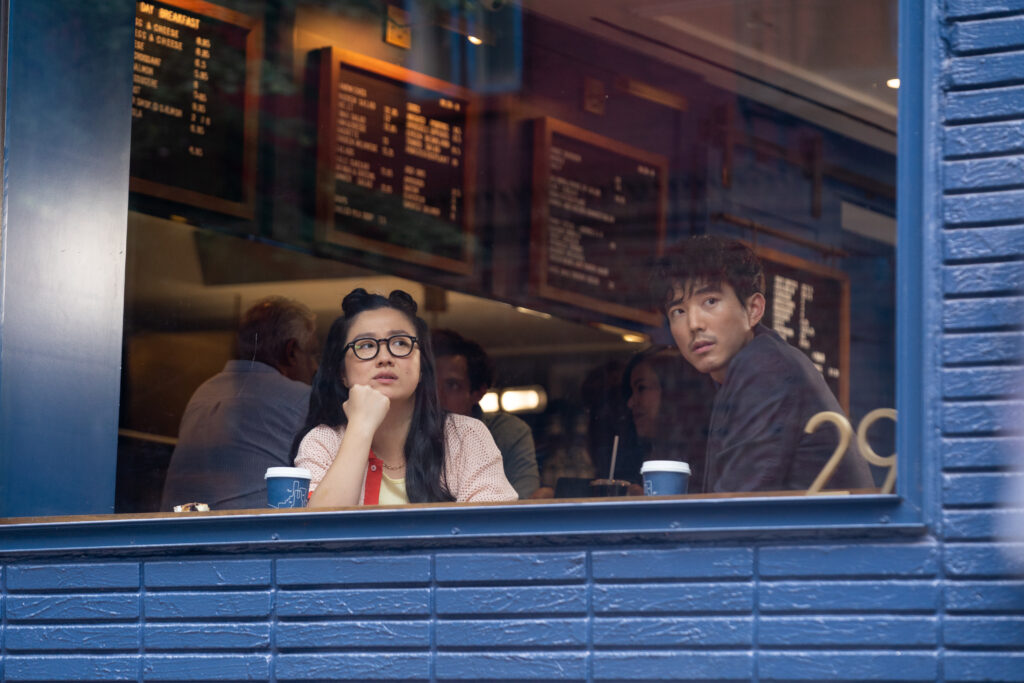
Sherry Cola and Justin H. Min in “Shortcomings” (Photo by Jon Pack/Sony Pictures Classics)

“Shortcomings” (2023)

Directed by Randall Park

Culture Representation: Taking place in the San Francisco Bay Area and in New York City, the comedy film “Shortcomings” (based on the graphic novel of the same name) features an Asian and white cast of characters portraying the working-class and middle-class.

Culture Clash: After an aspiring filmmaker and his girlfriend agree to take a break from each other while she does an internship in New York City, he and his semi-closeted lesbian best friend have various experiences in the dating scene.

Culture Audience: “Shortcomings” will appeal primarily to people who are interested in watching movies about single people looking for love and having a lot of quip-filled banter about their relationships.
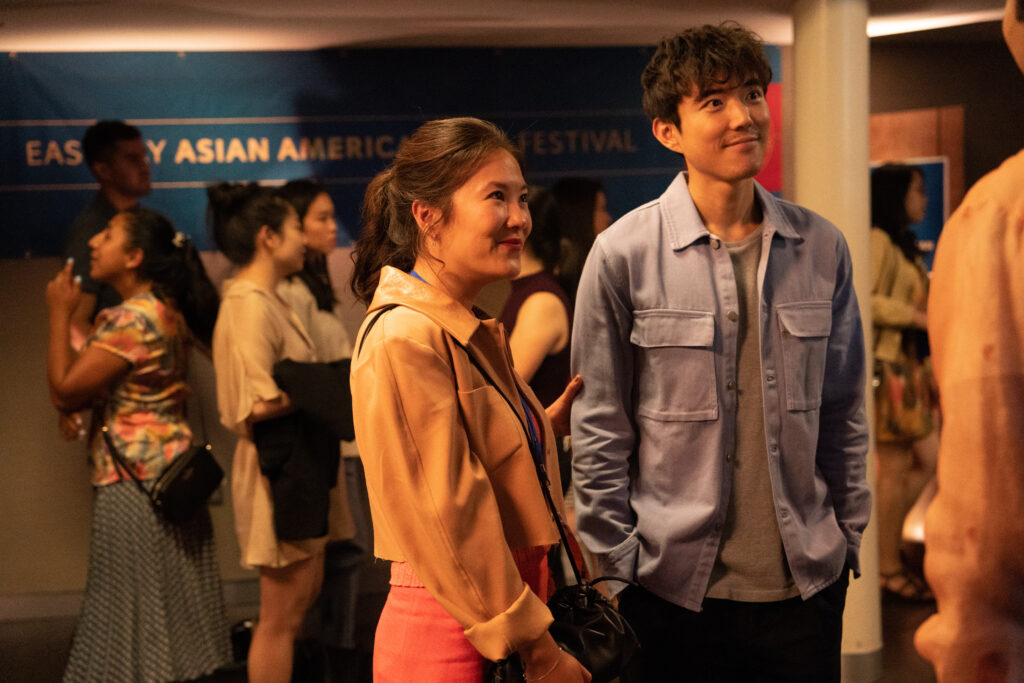
Ally Maki and Justin H. Min in “Shortcomings” (Photo by Jon Pack/Sony Pictures Classics)

“Shortcomings” avoids romantic comedy clichés by not focusing on who’s going to be in a happy romance at the end. It’s a mostly entertaining character study of about a cynical grouch and his lesbian best friend, as they navigate the dating scene. “Shortcomings” is neither a classic film, nor is it an awful movie that’s a waste of time. It’s somewhere in between, as a movie that’s a fairly good option for people who are inclined to like movies where most of the scenes are people talking about themselves and their love lives.

Randall Park, who is best known as a comedic actor (he was a star of the 2015-2020 comedy TV series “Fresh Off the Boat”), makes his feature-film directorial debut with “Shortcomings,” a witty and occasionally sitcom-ish examination of unmarried people with a jaded attitude that often masks the hope of finding true love. (Park has a cameo in the movie as a waiter named Ji-Hun.) “Shortcomings” is based on the 2007 graphic novel of the same name by Adrian Tomine, who adapted the book into the “Shortcomings” screenplay. “Shortcomings” had its world premiere at the 2023 Sundance Film Festival and its New York premiere at the 2023 Tribeca Festival.

In the beginning of “Shortcomings,” aspiring filmmaker Ben Takanaka (played by Justin H. Min) and his girlfriend Miko Higashi (played by Ally Maki), who are both Japanese American and in their late 20s, are watching a romantic comedy at a movie theater in Berkeley, California, where they live. The movie they are watching is an unimaginative ripoff of “Crazy Rich Asians,” and it’s playing as part of the East Bay Asian American Film Festival. Miko is one of the programmers of the festival, so she’s thrilled that this movie is there.

After the screening in the theater lobby, Miko says to Ben: “As a community, we waited a long time to see ourselves reflected in a …” Ben then interrupts and finishes the sentence by saying, “A garish, mainstream rom com that glorifies the capitalistic fantasy of validation through wealth and materialism?” Miko looks slightly offended, but she’s become accustomed to Ben making cutting remarks when he doesn’t approve of something. Viewers will find out that Ben doesn’t approve of a lot of things.

Miko and Ben live together and have been dating each other for six years. Ben has issues with Miko recently having a political awakening about her Asian heritage and being more outspoken about Asian representation in many aspects of life. Ben (who occasionally talks out loud to himself and the “Shortcoming” viewers) says of Miko’s newfound political awakening: “She’s doing it because it’s trendy.”

It should come as no surprise that Ben and Miko have not been getting along with each other lately. Most of their arguments are about Ben thinking that Miko is some kind of “sellout,” while Miko thinks that Ben is jealous that her career has been advancing in the movie industry while his has not. Ben works as a manager of a local movie theater called Berkeley Arts Cinema.

Ben and Miko also have very different attitudes when it comes to love and marriage. Miko eventually wants to settle down and get married. She thinks that marriage should be the next step in her relationship with Ben. Ben doesn’t think they need to get married to prove anything. They’ve reached a stalemate regarding this issue.

Miko also has a problem with what she thinks is Ben’s sexual obsession with white women, especially pretty blondes. Ben denies it, but Miko gets triggered when she finds out that Ben has been looking at porn that only has white people in it. Ben thinks she’s overreacting and says it’s ridiculous for Miko to think he can only look at porn with Asian people in it. However, Miko is correct about Ben having an attraction to pretty blondes, based on who becomes his two love interests later in the movie.

And so, when Miko tells Ben that she has accepted an opportunity to do a three-month internship at the Asian American Film Institute in New York City, Ben and Miko mutually agree that they should take a break from their relationship. During this break, they can date other people and figure out after Miko’s internship ends if they should become a couple again or break up permanently. Ben sees it as a chance to explore the dating scene and see what he’s been missing.

Meanwhile, Ben’s best friend is Alice Lee (played by Sherry Cola), a Korean American lesbian who hasn’t told her conservative parents about her true sexuality. Alice not only hasn’t told her parents, she also deliberately misleads them into thinking that she dates men. As shown in the “Shortcomings” trailer, Alice pretends that Ben is her boyfriend when she introduces him to her parents (played by Borah Ahn and David Niu), who don’t have names in the movie.

Ben, who is a self-described movie snob, manages a small staff at Berkeley Arts Cinema. The employees he supervises include two self-admitted movie geeks who are concessions workers: talkative Gene (played by Jacob Batalon) and laid-back Lamont (played by Scott Seiss), who have constant debates and other discussions about movies. In a very meta joke, Gene mentions in one of these conversations that he prefers the “new Spider-Man.” (In real life, Batalon is a co-star of the “Spider-Man” movies starring Tom Holland.)

A new employee who has joined the team has caught the romantic interest of Ben. Her name is Autumn (played by Tavi Gevinson), a hipster who works in the theater’s box office. Ben wants to date her, but he’s also aware of how tricky it can be for a supervisor to date someone who reports to the supervisor. Autumn invites Ben to an avant-garde spoken-word performance that she is doing, and it’s Ben’s chance to see if this could possibly lead to a romance with Autumn, or if she wants to keep the relationship strictly platonic.

Around the same time, Ben meets down-to-earth Sasha (played by Debby Ryan) at a house party where Alice is also in attendance. One of the first things that Sasha says to Ben is: “We’re probably the only two people at this party whom Alice Lee has not seduced.” Sasha also confirms that she’s bisexual when Sasha tells Ben that she’s single and available after breaking up with her most recent girlfriend two months ago. Ben and Sasha have an instant attraction to each other, but Alice tells Ben not to date Sasha, whom Alice calls a “fence sitter.”

As already shown in the “Shortcomings” trailer, Alice decides to move to New York City. What’s not shown in the trailer: Alice moves to New York City because she got expelled from grad school for kicking another student in the vagina during an argument. This violent incident is not shown in the movie. While in New York City, Alice’s life changes when she meets another queer woman named Meredith (played by Sonoya Mizuno), and they quickly become involved with each other.

Ben decides to visit New York City, partly to hang out with Alice, and partly to spy on Miko. This is where the movie gets into sitcom-ish territory. Ben gets jealous after finding out that Miko has started dating a guy named Leo Alexander (played by Timothy Simons), who met Miko through Leo’s filmmaker friend whose movie was at the East Bay Asian American Film Festival. (Miko dating Leo is also revealed in the “Shortcomings” trailer.)

There really isn’t much of a plot to “Shortcomings,” whose appeal is mainly in watching how these characters interact with each other. The best scenes, of course, are those with Ben and Alice, who feel comfortable enough with each other to tell each other exactly how they feel. It’s in contrast to how Ben puts on more of a “nice guy” front as being sensitive and insecure when he’s dating someone new. He’s much more acerbic and pessimistic when people get to know him better and he shows his true personality.

It’s through the characters of Ben and Alice that viewers see how people often present themselves one way to certain people and another way to other people. Min handles his role as the often-unlikable Ben with considerable aplomb. Ben is not a “villain,” but he’s deliberately portrayed as a very flawed, self-sabotaging individual who hasn’t figured out yet that he’s going to have a hard time finding true love if he doesn’t love himself.

In the role of Alice, Cola has impeccable comedic timing and makes her banter scenes with Min have creative sparks of energy that are enjoyable to watch. The friendship between Ben and Alice is more meaningful than many of the romantic relationships shown in the movie. Overall, “Shortcomings” can be an amusing and realistic look at people’s personality quirks and insecurities that often get amplified (or covered up) when they go through the ups and downs of dating. It’s the type of movie that succeeds in its intention of making viewers laugh and feel uncomfortable at the same time, with an ending that is entirely authentic.

Sony Pictures Classics released “Shortcomings” in select U.S. cinemas on August 4, 2023. The movie was released on digital and VOD on September 14, 2023, and on Blu-ray and DVD on October 17, 2023.

Review: ‘Joy Ride’ (2023), starring Ashley Park, Sherry Cola, Stephanie Hsu and Sabrina Wu

July 6, 2023

by Carla Hay

Stephanie Hsu, Sherry Cola, Ashley Park and Sabrina Wu in “Joy Ride” (Photo by Ed Araquel/Lionsgate)

“Joy Ride” (2023)

Directed by Adele Lim

Some language in Mandarin and Korean with subtitles

Culture Representation: Taking place in the United States, China, South Korea and France, the comedy film “Joy Ride” features a predominantly Asian cast of characters (with some white people and African Americans) representing the working-class, middle-class and wealthy.

Culture Clash: Four Asian American women in their late 20s have misadventures in China, where one of the women is on a business trip and tries to find her birth mother. 

Culture Audience: “Joy Ride” will appeal primarily to people who can tolerate raunchy comedies about the ups and downs of friendships.

Sabrina Wu, Sherry Cola, Stephanie Hsu and Ashley Park in “Joy Ride” (Photo by Ed Araquel/Lionsgate)

“Joy Ride” earns its reputation for being a movie for “mature audiences only.” Some of the fantasy elements of this comedy don’t work very well, but the snappy dialogue and the chemistry between the cast members make “Joy Ride” highly entertaining to watch. The movie recycles some elements from other comedy films about friends on a misadventurous trip, such as 2009’s “The Hangover,” 2011’s “Bridesmaids” and 2017’s “Girls Trip.” However, “Joy Ride” has plenty of originality on its own, including a story told from an Asian American female perspective.

Directed by Adele Lim, “Joy Ride” was written by Cherry Chevapravatdumrong and Teresa Hsiao. Lim, Chevapravatdumrong and Hsiao are also three of the producers of “Joy Ride,” which had its world premiere at the 2023 SXSW Film & TV Festival. There’s a lot of authenticity in “Joy Ride” that has to do with the fact that Asian American women are principal leaders on the creative team in this movie that is centered on Asian American women. All four of the main characters in “Joy Ride” are fully formed human beings and not hollow stereotypes, although there are some clichés in certain situations that are played for laughs.

Too often, Asian women are stereotyped in movies as subservient or tragic figures. “Joy Ride” is a giant and defiant middle finger to those stereotypes. At its core, “Joy Ride” (which is Lim’s feature-film directorial debut) is about true friendship, honesty, and being comfortable with one’s own identity. “Joy Ride” is far from being preachy, but it does offer some meaningful life lessons amid all the vulgarity and extreme comedy.

The beginning of “Joy Ride” shows how the friendship started between the two characters whose relationship gets the most screen time in the movie: Audrey Sullivan and Lolo Chen. They both met when they were 5 years old. Audrey’s family moved to the town of White Hills, Washington (a Seattle suburb), where Lolo and her family live have lived for a number of years. (Lennon Yee has the role Audrey at age 5, while Belle Zhang has the role of Lolo at age 5.) Audrey and Lolo are each the only child of their parents.

Audrey was adopted as a baby from China by a white married couple named Mary Sullivan (played by Annie Mumolo) and Joe Sullivan (played by David Denman), who are loving and attentive but not completely in touch with giving Audrey enough exposure to her Asian heritage. Audrey has lived in predominantly white areas her entire life. Lolo’s parents are Jenny Chen (played by Debbie Fan) and Wey Chen (played by Kenneth Liu), who are Chinese immigrants who own and operate a Chinese-food restaurant.

When they meet at 5 years old, Audrey is obedient and shy. Lolo is rebellious and outspoken. During Audrey’s first day at her new school, she is bullied by some white boys for being Asian. Lolo’s reaction is to punch the boy who is the cruelest to Audrey. It sets the tone for the friendship between Audrey and Lolo, who are the only Asian girls in their neighbhorhood. (In flashbacks, Isla Rose Hall has the role Audrey at age 12, while Chloe Pun has the role of Lolo at age 12.)

Audrey and Lolo are so close, they have a sisterly friendship. Their personalities stay the same into adulthood, except Audrey becomes more confident as an adult. The majority of “Joy Ride” shows Audrey (played by Ashley Park) and Lolo (played by Sherry Cola) when they are both 29 years old.

Audrey has grown up to be a responsible and successful corporate attorney at a law firm where she is the only Asian attorney. The movie makes a point of showing that almost every attorney at the firm is a white man. Audrey, who is accustomed to being around mostly white people, does what she can to fit in at this male-dominated law firm, including playing tennis with her male colleagues.

Lolo is a struggling artist whose specialty is making kitschy erotic art. For example, one of her art displays is a plastic recreation of her playground from her childhood, but with things such as a penis-shaped slide. An illustration she has made of a flower is supposed to resemble a vagina. It’s mentioned several times in the movie that Lolo is a sexually fluid “free spirit” who indulges in drugs and believes in having an unrestricted “sex-positive” lifestyle.

Audrey is under pressure because she is about to go on a business trip to Beijing, China, where she is expected to close a deal with an important potential client, who is a wealthy Chinese businessman named Chao Lin. If she closes this deal, it could mean a possible promotion for Audrey, who wants to become a partner in this law firm. Audrey’s boss Frank (played by Timothy Simons) is casually condescending in his racial attitudes and goes overboard in trying to appear like he’s politically “woke,” even though it’s obvious he dislikes everything that has to do with being politically correct.

Audrey’s boss and her other colleagues expect Audrey to have some kind of special advantage in closing the deal, just because she is Asian. Audrey doesn’t know how to speak Mandarin, but she pretends that she does because she wants the people at her law firm to think that she’s well-educated about China and in touch with her Chinese roots. “Joy Ride” has constant themes about how pretending to be someone you’re not can ending up backfiring in damaging ways.

Audrey and Lolo decide to go on this business trip together, partially because Lolo can speak Mandarin, and partially because Lolo just wants to get away from her life in the U.S. for a while. Lolo plans to visit family members in China. Lolo also says that she plans to hook up with basketball star Baron Davis (playing a version of himself), who will be in Beijing at the same time because he’s playing for a Chinese basketball team. Lolo is addicted to social media and does a lot of livestreaming throughout the trip.

Even though Audrey insists that this trip is mainly going to be business for her, there would be no “Joy Ride” movie if that turned out to be true. Audrey also has plans to visit her college best friend/roommate Katherine, nicknamed Kat (played by Stephanie Hsu), a Chinese American who has become a famous movie/TV actress in China. Throughout the movie, Lolo and Kat have a rivalry where they try to prove who is Audrey’s “real” best friend. It’s very reminiscent of the friendship rivalries that were in “Bridesmaids” and “Girls Trip.”

One person whom Audrey does not want to visit in China is her biological/birth mother, who was an unwed teenager when she gave Audrey up for adoption. The only thing that Audrey has of her mother is a photo of her mother holding Audrey as a newborn baby. Lolo can read Mandarin and notices that the back of the photo has the name of the adoption agency and the name of Audrey’s birth mother.

Before leaving for the trip, Lolo offered to go with Audrey to the adoption agency in China to try to find Audrey’s birth mother. It’s an offer that Audrey declined because Audrey says she’s happy with her adoptive parents and doesn’t want any more parents. Lolo is surprised and disappointed, because when they were children, Audrey used to talk a lot about the two of them going to China to find Audrey’s birth mother.

Lolo waits until she and Audrey are at the airport to tell her that someone else is going with them on this trip: Lolo’s socially awkward and eccentric cousin Deadeye (played by Sabrina Wu), who is androgynous, childlike, and obsessed with K-pop music. (In real life, Wu is non-binary and uses they/them pronouns.) Later in the movie, Deadeye reveals that her real name is Vanessa. Audrey, who has a tendency to be elitist, is temporarily upset by Deadeye going on this trip because she doesn’t want Deadeye to be a social burden.

Upon arriving in China, one of the first things that Audrey, Lolo and Deadeye do is visit Kat while she’s working on her soap opera TV series called “The Emperor’s Daughter.” Kat is the star of the show. And she’s engaged to her leading man: a tall and handsome actor named Clarence (played Desmond Chiam), who is originally from Australia. Clarence (who is a strict Christian) and Kat have been dating each other for three years.

One of the biggest comedy gags in “Joy Ride” is that Kat has a wild past that she has not revealed to religious Clarence, who doesn’t believe in having sex outside of marriage. Kat has been pretending to have the same religious beliefs as Clarence, who insists that they abstain from having sexual intercourse or any other intimate sexual activity with each other until they are married. Audrey knows about Kat’s past promiscuity but is keeping it a secret from Clarence because it’s not Audrey’s place to tell him. Clarence and Kat are very affectionate with each other, but their affection doesn’t go past passionate kissing.

Not surprisingly, there are immediate conflicts between Lolo and Kat, in their competition to outdo each other as “Audrey’s best friend.” Lolo doesn’t respect Kat because she thinks Kat is a phony. Kat doesn’t respect Lolo because she think Lolo is a failed artist. The sniping between these two women is one of the many problems that occur during this trip. Audrey doesn’t do anything to pit Lolo and Kat against each other, but Audrey doesn’t adequately deal with this rivalry problem either.

Audrey’s first meeting with Chao Lin, also known as Mr. Chao (played by Ronny Chieng), takes place at a nightclub. Because of this casual setting, Audrey has also invited Lolo, Kat and Deadeye to go to the nightclub with her. Audrey also needs Lolo and Kat there because they can speak Mandarin. Audrey has been told in advance that Mr. Chao will only speak in Mandarin to her. It turns out he actually knows English and was just testing Audrey.

Of course, this nightclub meeting is the start of even more problems. Mr. Chao and his all-male group of colleagues insist that anyone they do business with has to partake in their business customs, which includes binge drinking. Audrey feels obliged to go along. (And you know what that means in a comedy where a drunk person inevitably gets sick.) Lolo, Kat and Deadeye also join in on this binge drinking.

Mr. Chao knows that Audrey was adopted by white American parents, but he expects Audrey to know who her biological family is, in order for him to agree to the deal. “If you don’t know where you come from,” he says to Audrey, “how do you know where you’re going?” Lolo spontaneously lies and tells Mr. Chao that Audrey keeps in touch with Audrey’s birth mother. Mr. Chao then insists that Audrey’s birth mother and Audrey go to a party that Mr. Chao will be having in the near future.

Audrey is angry at Lolo for blurting out the lie to Mr. Chao, because finding Audrey’s birth mother will take time away from the other things that Audrey wanted to do on this trip. It won’t be the last time that Lolo’s impulsiveness causes some issues in this group. Caught in a lie, Audrey and her three companions then go on a quest to find Audrey’s birth mother, with the hope that the reunion will go well and that Audrey’s birth mother will want to go to the party. (It’s a lot to expect, but stranger things have happened in real life.)

Along the way, the quartet will get caught up in some wacky situations, including being stuck in a train car with a drug dealer named Jess (played by Meredith Hagner), right at the moment that the train security staffers are patrolling the aisles and will soon arrive at their train car to search their luggage for drugs, weapons or other contraband. Part of the comedy is that Audrey is so sheltered, she doesn’t figure out until it’s too late that Jess is a drug dealer, because Jess appears to be an innocent-looking young American woman. A quick plan is put into action that is exactly what you think it might be, in order to hide the drugs that Jess brought on the train.

The four travelers also visit Lolo’s large group of relatives who are all gathered in one house, for a family reunion. This clan also includes (cliché alert) a feisty grandmother named Nei Nei Chen (played by Lori Tan Chinn), who’s not afraid of giving her unfiltered opinions. Three of the four women also have separate sexual encounters with men on Baron’s basketball team, including Baron; Todd (played by Alexander Hodge), who knows Kat from a previous encounter; and Kenny (played by Chris Pang) and Arvind (played by Rohain Arora), who meet Audrey at a hotel bar.

“Joy Ride” doesn’t shy away from jokes and commentary about race relations, white supremacist racism and the prejudices that Asian people have against each other. In an airport scene, Deadeye gives a judgmental rundown of ethnic stereotypes, based on the travelers being from Taiwan, Hong Kong, South Korea or Japan. The movie also shows how some Chinese people are prejudiced aganst Koreans because they think that Koreans ar a lower class of Asian people than Chinese people.

Audrey has some self-esteem issues related to her racial identity because, as she says at one point in the movie, she’s not white enough to fit in with white people and she’s not Asian enough to fit in with Asian people. Deadeye was bullied as a child and still struggles with finding people who fully accept her. It’s mentioned several times in the movie that most of Deadeye’s “friends” are people she only knows through online activities.

The movie has a few dream-like sequences that are whimsical but don’t really fit the harder edges of this comedy. One of these sequences is styled like a music video, when Audrey, Lolo, Kat and Deadeye pretend to be new K-pop stars, in order to board a private jet to South Korea without passports. Because, yes, “Joy Ride” has the travel comedy cliché of stolen luggage and stolen passports.

“Joy Ride” has a few surprises, including something that one of the women finds out, which leads to a sentimental, tearjerking moment in the film. Some viewers might expect “Joy Ride” to be all raunchy fun, but the movie handles this balance of zany comedy and serious drama in a mostly skillful way. The temporary shifts in the movie’s tone bring “Joy Ride” back down to earth to show that these four women are not caricatures for the sake of comedy.

Because “Joy Ride” has a lot to do with the friendship between Audrey and Lolo, the cast members who get to show the most emotional range in the movie are Park and Cola. Park in particular rises to the occasion by adeptly portraying all aspects of these emotions. Cola also does quite well in her role as Lolo, although the movie could have done a little more to show more of Lolo’s life that doesn’t involve her friendship with Audrey.

Hsu is hilarious as pampered diva actress Kat, who is fixated on what other people think about her. Wu also has moments to shine in scenes where Deadeye starts to come out of her introverted shell. Of the supporting cast members in “Joy Ride,” Chiam stands out with some very good comedic timing in portraying Kat’s hunky and pious fiancé Clarence, who upends the stereotype that physically attractive and famous actors are sex-crazed cheaters.

Even though “Joy Ride” uses many of the same formulas that are found in other travel comedy films, there are so many other things about the movie that are rarely seen in American-made comedy films. “Joy Ride” director Lim (who wrote the 2018 smash hit “Crazy Rich Asians”) gives a brisk and lively pace to the movie, even though some viewers might think that too much is crammed into the short trip that’s depicted in “Joy Ride.” Parts of “Joy Ride” do seem overstuffed, but what’s in the movie overall is worth unpacking.

Lionsgate will release “Joy Ride” in U.S. cinemas on July 7, 2023.

Copyright 2017-2026 Culture Mix
CULTURE MIX