
June 19, 2021
by Carla Hay
Directed by Tran Thanh and Ngoc Dang Vu
Vietnamese with subtitles
Culture Representation: Taking place in Ho Chi Minh City (also known as Saigon), Vietnam, the comedy/drama film “Bố Già (Dad, I’m Sorry)” features an all-Asian cast representing the working-class and middle-class.
Culture Clash: A dysfunctional family has ups and downs as the family’s fortune ebbs and flows, and the family is affected by a paternity scandal.
Culture Audience: “Bố Già (Dad, I’m Sorry)” will appeal primarily to people who are interested in watching a soap-opera-styled family story that has overly exaggerated acting and elements of broad comedy.
If you’re prone to get headaches from watching movies where most of the actors shout unnecessarily when they over-emote, then make sure that you have some aspirin nearby when watching “Bố Già (Dad, I’m Sorry).” It’s a convoluted and frequently messy film that awkwardly tries to balance comedy and drama, with over-the-top acting that lowers the quality of what could have been a more interesting movie. The treacly sentimentality tacked on at the end of the story can’t erase the problematic scenes where women are treated as nuisances, in order to make sure that the male characters have the most importance in the story.
Directed by Tran Thanh and Ngoc Dang Vu and written by Ho Thuc An and Nhi Bui, “Bố Già (Dad, I’m Sorry)” tells the story about a very dysfunctional family in Ho Chi Minh City, also known as Saigon. (“Bố Già,” which means “The Godfather” in Vietnamese, is based on Tran Thanh’s web series of the same name.) Within this family are varying degrees of wealth, which cause feelings of insecurity and jealousy among the poor family members who live in the ghetto and the middle-class family members who have more comfortable lifestyles. During the course of the story, the family’s fortunes change, which affect the clan’s dynamics in how they treat each other and how they are viewed by the outside world.
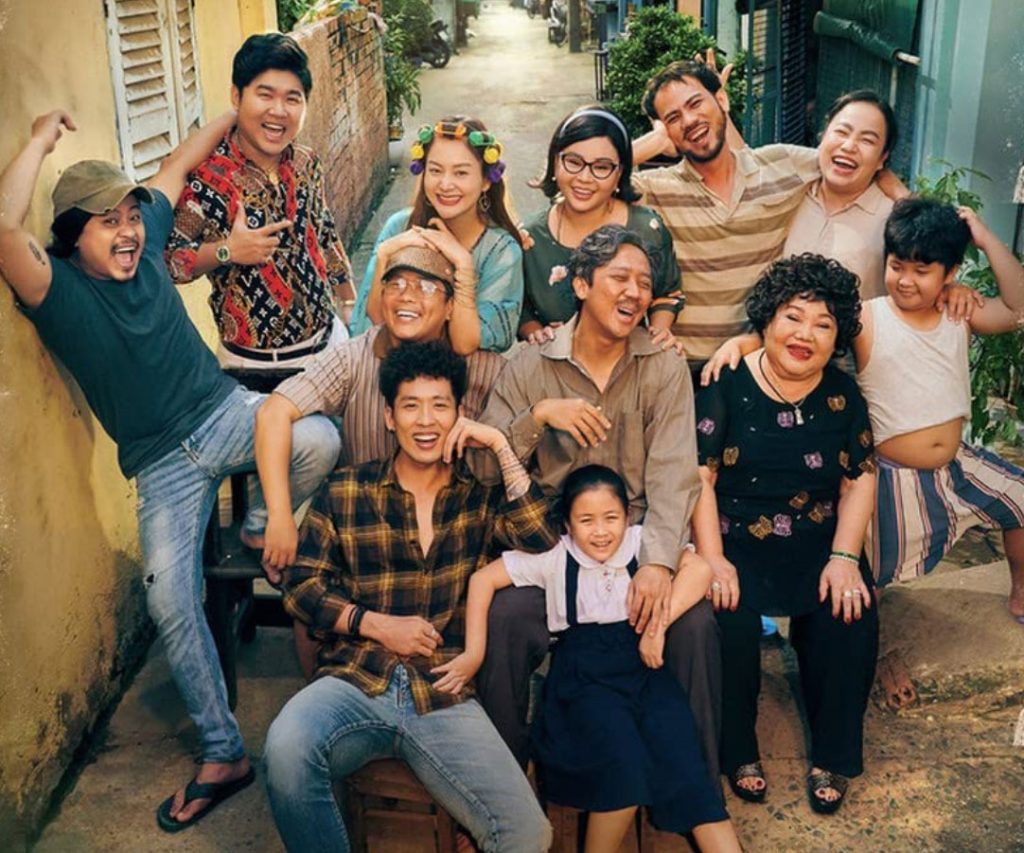
The members of this bickering family are:
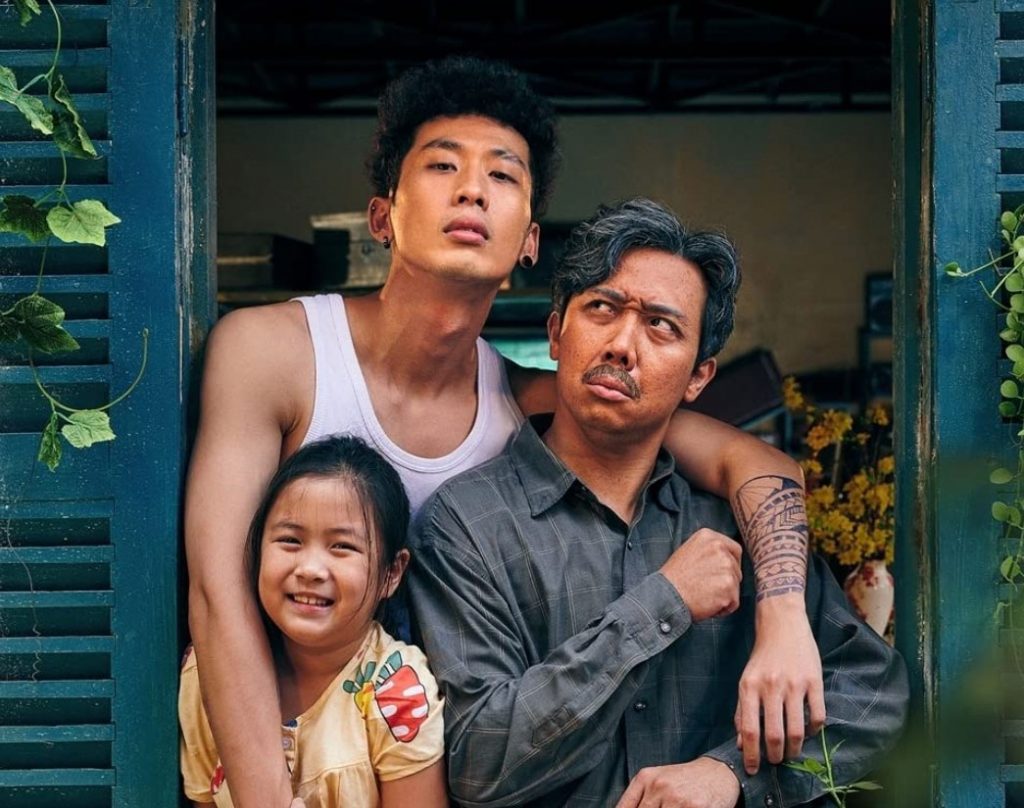
- Ba Sang (played by Trấn Thành), the movie’s narrator, a divorced father who lost his fortune and is now heavily in debt.
- Quấn (played by Tuấn Trần), Ba Sang’s son, who is a 23-year-old aspiring YouTube star.
- Bu Tot (played by Ngân Chi), a 6-year-old girl who has been raised by Ba Sang, ever since he brought her home when she was a baby.
- Hai Giàu (played by Ngọc Giàu), Ba Sang’s older sister, who sells gravestone plots and employs Ba Sang to help him pay off his debts.
- Út Quý (played by La Thành), Hai Giàu’s alcoholic son who’s the “black sheep” of the family.
- Bình Lợi (played by Quốc Khánh), Hai Giàu’s goofy younger son.
- Tư Phú (played by Hoàng Mèo), Ba Sang’s younger brother who is generally passive unless he gets irritated by his nagging wife.
- Thím Ánh (played by Lan Phương), also known as Ánh, who is Tư Phú’s overly critical, shrewish and very materialistic wife.
Another featured character in the movie is Cam Le (played by Lê Giang), a platonic friend of Ba Sang who might or might not have romantic feelings for him. Cam Le is often the calm voice of reason when Ba Sang and his family start feuding or acting unstable. And a woman named Truc Nhan (played by Minh Tu), who’s from Quấn’s past, resurfaces with news that shakes up the family.
Much of Ba Sang’s insecurity comes from feeling like a loser because he used to be a successful businessman, but he made a lot of bad choices, and now he’s drowning in debt. His financial problems also cost him his marriage. Ba Sang is living in a very poor neighborhood that he thinks is beneath the social class that he thinks he deserves.
Ba Sang’s alcoholic nephew Út Quý is a criminal who is in debt to some local gangsters. The movie has a subplot about these gangsters lurking around because they’re growing impatient with Út Quý being unable to repay the money that he owes. Út Quý’s drinking problem is so bad that he has the unsavory reputation of being the “town drunk.”
Ba Sang’s adult son Quấn still lives with Ba Sang, who is annoyed because he doesn’t think that Quấn’s YouTube channel is a practical way to make money. Ba Sang lectures Quấn to get a “real job,” but Quấn refuses to do anything else for work because he’s convinced that he will eventually get rich from being a YouTube star. The only person in the family whom Ba Sang doesn’t seem to get irritated with at some point or another is Bu Tot, who is an adorable and obedient child.
Because “Bố Già (Dad, I’m Sorry)” is a soap-opera-styled movie, there’s a lot of twists and turns to the plot that include a paternity scandal and a health crisis where someone needs a kidney transplant. Unfortunately, the melodramatic tone to the story means that the actors tend to over-act in a way that’s not flattering to the movie. And there’s too much shouting of dialogue, as if some of the actors think that in order to convey strong emotions, you have to shout.
“Bố Già (Dad, I’m Sorry)” also has a problematic way of depicting domestic violence. In more than one scene, Tư Phú slaps his wife Ánh very hard on the face when they argue. But this type of abuse is brushed aside as nothing more than a man trying to control his wife when she gets too mouthy. When he slaps her, it’s in front of other members of the family who do nothing about this abuse. In one scene, Ba Sang says that Ánh deserves to be slapped for “running her mouth.”
As annoying as Ánh can be, no one deserves to have this type of abuse inflicted on them. Ánh isn’t even the most troublemaking member of the family. Ne’er-do-well drunkard Út Quý is the family’s biggest problem, but his destructive behavior is excused, with the implication being that because he’s a man, he’s allowed to get away with it. There’s a scene where Út Quý literally destroys a birthday party for his brother Bình Lợi, but Út Quý faces no real consequences.
In addition to the movie’s over-the-top acting, “Bố Già (Dad, I’m Sorry)” falters by trying to cram in too much melodrama, which results in some of the more pivotal scenes being rushed. And many of the scenes that are intended to be comedic are just irritating, unless you consider it amusing to see a bunch of actors portraying family members who act like feuding chickens.
Some of the direction is downright sloppy. There’s a scene where the family has gathered inside an apartment, and the family member who owns the apartment goes inside a bedroom, and is surprised to see an estranged member of the family in the room. How did that person get in that room without anyone else knowing, when there’s only one door for the apartment? It’s never explained.
“Bố Già (Dad, I’m Sorry)” isn’t a terrible film, since it has some touching moments that are meant to be a sentimental message about how people should not take family members for granted. It takes this 128-minute movie a long time to get to that message toward the end of the film. Just be prepared to sit through a lot of tiresome human squawking along the way.
3388 Films released “Bố Già (Dad, I’m Sorry)” in U.S. cinemas on May 28, 2021. The movie was released in Vietnam on March 12, 2021.